What is the difference between a diamond and cubic zirconia by eye
The jewelry market today is filled with a large number of fakes. This phenomenon is due to the market difference in the cost of original stones or materials with their synthetic counterparts.
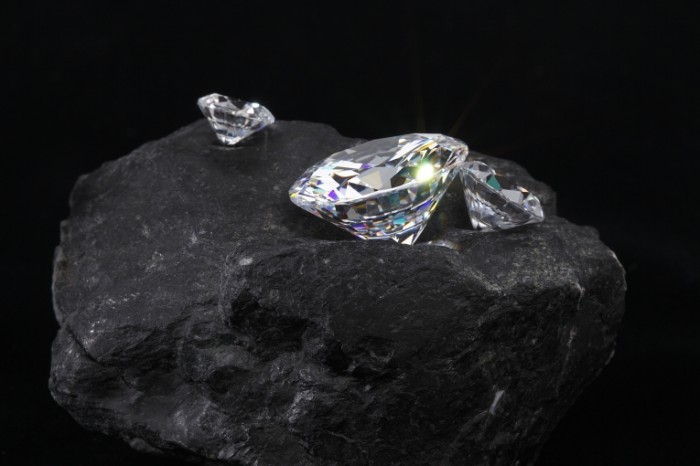
The jewelry market today is filled with a large number of fakes. This phenomenon is due to the market difference in the cost of original stones or materials with their synthetic counterparts. In one case, the jewel needs to be discovered in the bowels of the planet, mined using specialized tools, while paying for the labor of workers, then carefully transported to the required region and correctly processed to the desired visual appearance. On the other hand, there is a technique for applying progress in the field of chemistry, due to which the previously indicated difficulties are reduced to nothing.
The main flow of buyers, which is the backbone of the economic enrichment of stores, does not have a sufficient level of knowledge in this area, which is why a situation with customer deception occurs.Despite the fact that fakes visually almost do not differ from the original, which was hard mined in the bowels, this causes moral and material damage in relation to the acquirer.
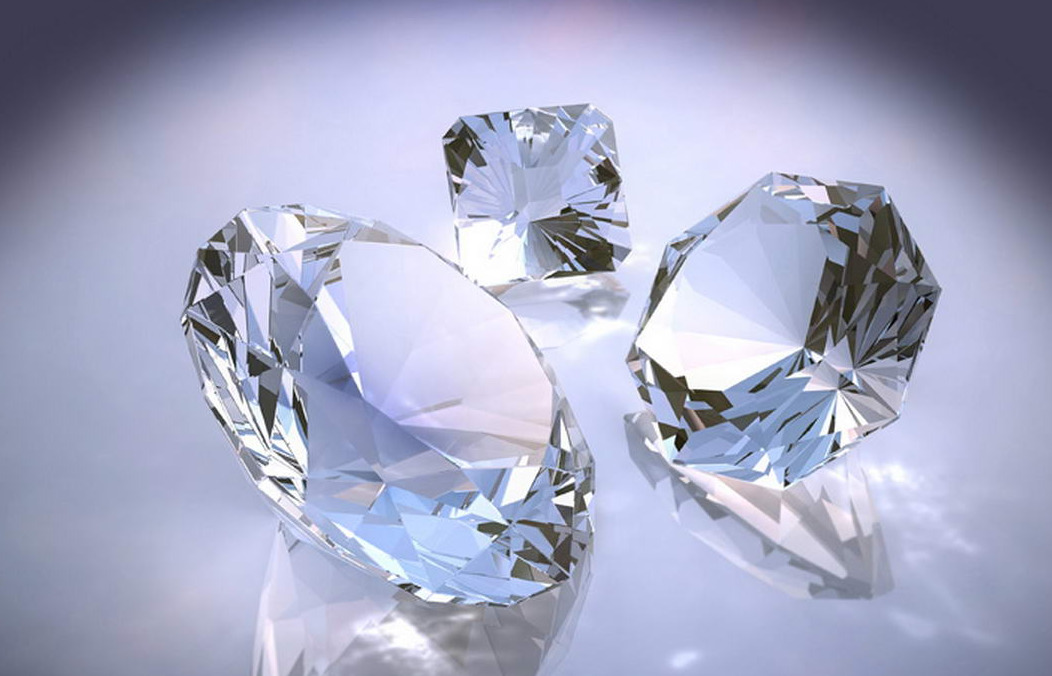
One of the most common substitutions on the market is with the popular diamond gemstone. Unscrupulous companies or shops replace the jewelry with a laboratory-derived analogue - cubic zirconia.
Key differences between diamonds and cubic zirkonia
A diamond is rightfully considered an expensive gem, the size and volume of which are often insignificant. To determine visual measurements, you will need sharp eyesight or specialized devices that will help you focus on the little things.
Fianite, artificially bred in the laboratory, has a sufficient number of differences from the original, thanks to which it is possible to determine the type of mineral:
- Mass - it is proved that the weight of a synthetic stone is directly proportional to the natural brainchild by 2-3 times;
- Grease wettability - The technique of using grease in gemstone analysis is used quite frequently. The diamond-cubic zirconia connection did not pass her by. The original will leave an invariable mark when, like a laboratory decoration, it begins to spread fat over the entire area, forming an ugly mark in the form of a blot;
- Conduction of heat - unlike cubic zirconia, a diamond does not have the property of fogging;
- The power of fusion - natural stone, due to the unique internal chemical structure, has high-intensity reflections, while cubic zirconia somewhat loses this coefficient with a similar size or with a symmetrical type of processing;
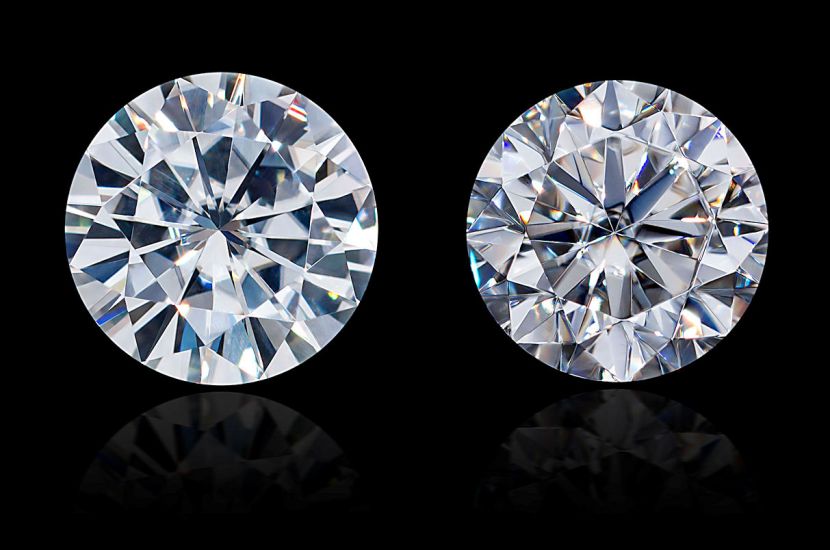
- The shape of the cut - the edges of the diamond are sharp and clear, and the cubic zirkonia are softer and more rounded;
What is a diamond
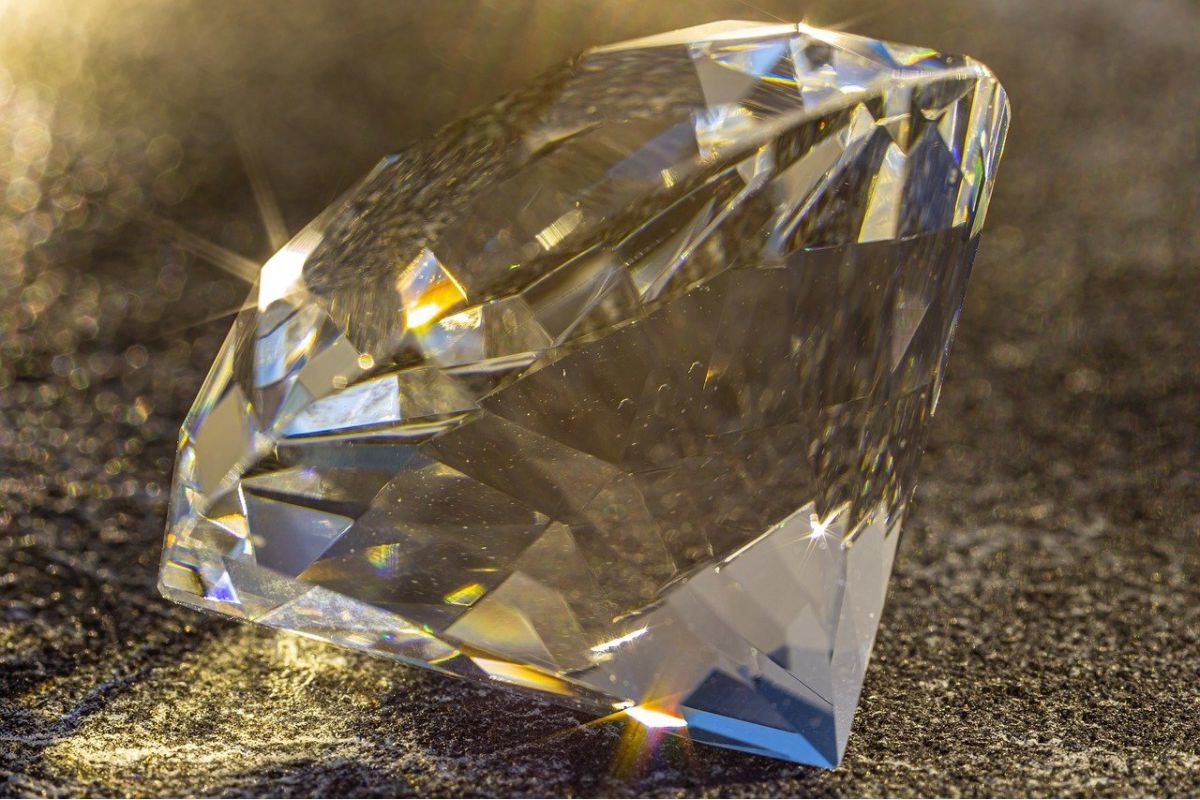
A diamond is a diamond processed in specialized places. It is rare, but almost on all continents and their regions. There are a number of theories about the formation of this gemstone. The most developed version is considered to be igneous in combination with mantle. At high pressure, carbon atoms form a specific crystal lattice that turns the material into diamond. An interesting fact is that at elevated temperatures, the stone turns into graphite.
The mineral is used in various activities:
- As a piece of jewelry due to its appearance, visual features and increased density, which allows for good sharpening;
- For coatings whose materials operate at elevated temperatures;
- When creating heavy-duty drills or saws;
Read in more detail about a high-quality artificial diamond.
What is phianite
Fianite is a stone artificially bred in the laboratory. The creators of this brainchild are scientists from the Physical Institute of the Lebedev Academy of Sciences. In the 1970s, the workers of the “intellectual shop” were faced with the task of creating a material with specific optical properties, but the invention quickly fell into the hands of jewelers, who immediately came up with a practical application for this stone. Among chemists, fianite is called zirconium dioxide, although in the West it also has names such as Jewellite or Daimonsquaem.
In the twenty years since the artificial withdrawal of the material in workshops and laboratories, it has been created for a weight of more than 50,000,000 carats.
Thanks to progress in science, and especially in its chemical direction, scientists have learned how to modernize cubic zirconia by changing its color.As a result, unscrupulous jewelers and sellers replace originals with synthetic copies. It is important to understand that the stone itself is considered a worthy invention that allows you to create an attractive stone that is accessible to people of any income.

How to distinguish cubic zirconia from a diamond at home
In order to determine the quality and originality of a gem in a piece of jewelry, it is not necessary to know the complex properties of stones and their chemical structures, familiar to professional jewelers or chemists with extensive experience. You need to have perseverance, attentiveness and have the necessary basis, which makes it possible to analyze the information received.
By having a certificate
The first and foremost rule is the need to purchase jewelry or gems from trusted sources or trusted jewelry stores. In this case, when purchasing the desired product, the store will issue you a specialized certificate with confirmation from specialized organizations, such as the Gemological Center of Moscow State University or the Gemological Institute of America. The document indicates the parameters of the purchased product, its color, purity and dimensions. Its name and number of the conclusion are also entered.

By cost
Due to a sufficient number of expensive stages in the extraction of a diamond, and then the subsequent transportation and processing, the cost of a stone cannot be lower than a certain level in the region. A natural gem is considered one of the most expensive in the world, which is why the cost exceeds several thousand or tens of thousands of dollars. The price tag is primarily affected by the size and quality of processing of the product.
Purity
Cubic Zirconia is a synthetic stone bred in the laboratory. Because of this, defects in a detailed inspection are practically absent due to the control and quality of its output. A diamond, which is a processed version of a diamond, has defects due to the mantle method of formation.
To determine inaccuracies and errors, you need to take a magnifying glass and point it towards the stone. If there is a darkening or cavity, a real stone is presented in front of you.

By cutting
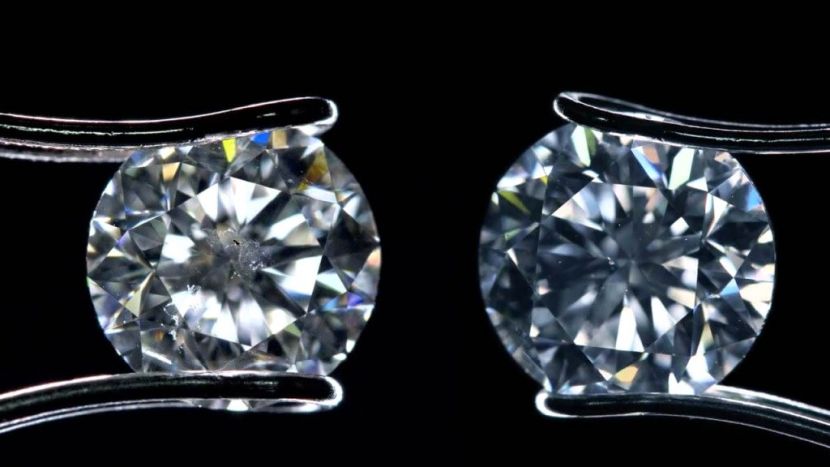
It is important to analyze the cut with a magnifying glass. Cubic Zirconia, due to its own chemical characteristics, has rounded edges. A diamond, due to its super strength, does not lose its appearance when sharpened. In view of this, and the desire to produce a product with maximum luminosity through reflections, jewelers achieve clear and specific boundaries that are not inherent in most other materials.
With the help of fat
When applying fat to the surface of cubic zirconia, it will spread into groups of drops, when, like on a diamond, the fat will gently and evenly flow down. In specialized stores, felt-tip pens are sold for this examination.
Testing for hardness
The method is considered to be specific because of the difficulty of execution in a jewelry store. You need to take a stone and hold it on the glass. In the event that the buyer holds the diamond, the glass will be cut when the cubic zirconia causes a shallow scratch.
During this type of procedure, there is a chance that the gemstone will be damaged and you will have to buy or refund the cost.
into the light
If a large model of jewelry is purchased, then the client needs to look through it into the light. A natural brainchild will create a blurry picture, when, like a synthetically derived stone, it will resemble glass.

Checking the thermal conductivity
The mineral, mined from the bowels of the planet, due to its chemical characteristics, has a high thermal protection, which is why when you try to heat it with your breath or hands, nothing will happen to it, when, like cubic zirconia, it instantly changes its own temperature.
With acid
To use this method, the experimenter will need hydrochloric acid. The property of cubic zirconia is the lack of resistance to this kind of acid. If it enters the flask, the artificially derived mineral will become stained and instantly deteriorate, making it unsuitable for wearing or using. A diamond with a high density coefficient will not change even a gram.

Read See also the properties and meaning of a black diamond.
With the help of ultraviolet
In the presence of an ultraviolet lamp, the analysis of a stone for its fakeness is facilitated. To do this, put the product on the table at the point where the lamp is directed, and then turn off the light source.
A fake has an increased concentration of blue tint, when it does not stand out like a diamond.
By density and weight
If the mineral is not inserted into the jewelry, then it is necessary to carry out a weight analysis:
- It is necessary to put a stone on the scales working with low ranges and write down the weight indicated on the display;
- Then the product is removed and a glass of water is placed;
- After carrying out the above operations, you need to firmly fix the stone with a thread and lower it into a glass of water;
- As a final step, the experimenter divides the previously obtained weight of the stone by the current number.
If as a result of calculations a value exceeding 6.25 is obtained, then you are holding cubic zirconia in your hands. The density of the natural mineral is 3.51 g/cm3.
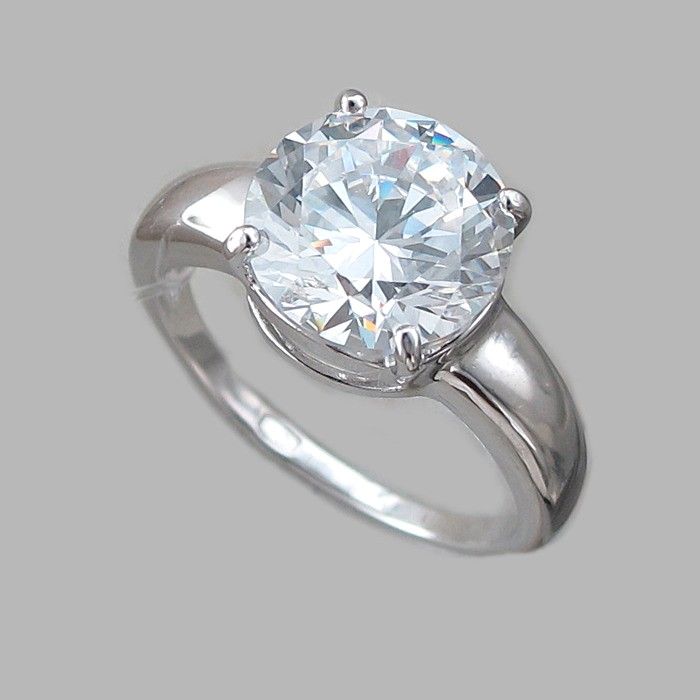
By rim
Among jewelers, there are a number of unwritten rules for working with certain gemstones or materials. The diamond is no exception.
The frame for this mineral is made only from precious metals. Gold and platinum are considered the most common, and the sample of the first is at least 585, and the second is 900. The corresponding information data must be placed on the product.
When working with expensive stones, serious jewelry companies almost never use glue, as this spoils the visual appearance of the product. This paperclip method is mainly used when working with cubic zirconia or rock crystal.
When developing a frame, a specialized place is always created on the back so that the mineral is visible from all sides. The fastening system in the earrings is made in such a way that the stone fixed in the jewelry is visible as much as possible and is not covered by other details. The inside of a cut diamond ring is never mirrored.
With the help of water
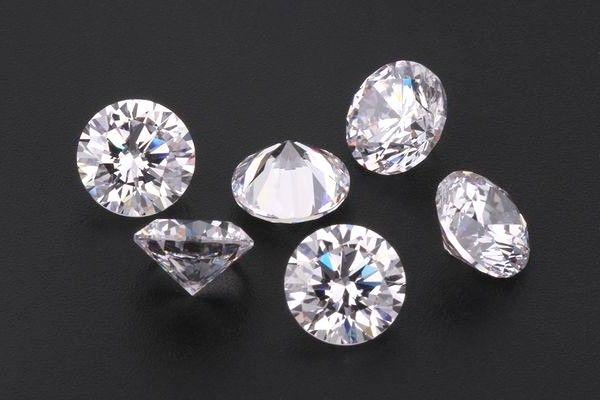
This method is also considered one of the simplest. The bottom line is that a stone is thrown into a glass filled with water to be analyzed. In the case of a fake, the sink rate will be relatively low, when, as a natural brainchild, it instantly and almost vertically sinks.
By splitting the world
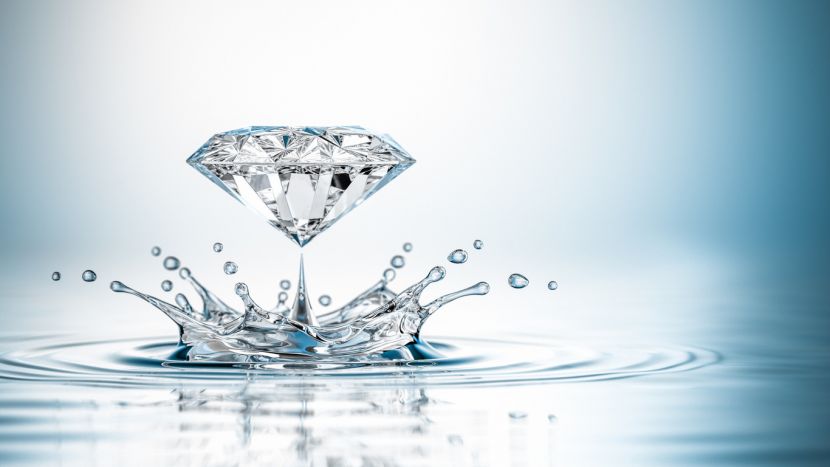
For a successful analysis, you need a magnifying glass with a twenty-fold increase. The experimenter must first put the mineral under a direct light source, and then look at its face through an optical device. In the case of the original, a single beam will be visible, while cubic zirconia will create a fuzzy optical picture.
It should be remembered that cubic zirconia of any size has an equally high level of iridescence, while like a diamond it increases brightness in proportion to its volume.
With a magnet
The method is suitable for individual stones outside of jewelry. Almost all synthetic minerals, due to the peculiarity of the output, have a "weakness" relative to magnetized objects, as a result of which, when they enter its zone of influence, changes will begin to occur.
Fire and water
Since the processed diamond has an extremely high strength factor, unlike fakes, during the initial processing by fire, and then a sharp temperature drop caused by cold water, the mineral will not be covered with any cracks and will not receive internal damage.
A little about certification
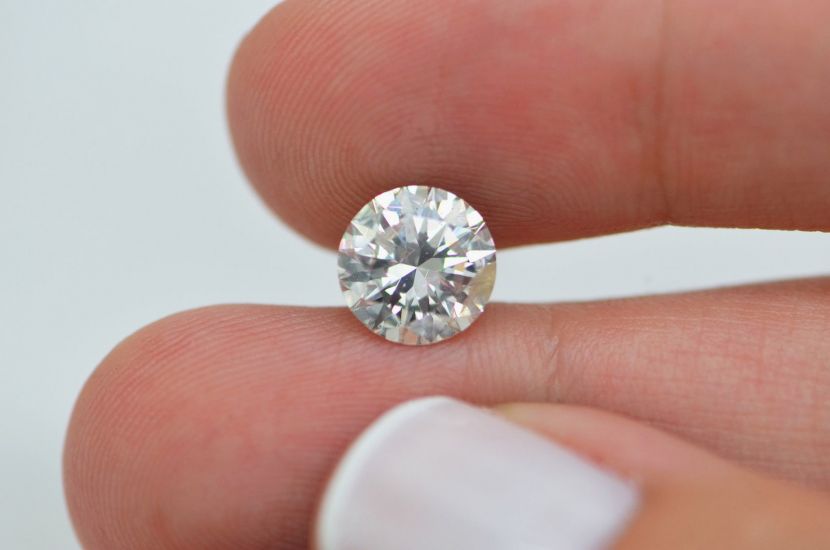
The current realities have dictated the need to create specific organizations whose task is to conduct a series of objective tests based on the derived protocols, which makes it possible to confirm the type of stone, its originality, and also to find out its characteristics. As a result of the work, a special certificate is developed for the previously studied material or stone.
To date, the most authoritative and error-free certificates are documents of the type GIAissued by the American Institute of Gemmology. Certificates are considered other popular and reliable sources of information. HDR and AGS.
If you wish to conduct your own analysis, the buyer has the right to give the stone or precious metal to a private company that evaluates them. It is important to understand that no one can guarantee the fidelity and truth of the result from an organization of this kind.
Interesting Facts
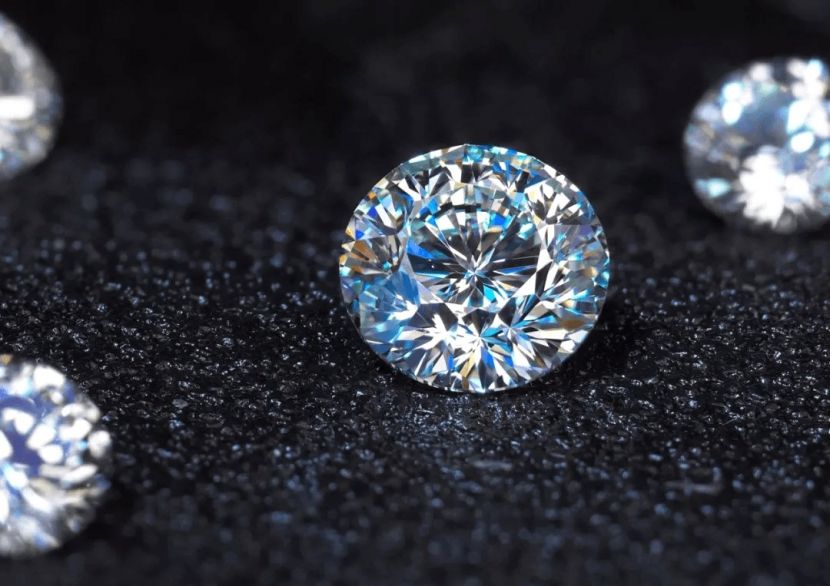
A number of sources demonstrate the myth that a diamond is invisible in water.The natural mineral has a yellowish tint, which is why there is a chance to see the stone even in running water.
There is a rule among jewelers that a diamond cannot be placed in budget-class jewelry. The frame is made only from noble metals with the presence of a specific level of sample.

According to scientists, the average age of diamonds on the planet is around one billion years. There is a possibility that the diamond sold in the jewelry store is a processed diamond that arrived on an asteroid from outer space.