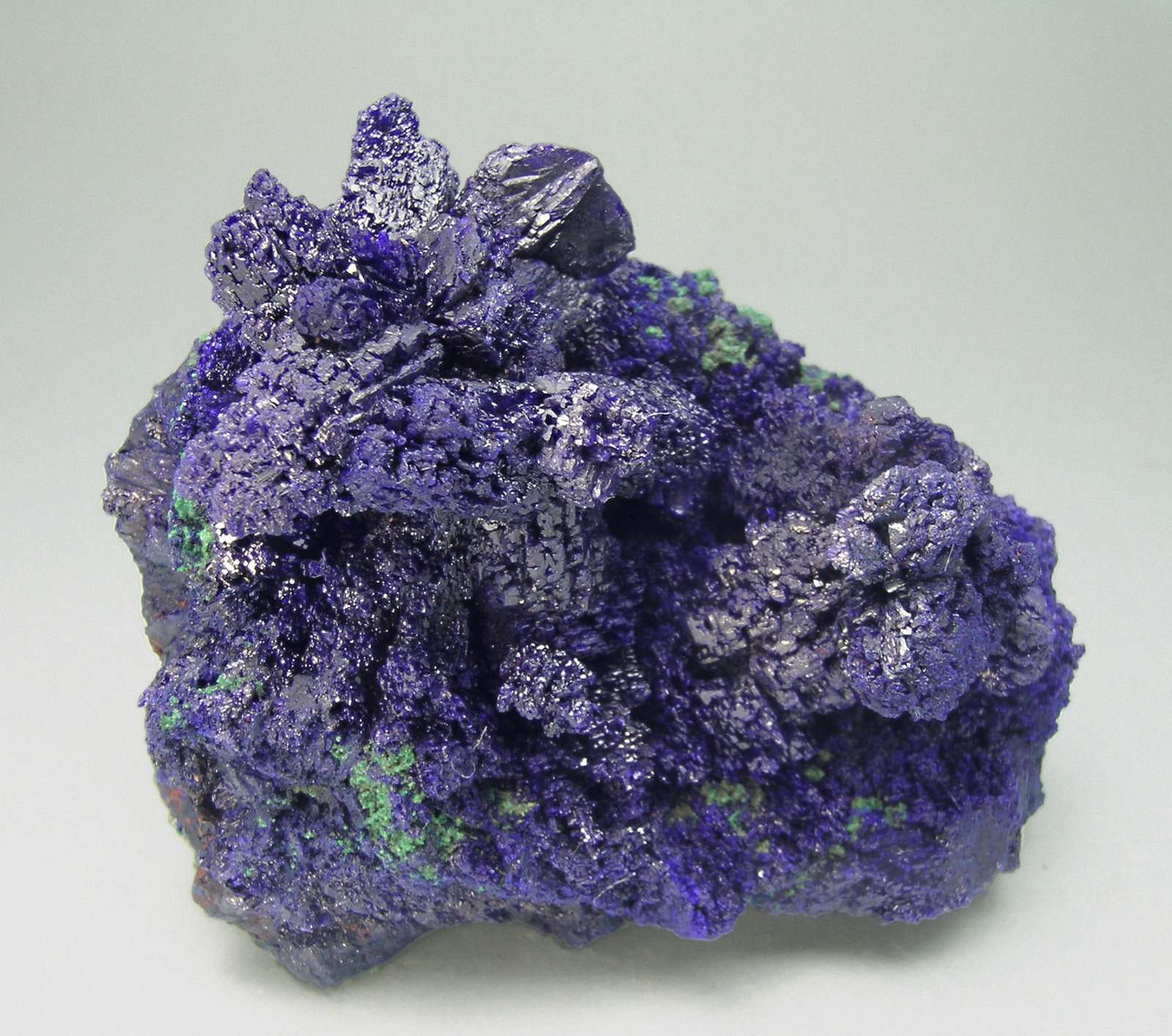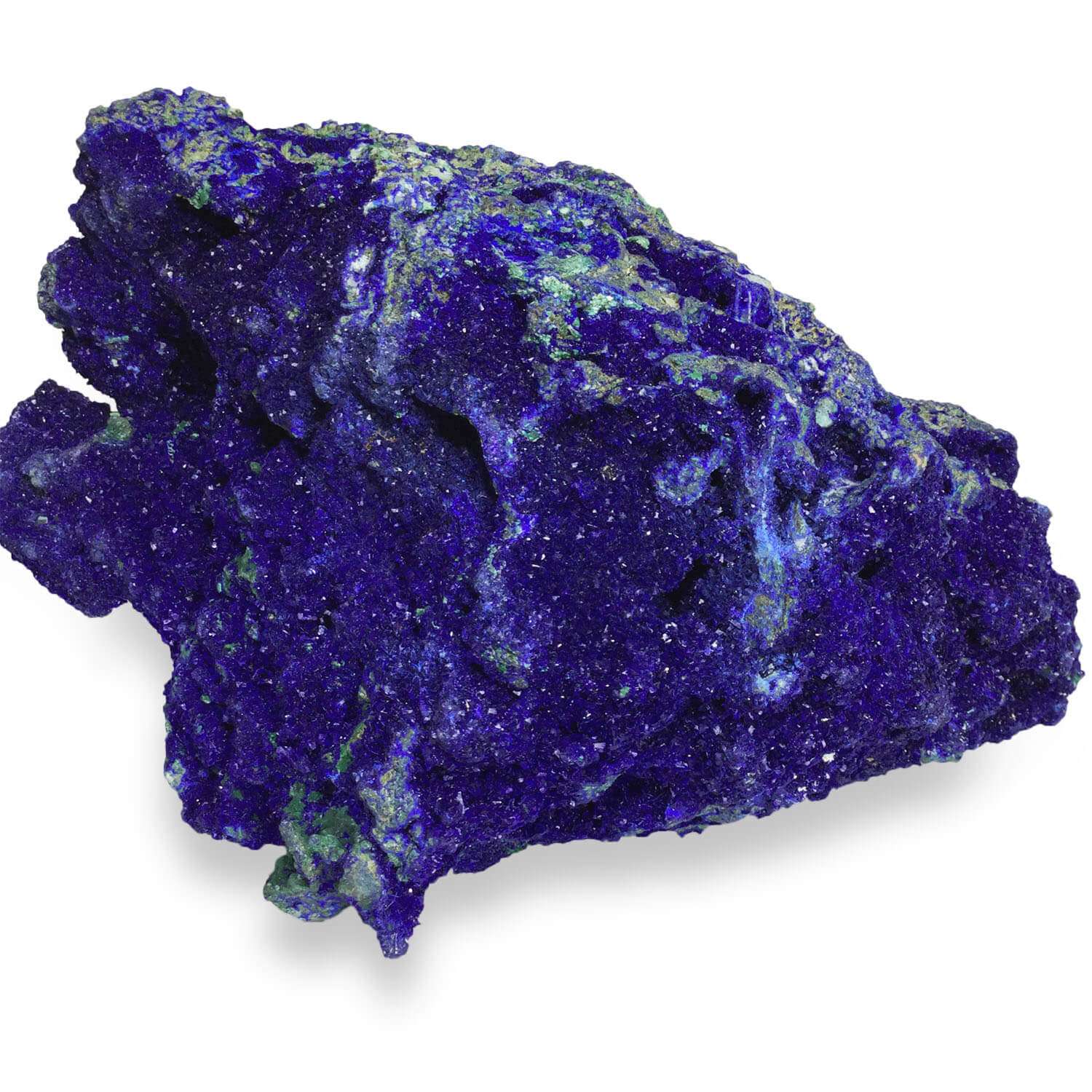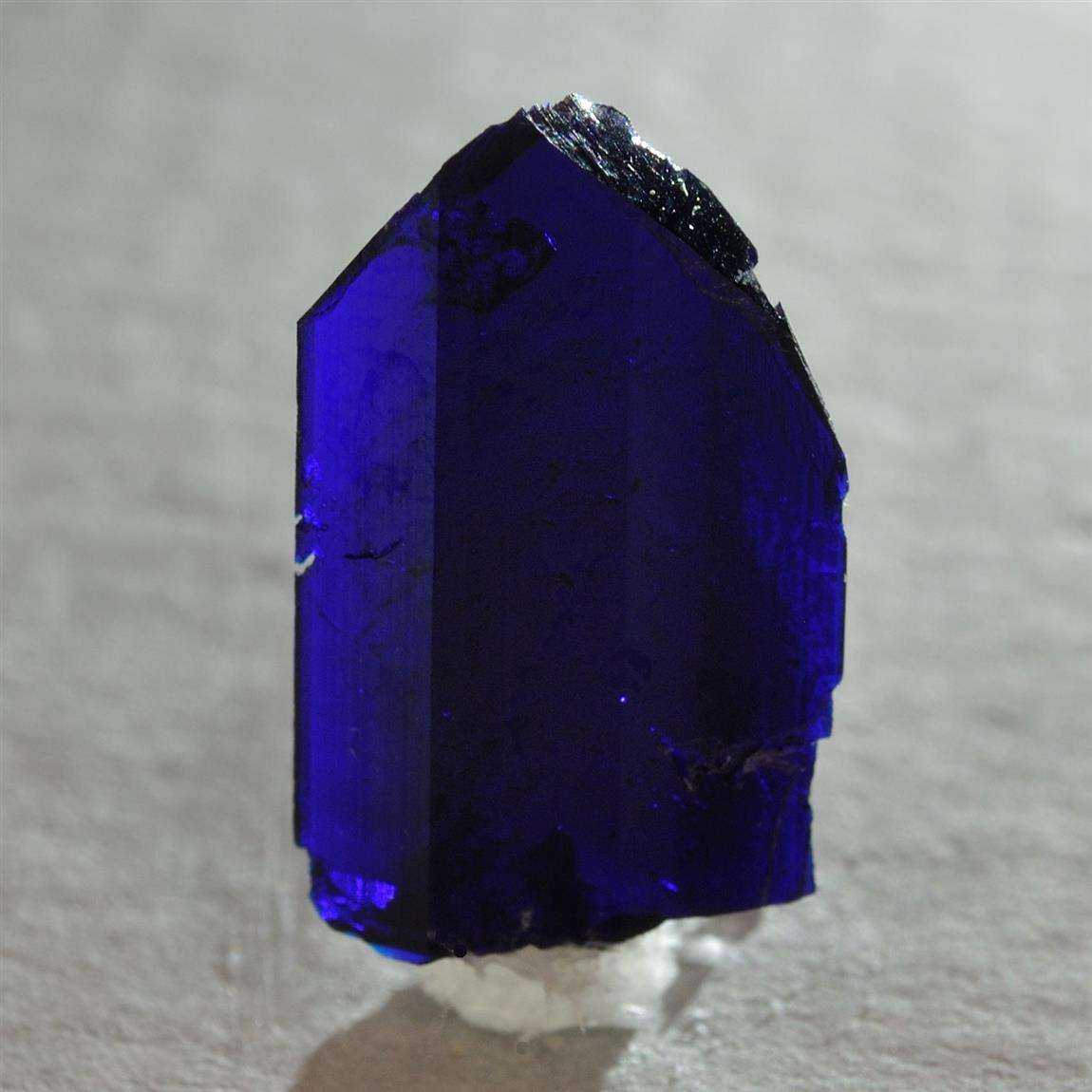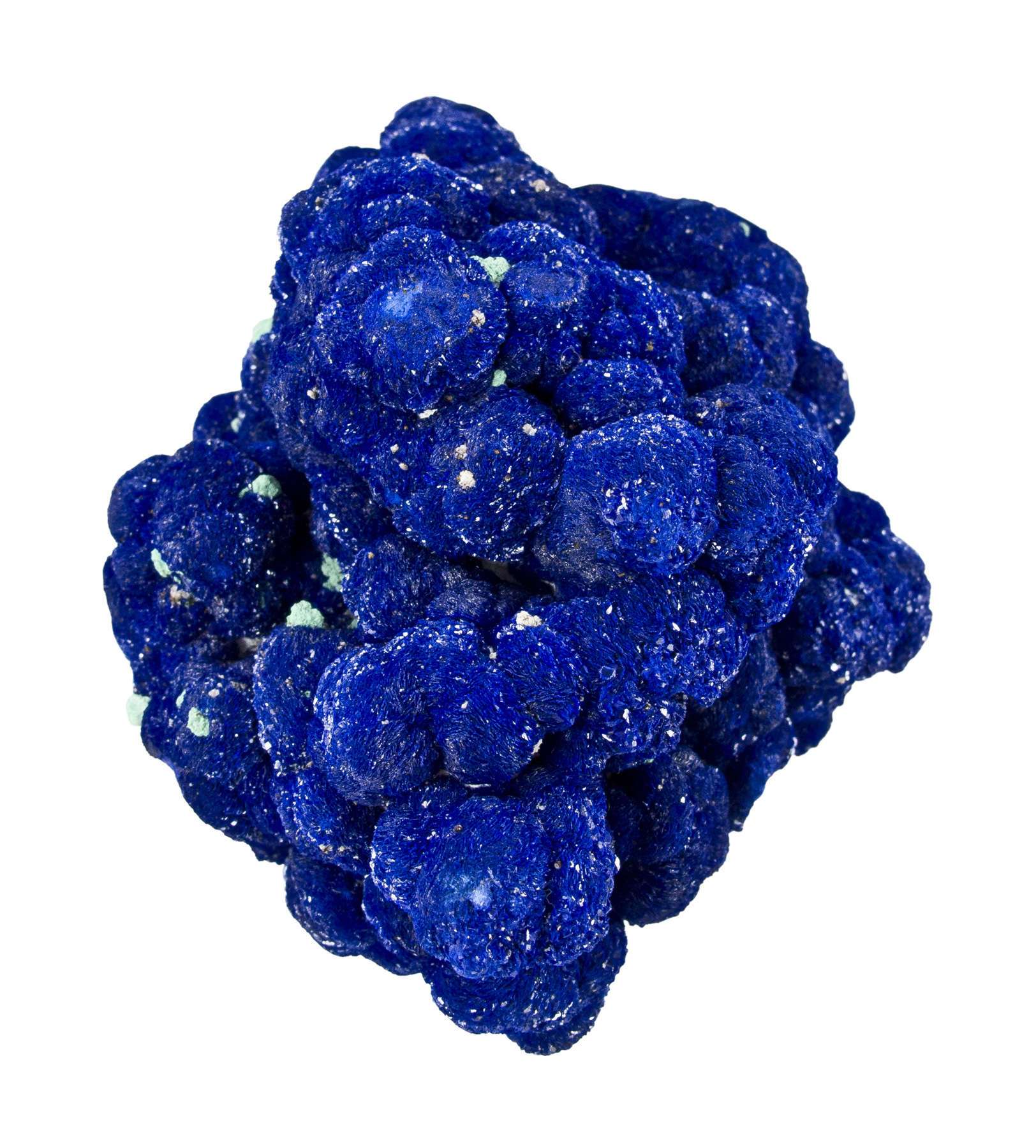
Inexpensive stone Azurite - what signs it combines, the history of occurrence, varieties of the mineral, photo, its useful properties
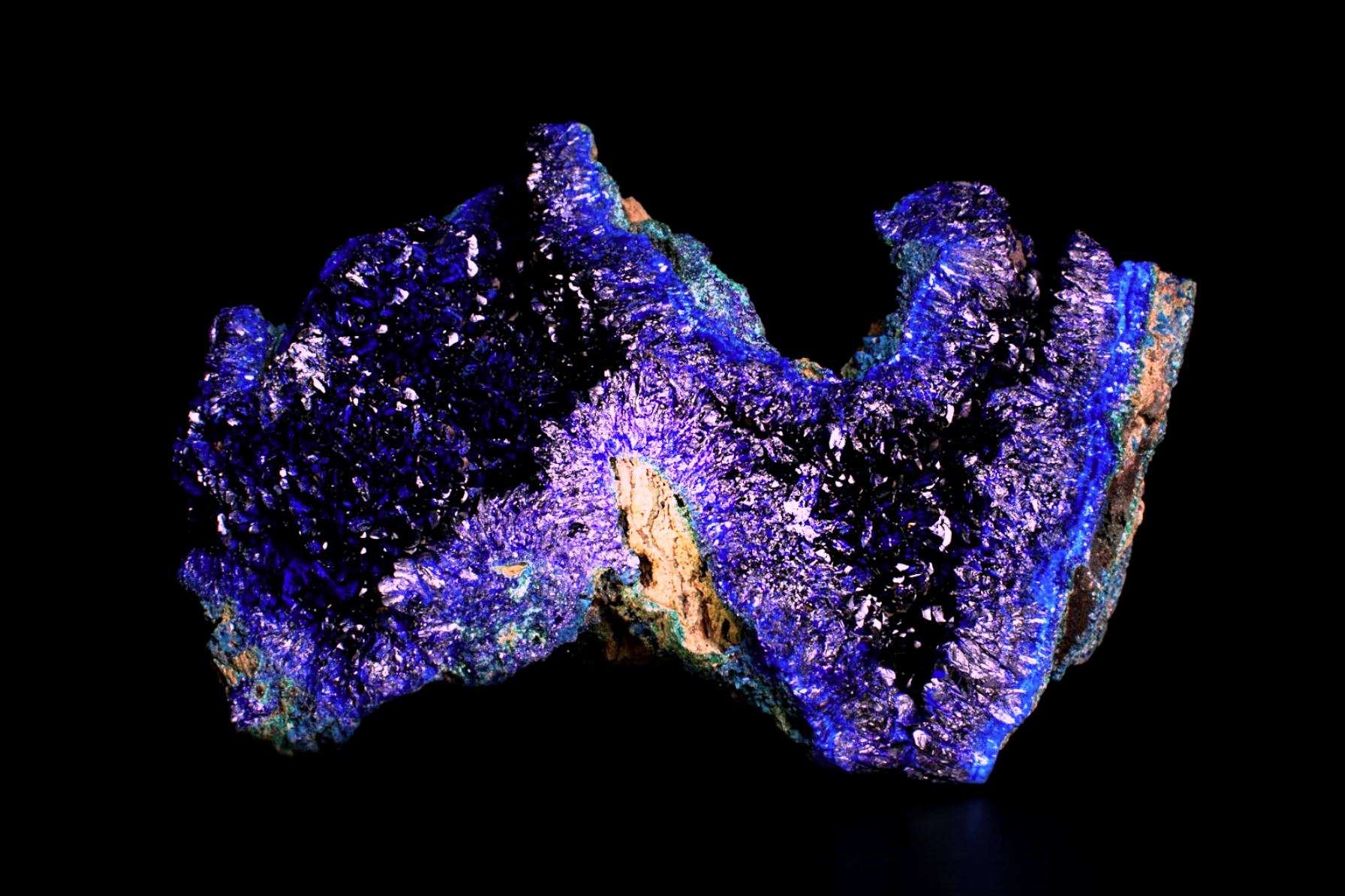
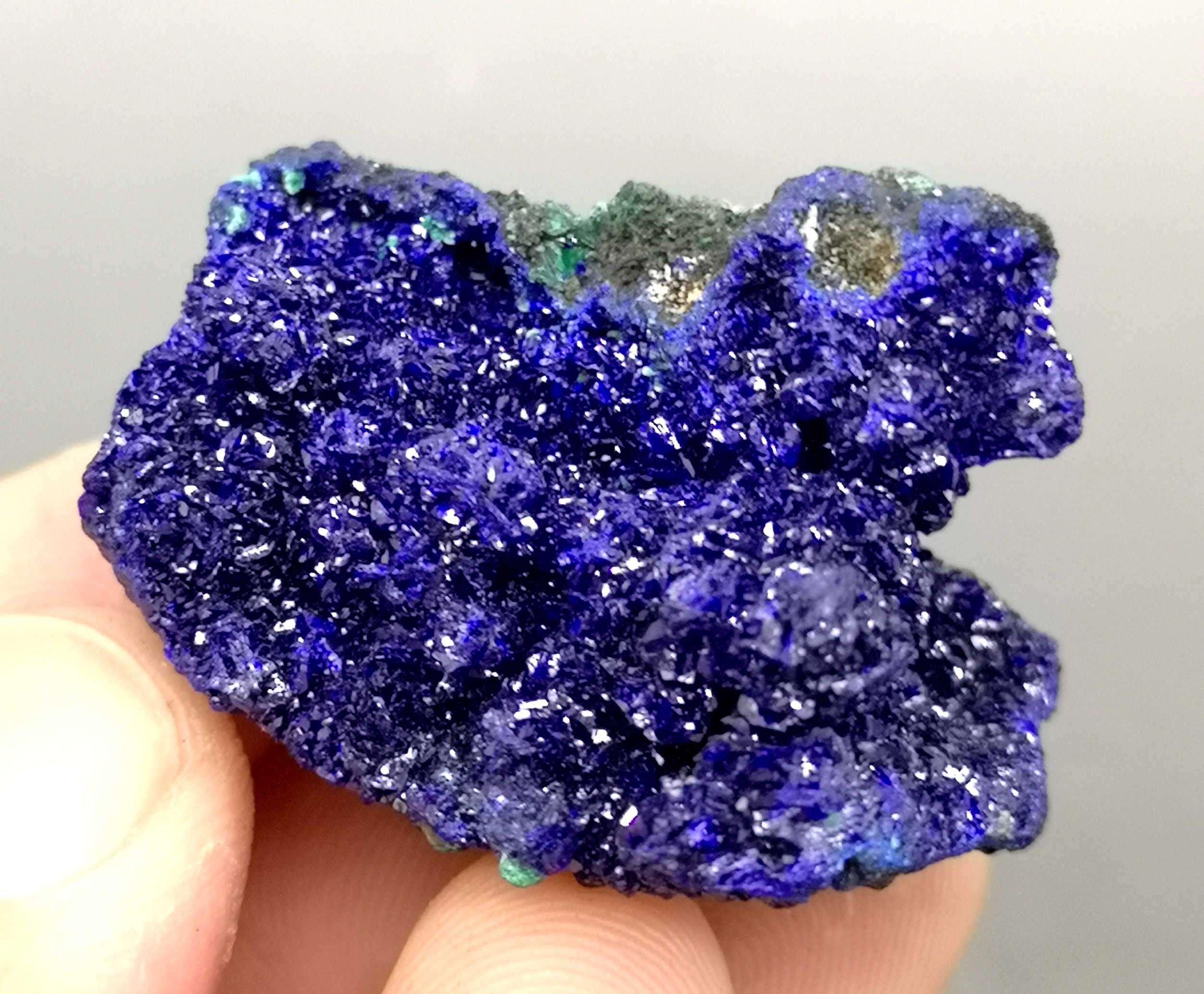
Azurite is a stone that is often confused with the more expensive lapis lazuli. The similarity of these minerals lies not only in the name. Both stones were used to make paint, which was used by medieval icon painters and Renaissance artists to convey the color of the sky and the sea.
History and origin of the name
The names "azurite" and "lapis lazuli" come from the same Persian word "lahvard", which meant a piercing blue color. The word itself came to us from the French "azur", which translates as "azure". The name "azurite" was proposed by Francois Byodan in 1824.
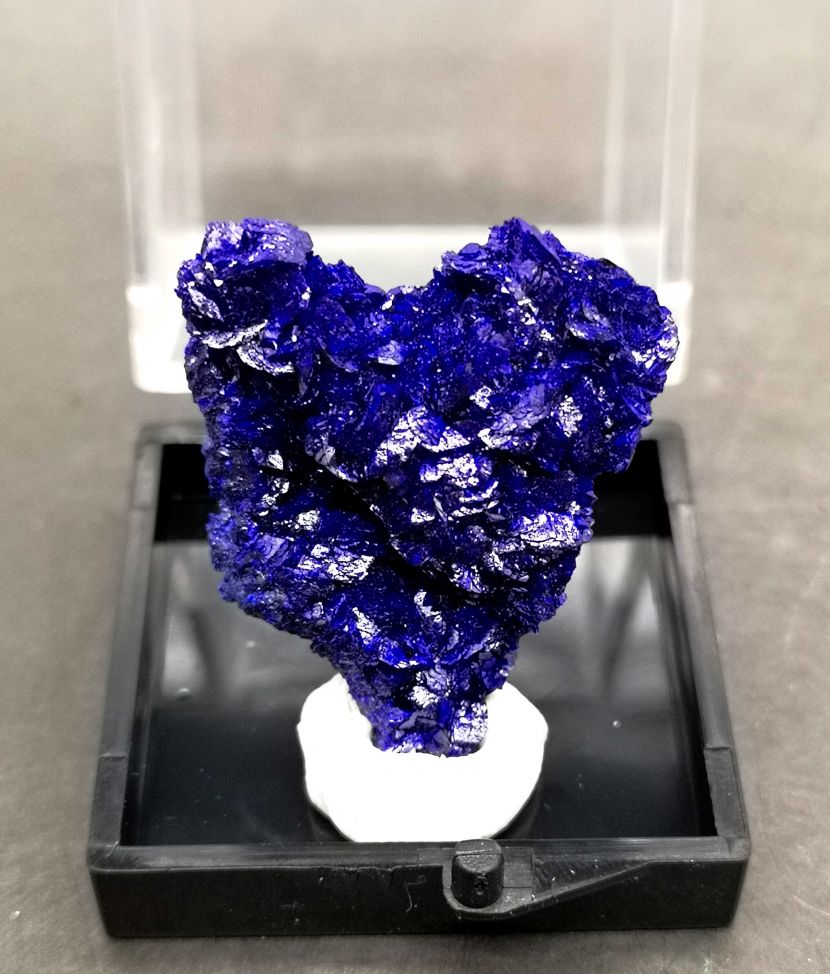
It is also called "shessilite" in honor of the French town of Chessy, near which there is a large deposit of this mineral. There are other names for this stone: "copper blue", "copper lapis", "mountain blue" and "copper azure".
Even in ancient times, Irish druids and ancient Egyptian priests made various amulets from azurite.
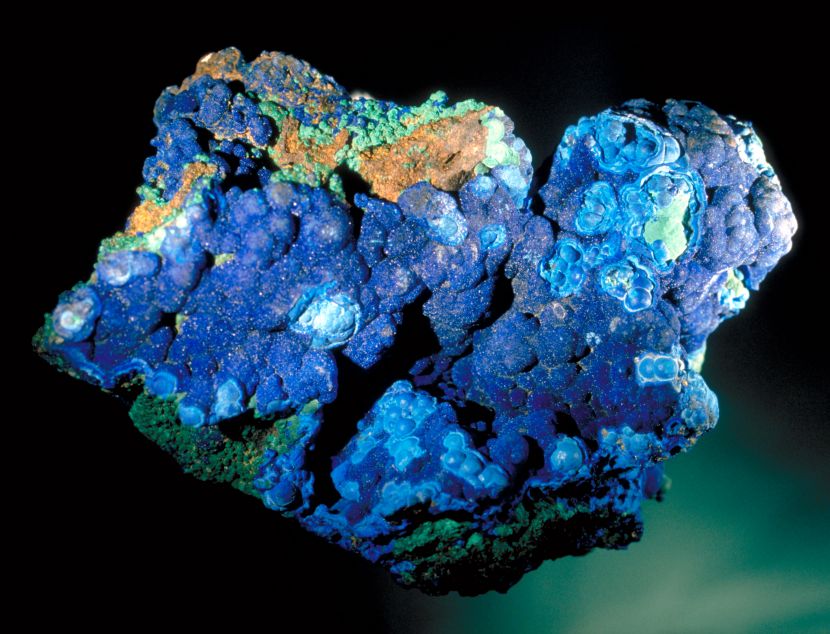
The stone of amazingly thick blue color was also appreciated in India, where it was recognized as having healing powers and contributing to the achievement of a state of deep meditation.
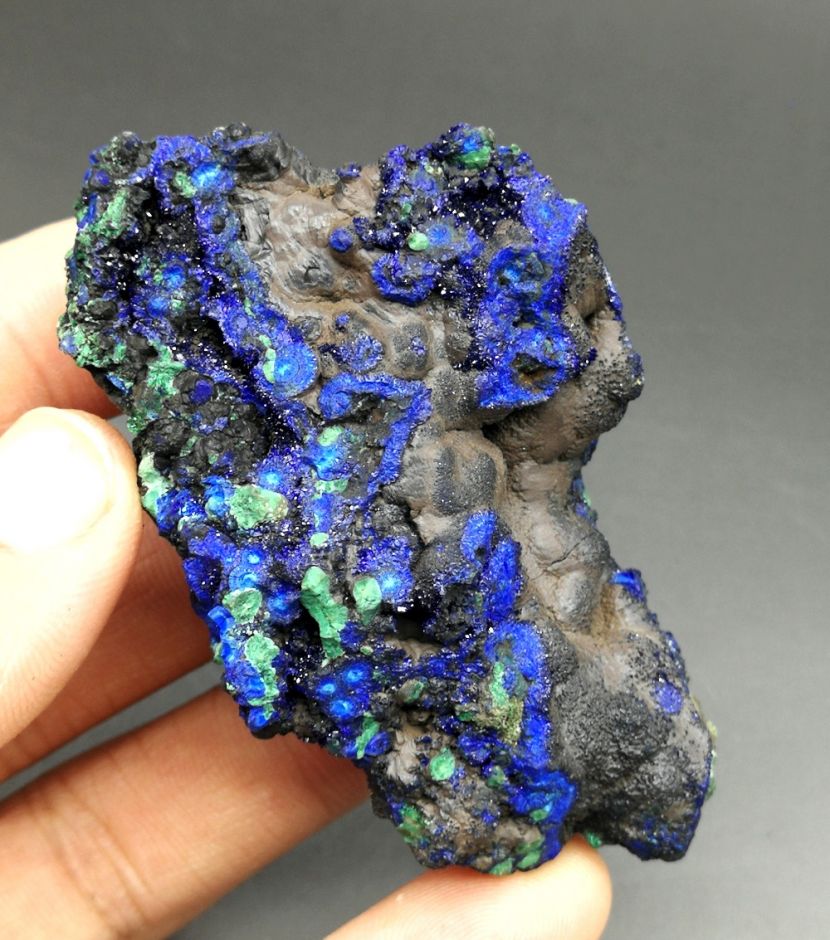
The surge of interest in this mineral in the Middle Ages was caused by the needs of icon painting.In those days, icons were painted with tempera paints based on eggs, to which minerals ground into powder were added. But if it was not difficult to find red, yellow or green stones in nature, then there was a big problem with blue ones.
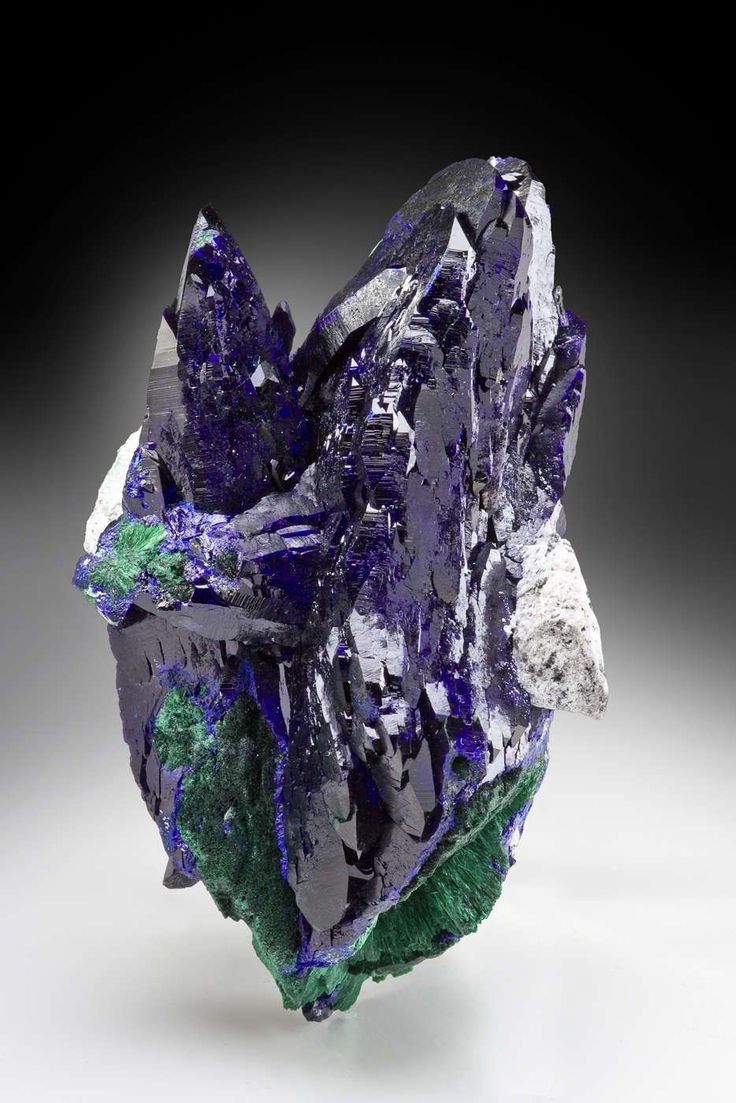
Natural ultramarine was made from the rare mineral lapis lazuli mined only in Afghanistan, and the process of obtaining it was incredibly complicated. It was necessary to separate the blue areas from accompanying inclusions, for which multiple separations in water, oil or wax were used, carefully separating the colored layer of the sediment from the gray and white.
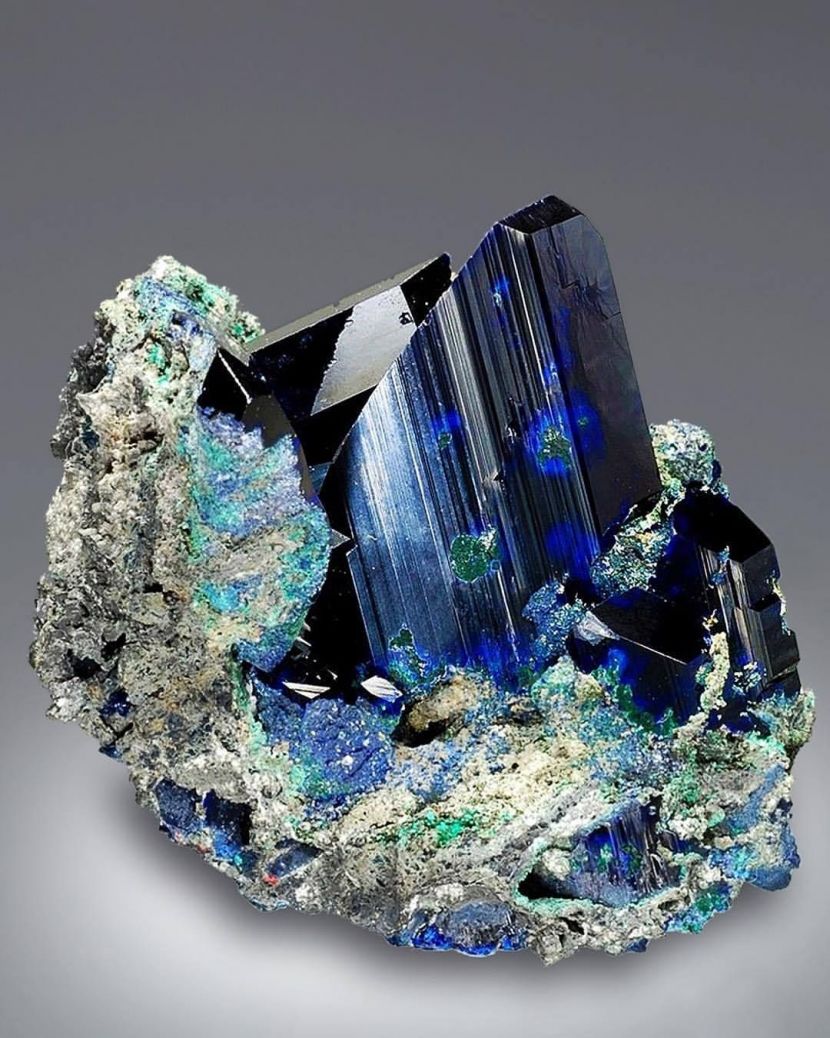
Together with the complexity of delivery, this raised the price of ultramarine to sky-high heights. The price of a gram of top quality paint was equal to the price of gold.
Therefore, icon painters and artists used it only for those works that the customer paid for in advance. In other cases, cheaper minerals were used, of which there were not so many. One of them was azurite.
These minerals are similar in appearance. Even Aristotle described them under one name. But there was a significant difference between them. It is much easier to obtain paint from azurite, for this it was only necessary to grind azurite into powder. The result was hardly noticeable to the inexperienced eye. But then the behavior of the dyes was radically different. If lapis lazuli retained a sky-blue color for centuries, then azurite became more and more green over time.
That is why in the paintings of many artists of the Renaissance and later times the sky looks green. This is not due to the color blindness of the masters, but because of the property of azurite to turn into green malachite under the influence of air and moisture. Even the painting of the Sistine Chapel turned green.
Did the painters know about this? They probably knew, because otherwise the precious ultramarine from lapis lazuli would not have been used for the most expensive works. And even the Egyptians noticed this property behind him. In ancient tombs, you can also find green skies.
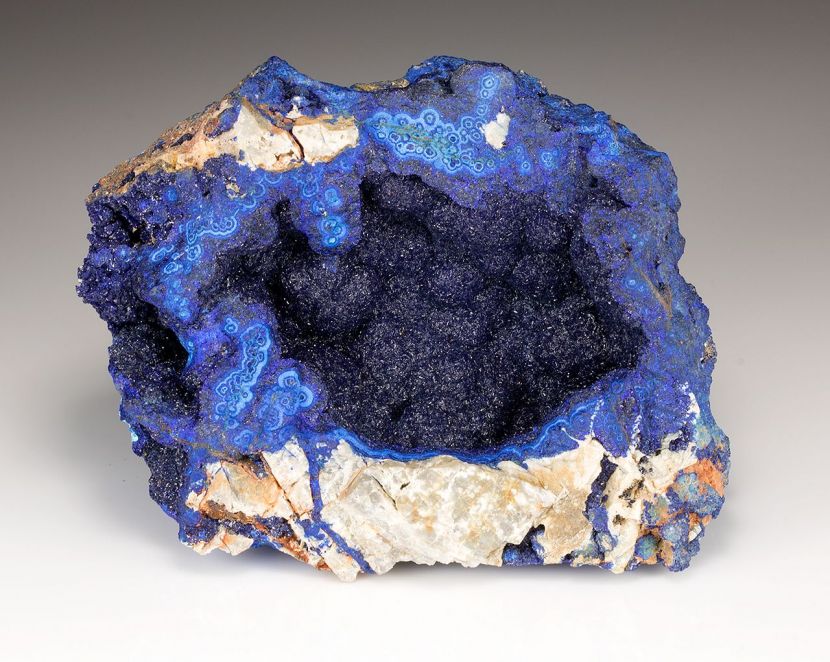
Today, azurite is also used in icon painting as a pigment, but rarely. Jewelry and crafts are made from the most beautiful stones. Azurite is also used in pyrotechnics to make green lights. But the copper and chemical industries consume the most, because it is copper ore and the initial product for the production of copper sulphate.
Place of Birth
Azurite deposits can be found on all continents.
In Europe, it is found in France, Slovakia, Bulgaria, Greece, Spain, Portugal, Germany, and Hungary. In Russia, they are rich in the Urals, Karelia, Altai, Kuzbass and Tuva.
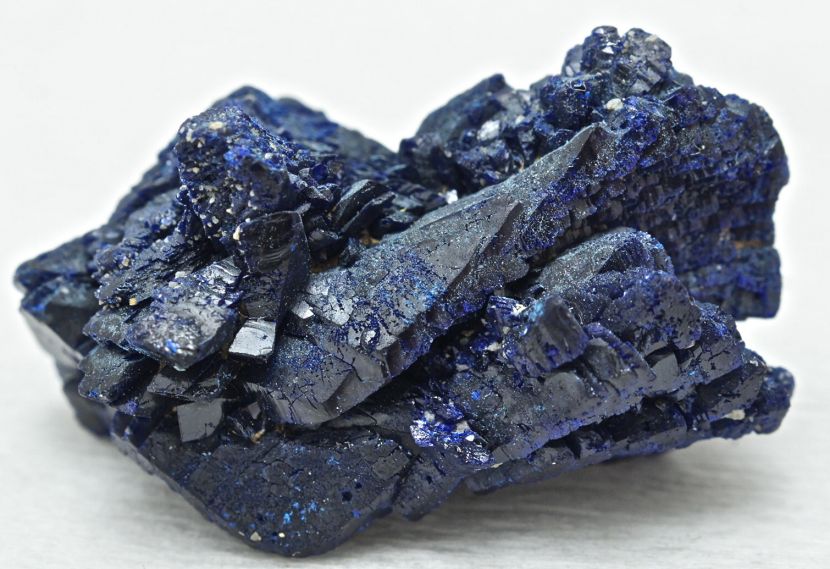
There are numerous deposits in Kazakhstan, China, Australia and Pakistan. In Africa, it is found in the Congo, Morocco and Namibia, where almost black crystals are often found.
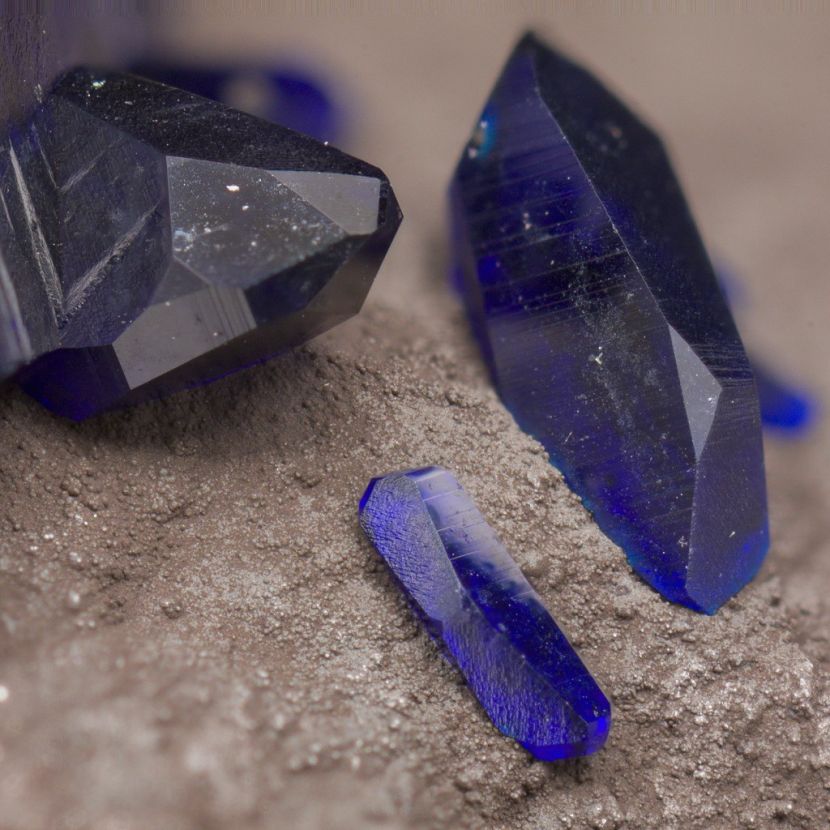
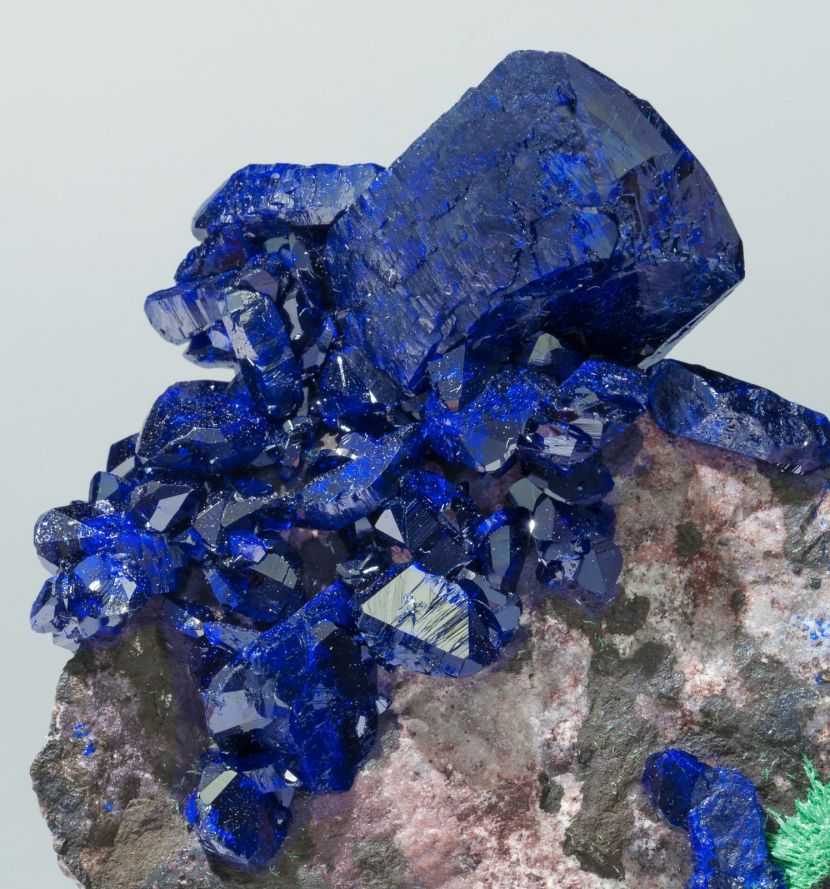
In China and in the Kemerovo region, gem-quality blue crystals are also found, but they are not often used in jewelry because of the exceptional fragility and softness of the stone. There is it in the USA, where the most beautiful stones are found in Arizona.
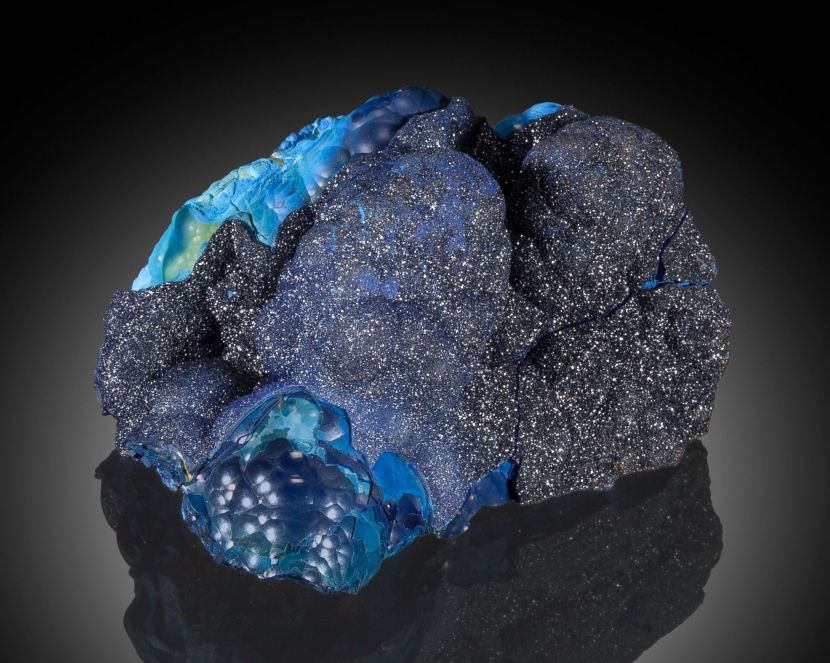
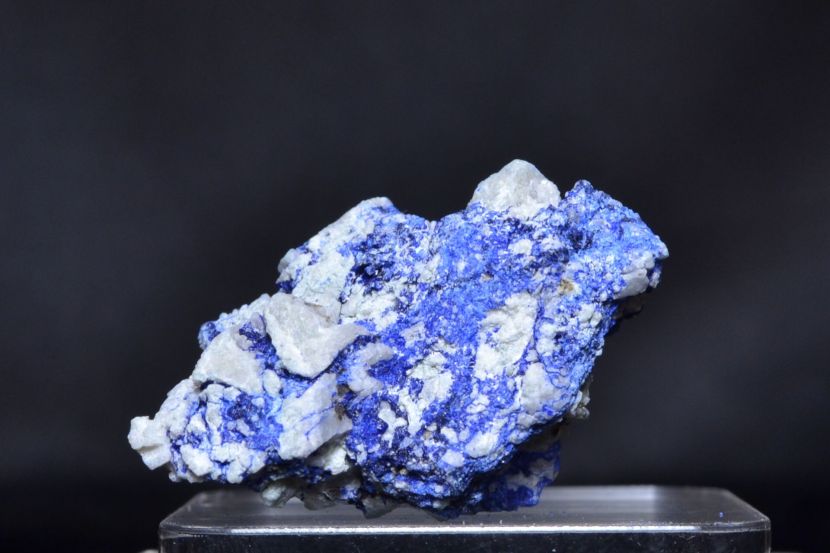
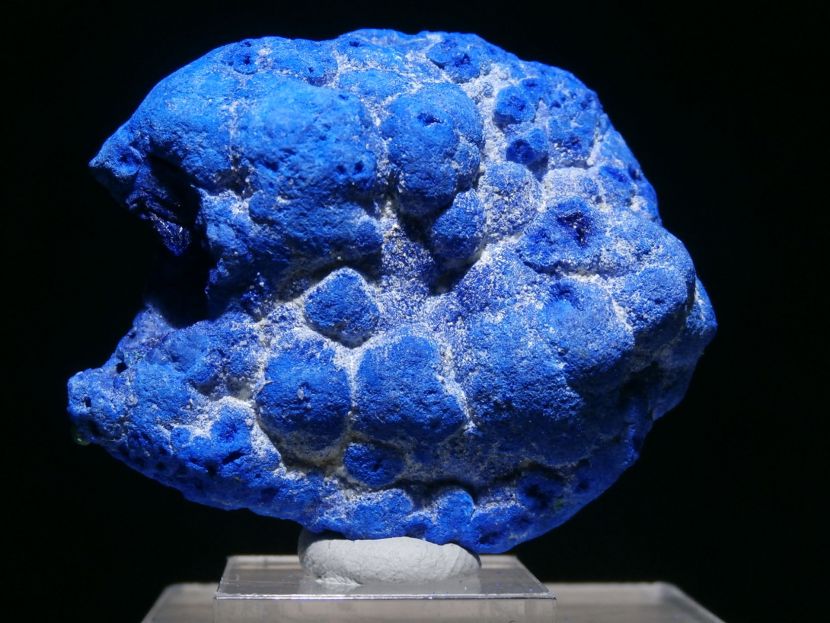
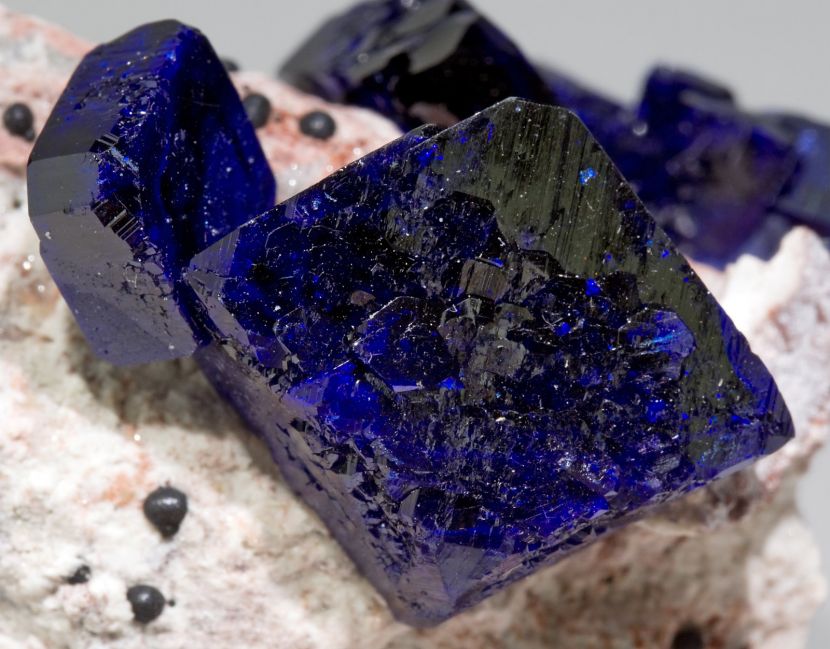
Pakistani and some Australian azurites look very unusual. Round inclusions of azurite are scattered on a white background of albite or spar.
Physical Properties
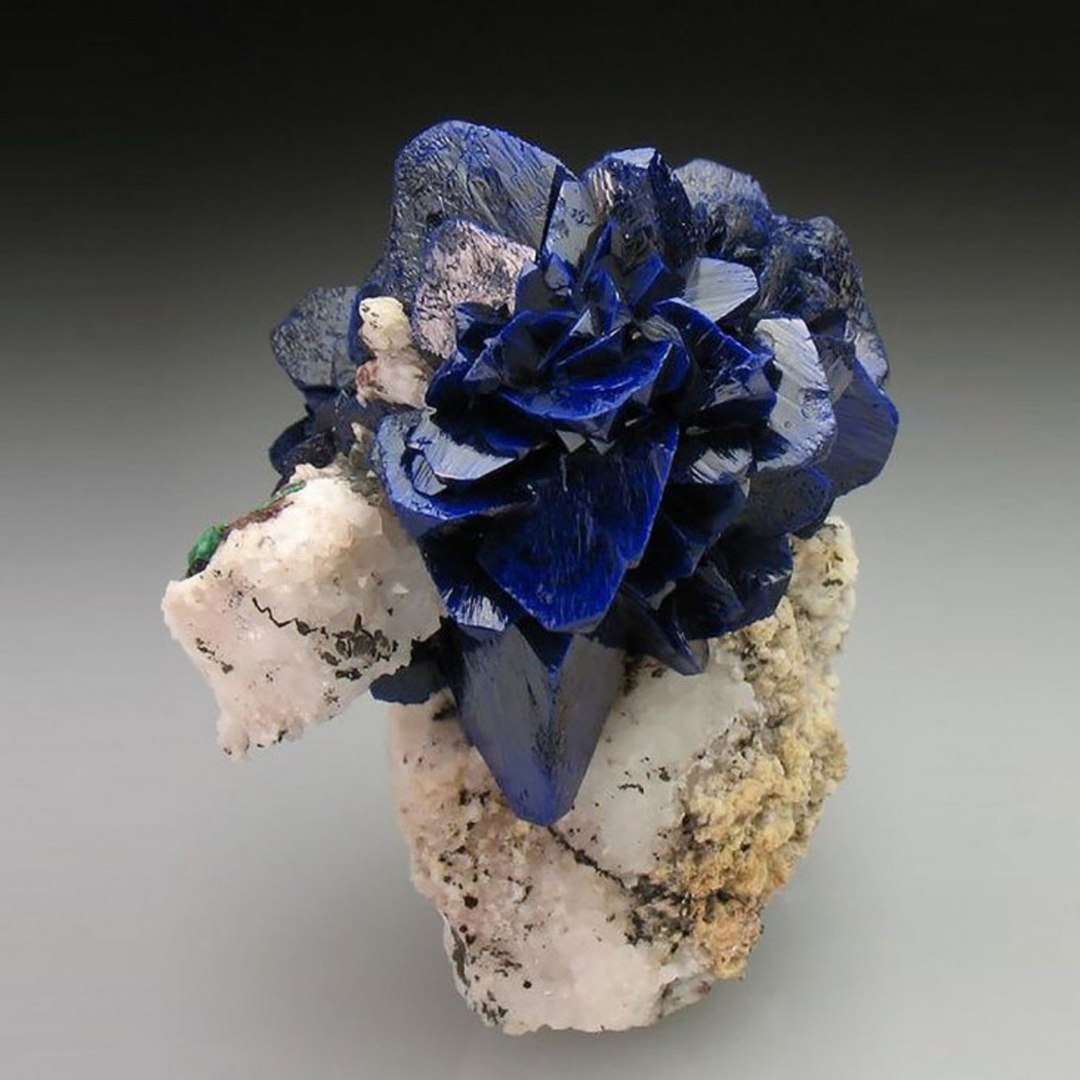
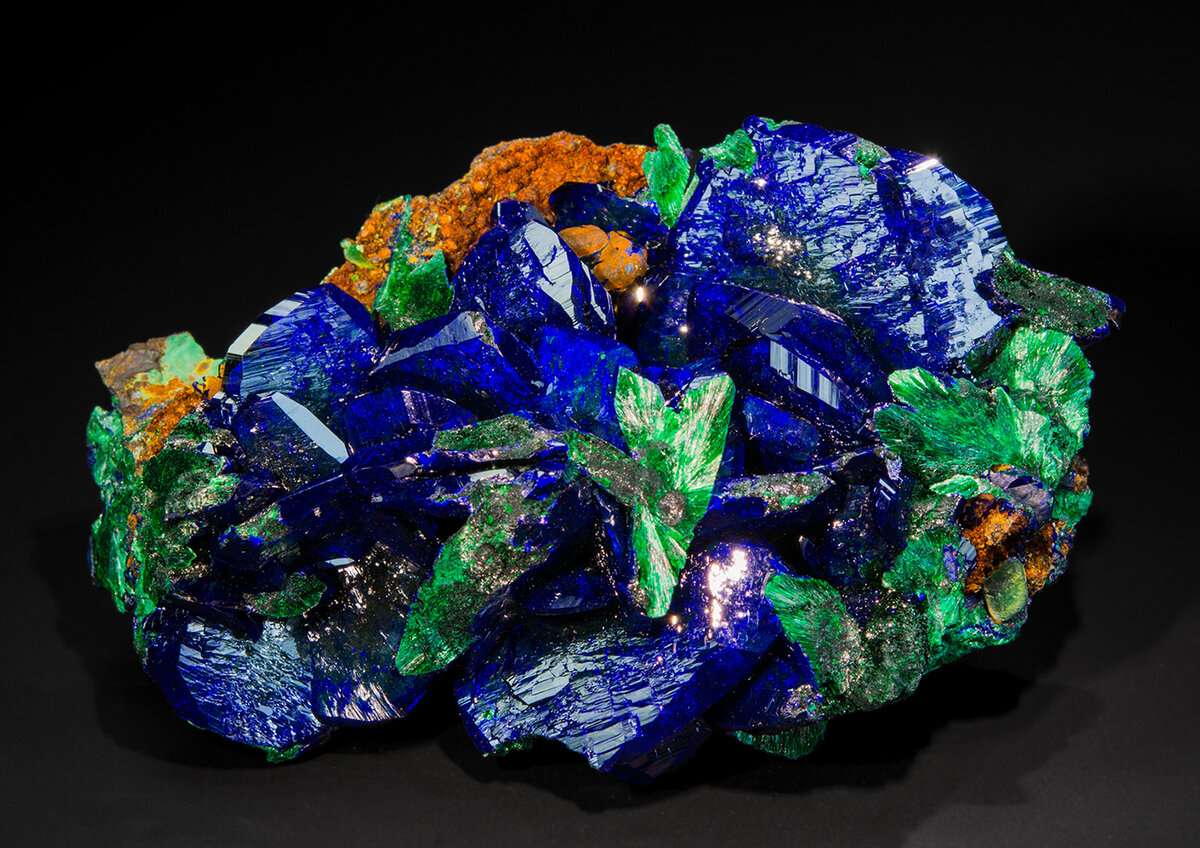
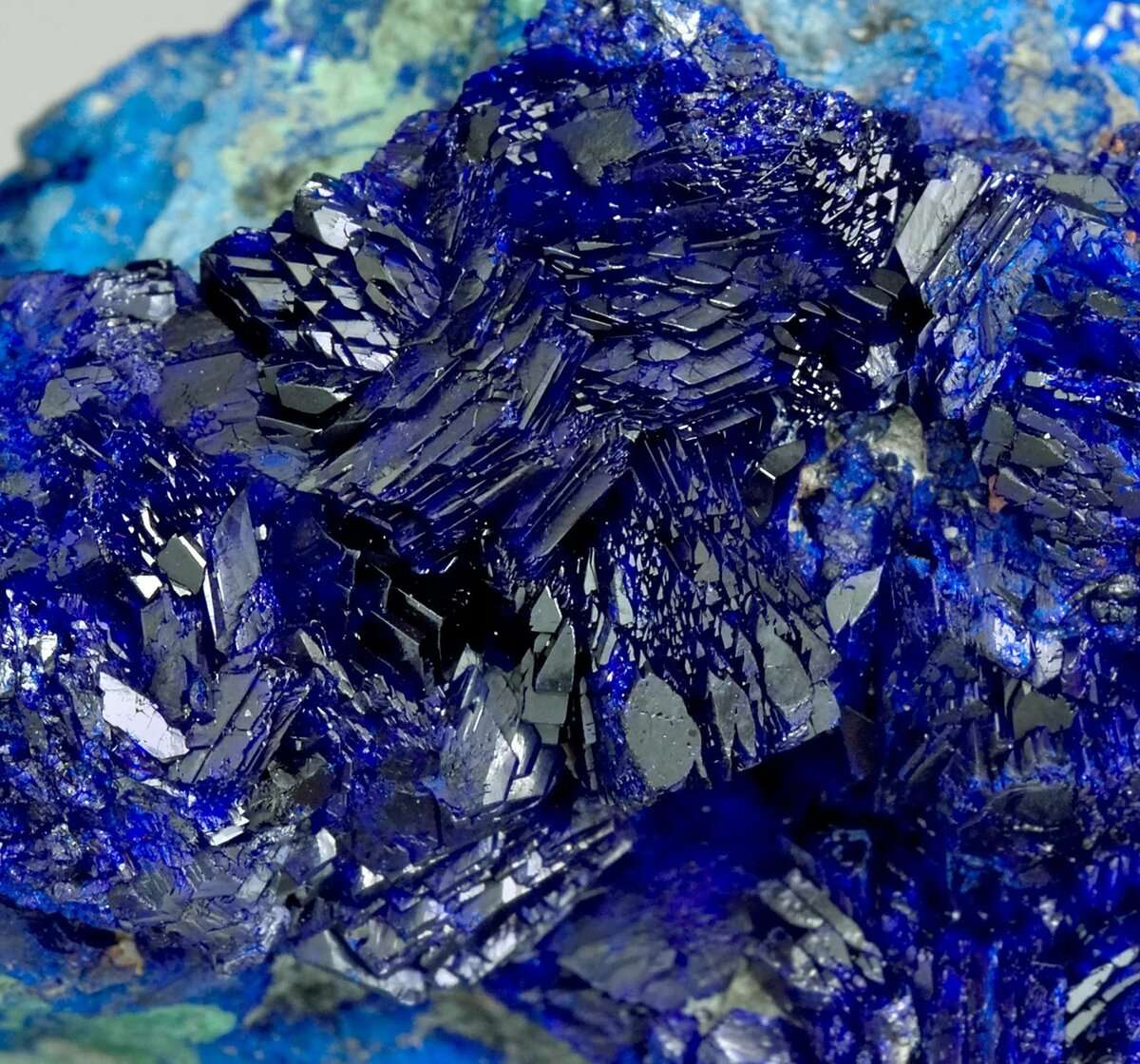
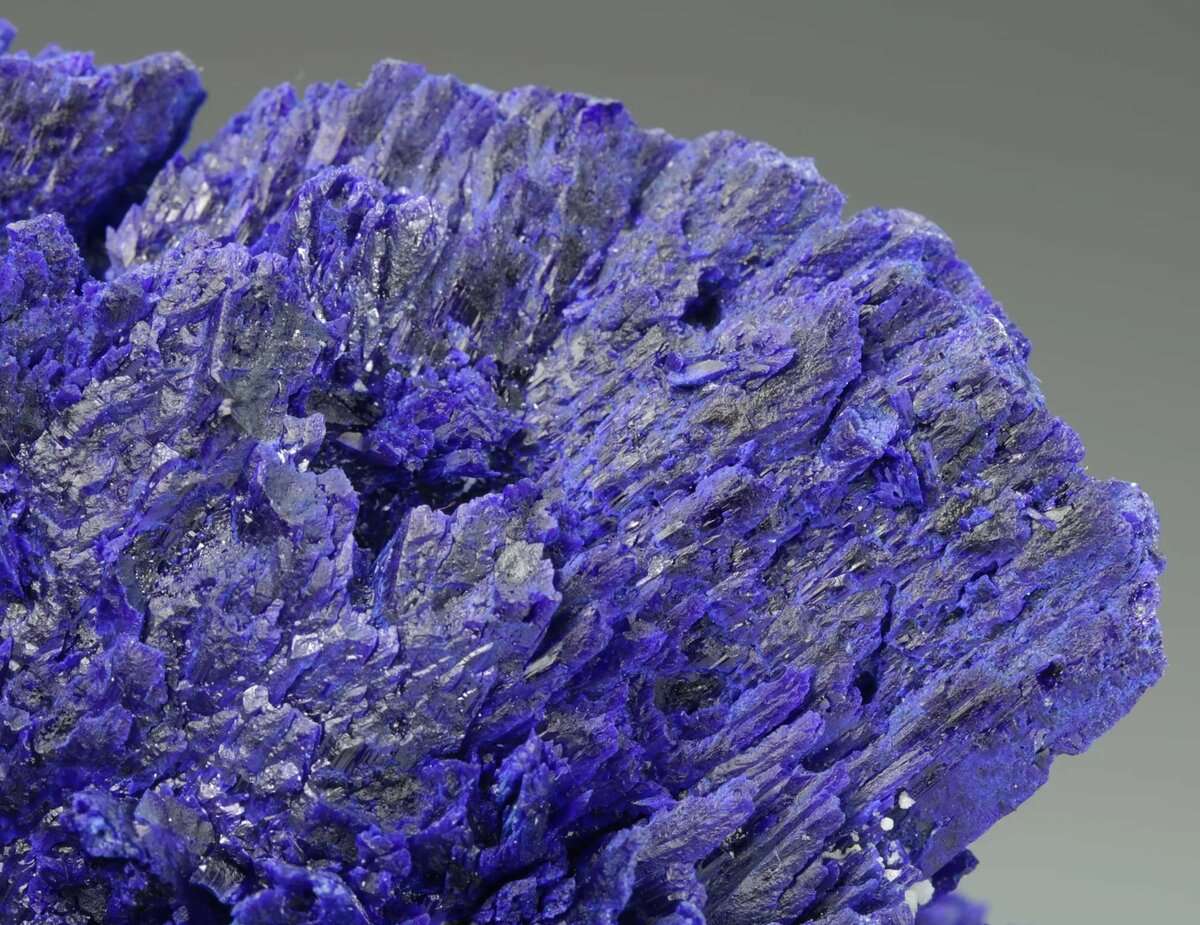
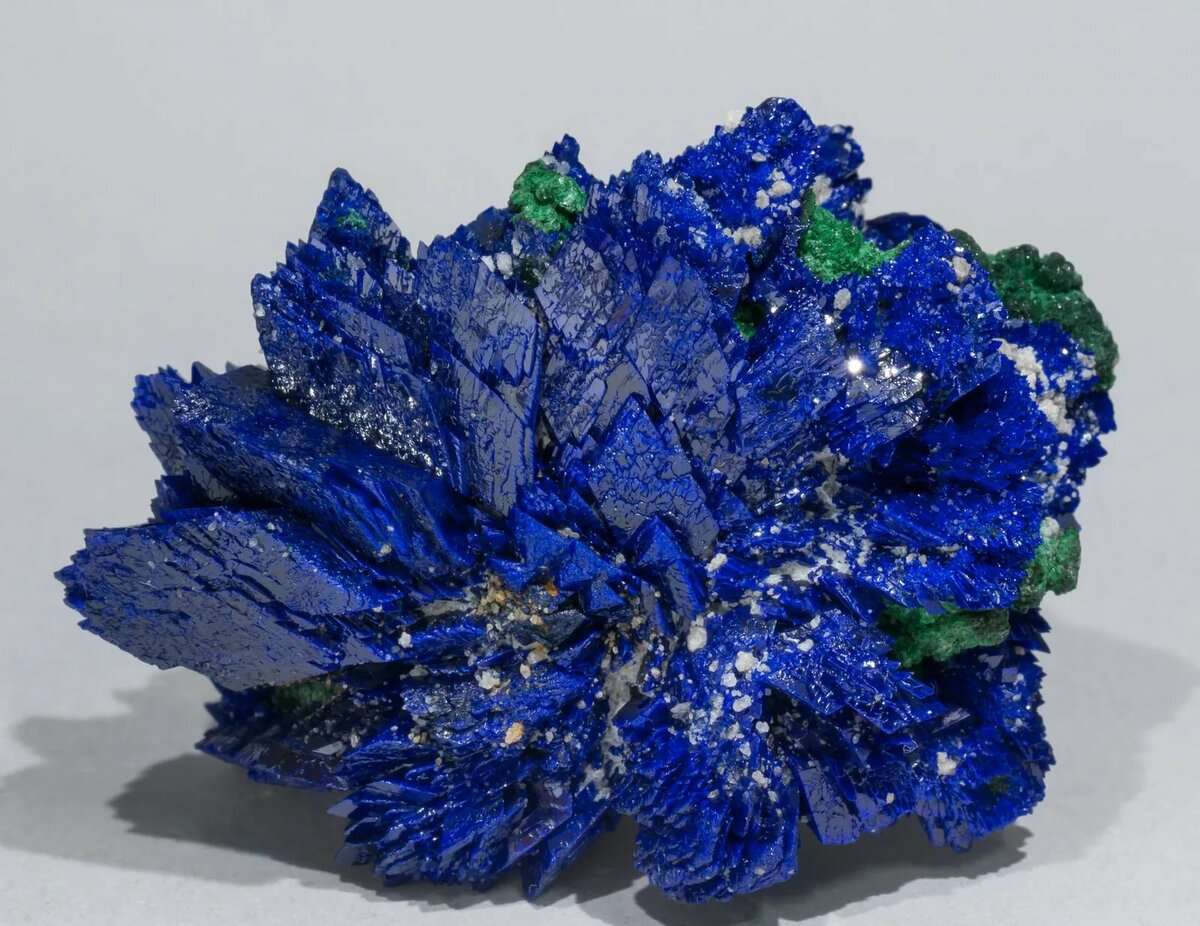
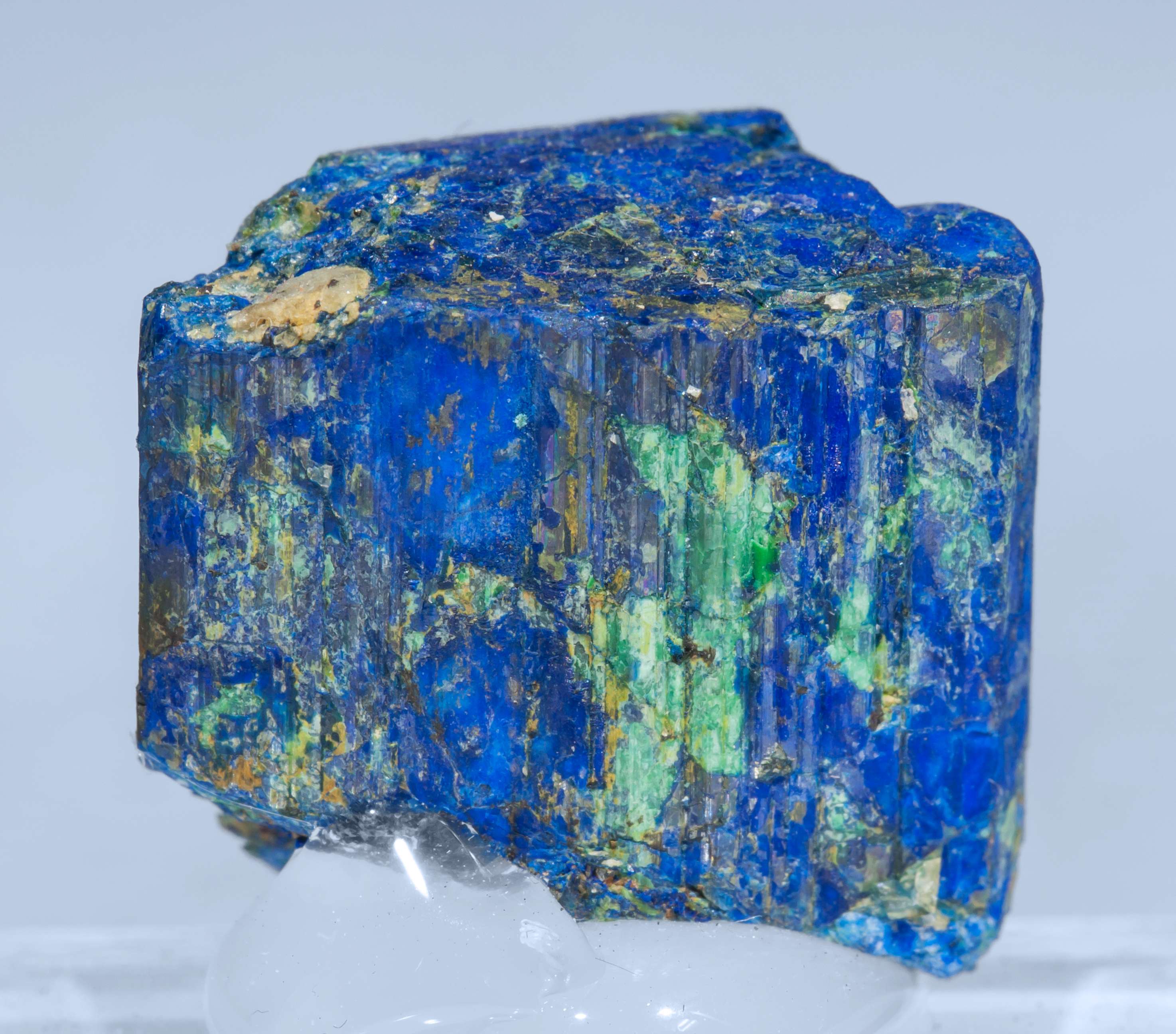
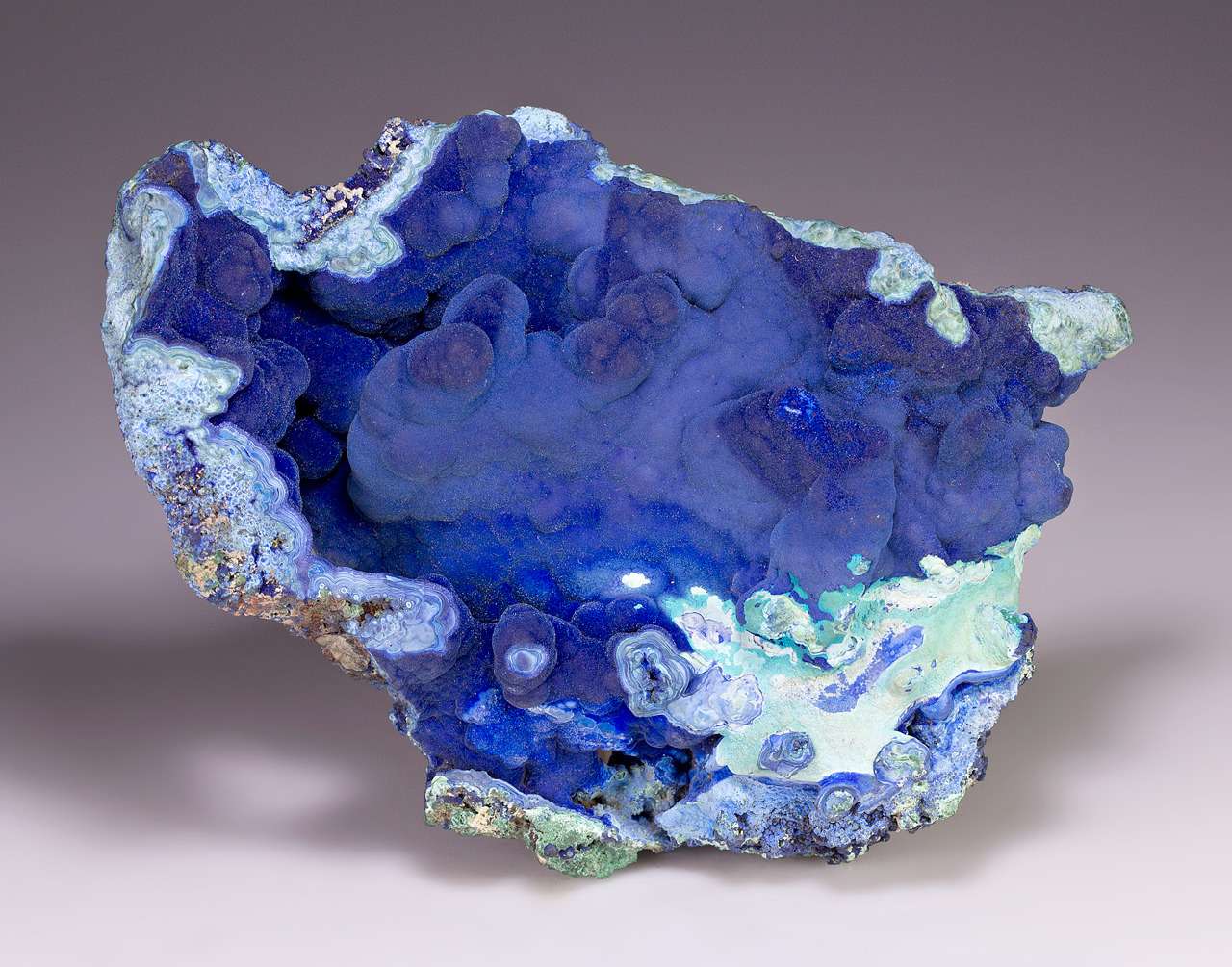
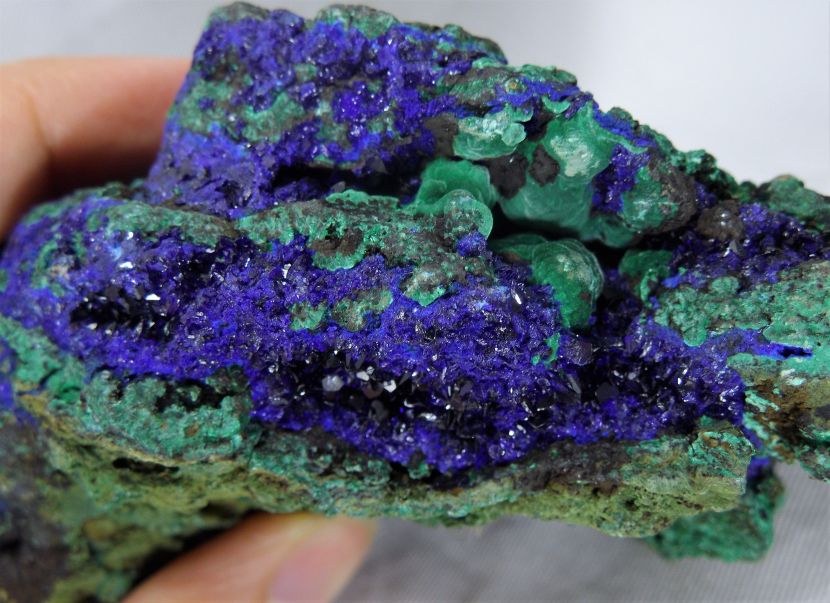
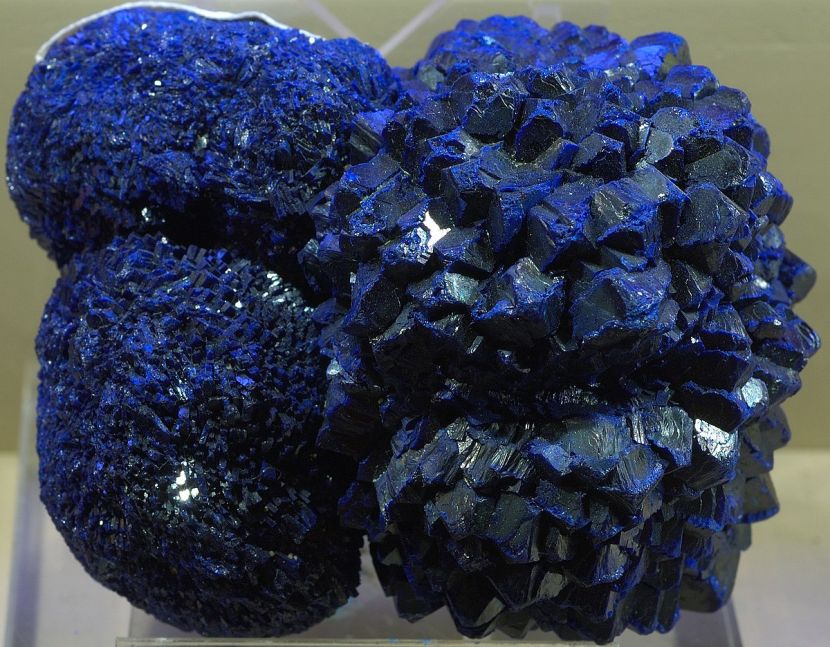
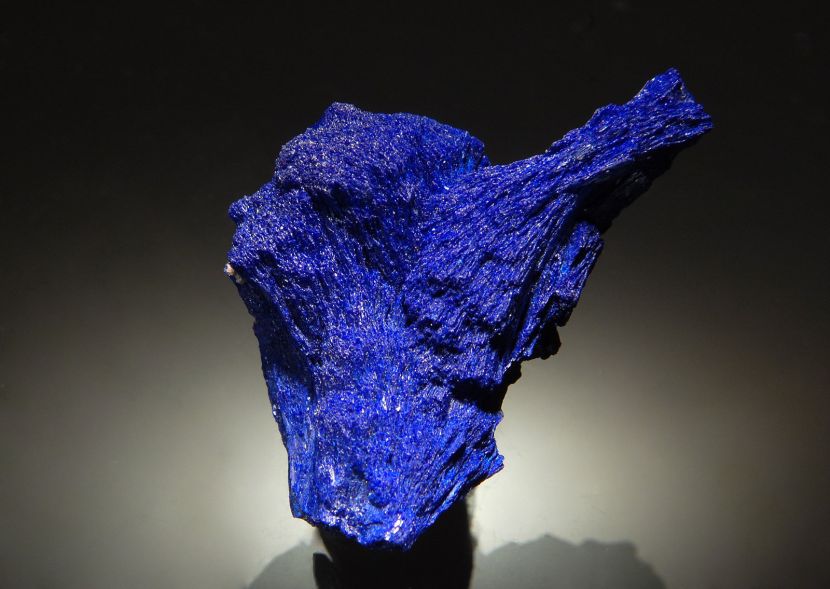
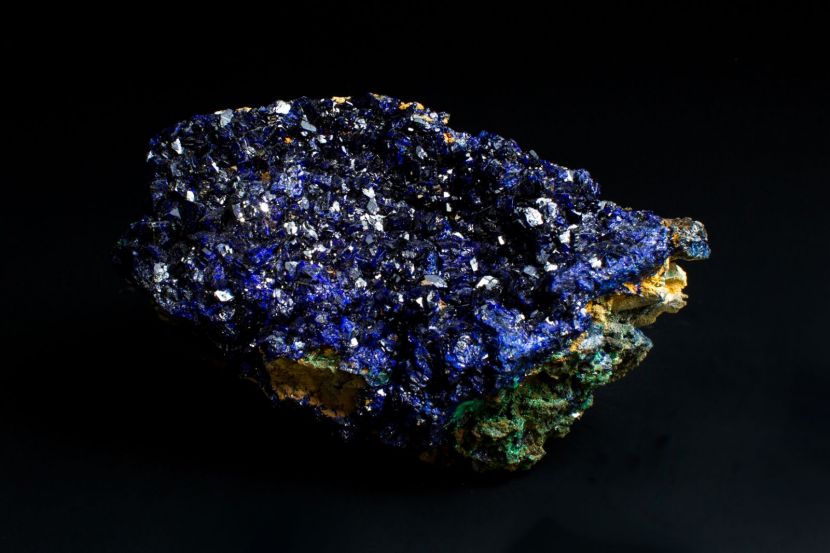
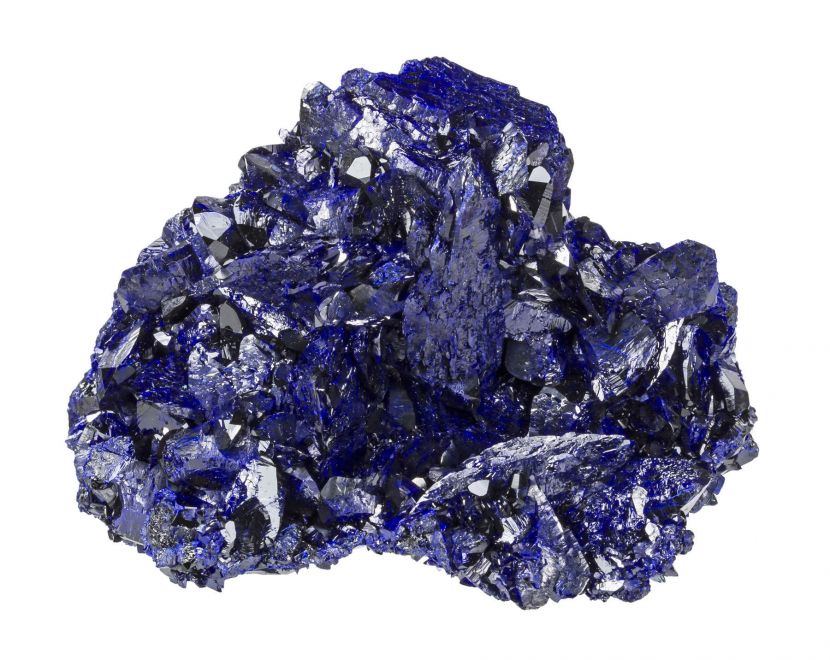
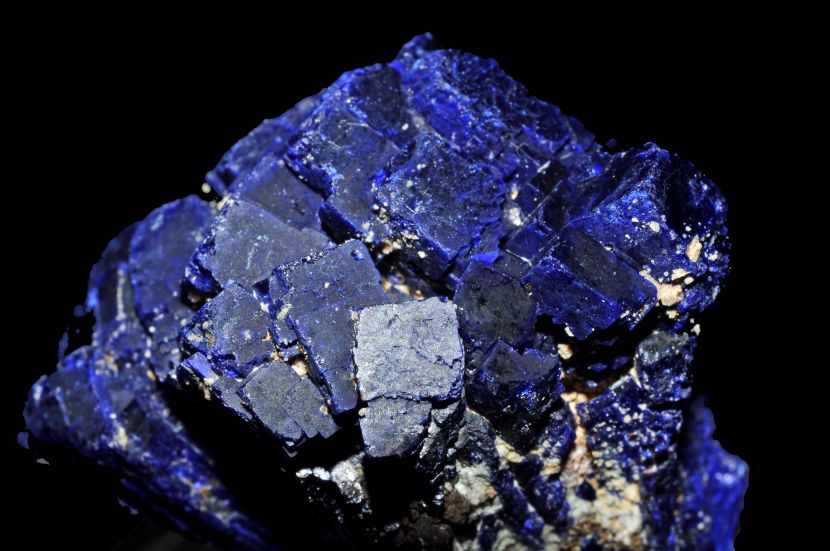
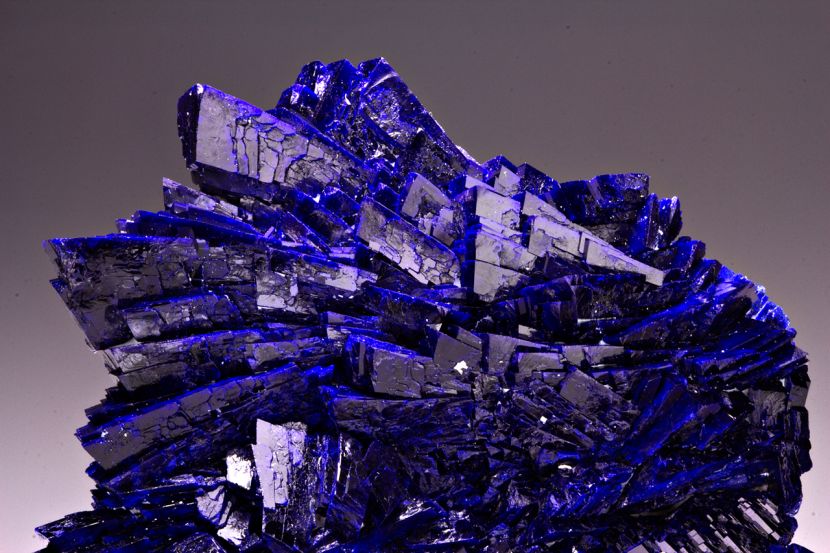
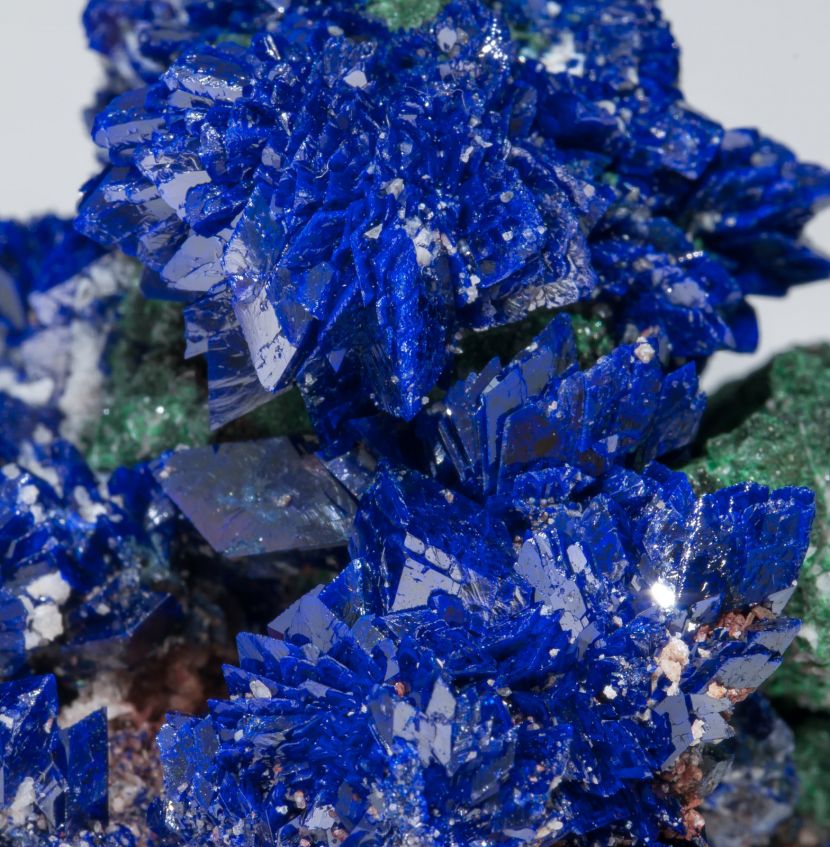
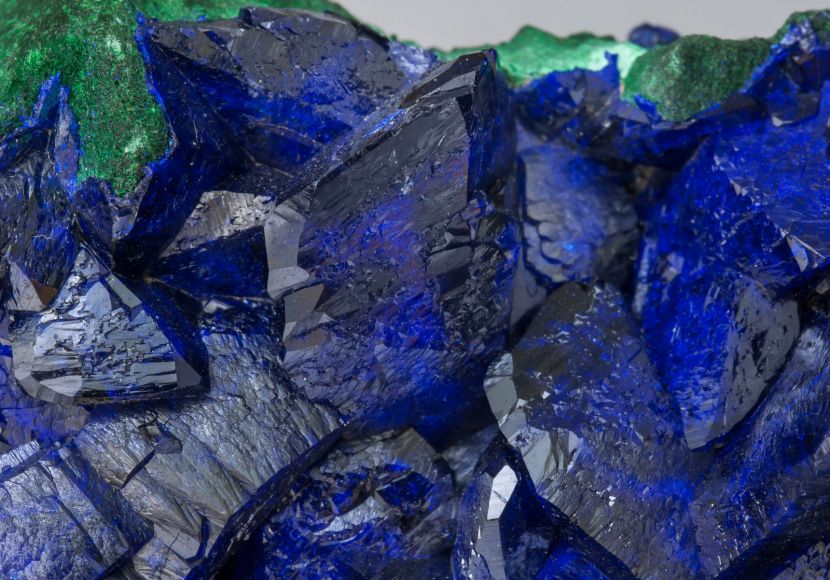
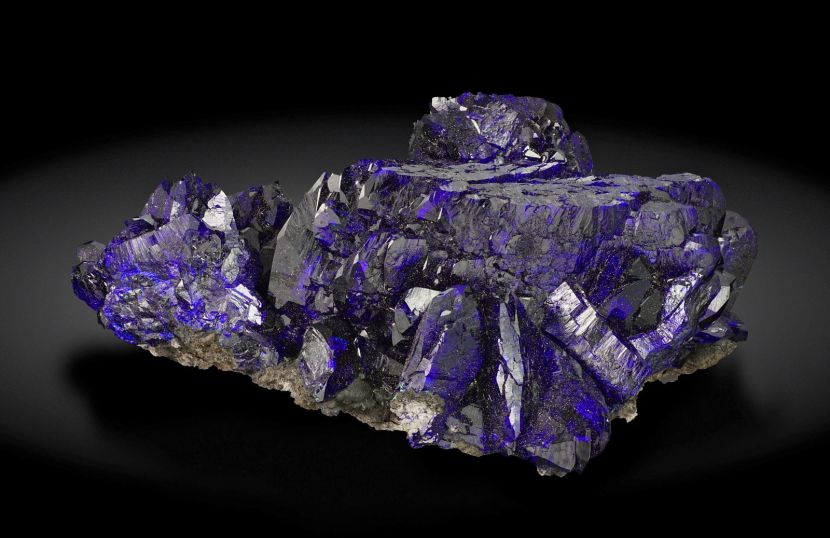
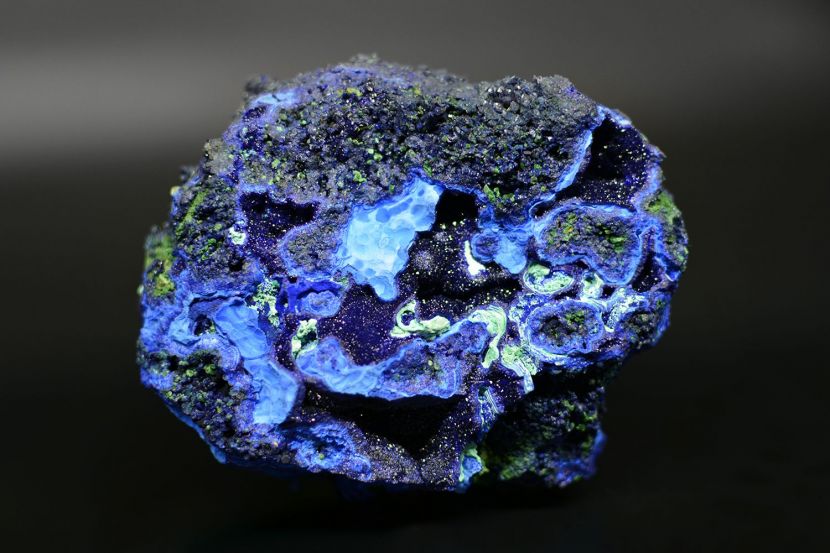
Azurite is a very soft mineral, its hardness is only from 3.5 to 4, its luster is glassy. The fracture is conchoidal. Slightly translucent. The color can be azure blue, dark blue or greenish purple. The density of azurite is 3.5-4 g/cm3. The syngony is monoclinic.
Chemical properties and composition
Azurite is the main copper carbonate.
When exposed to hydrochloric acid, it releases carbon dioxide.When heated to 220°C, they decompose with the release of carbon dioxide and water. In this case, black copper oxide CuO is formed.
The chemical formula is Cu3(CO3)2(OH)2.
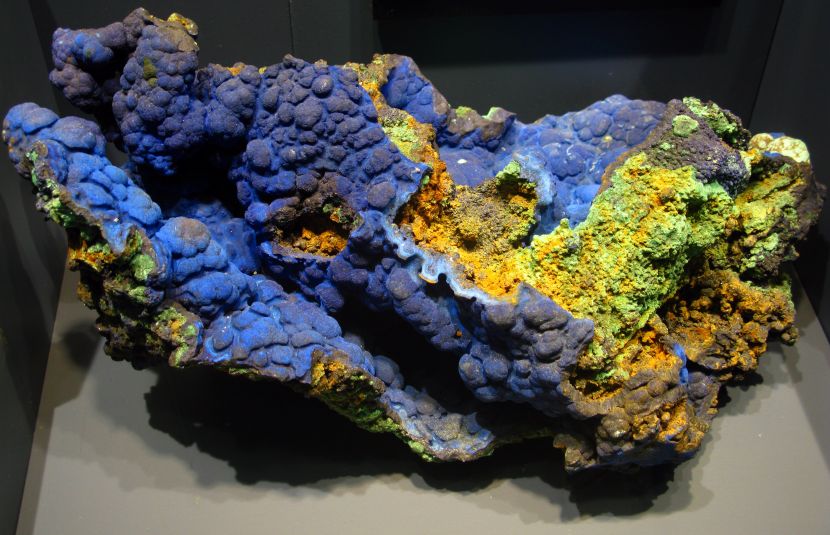
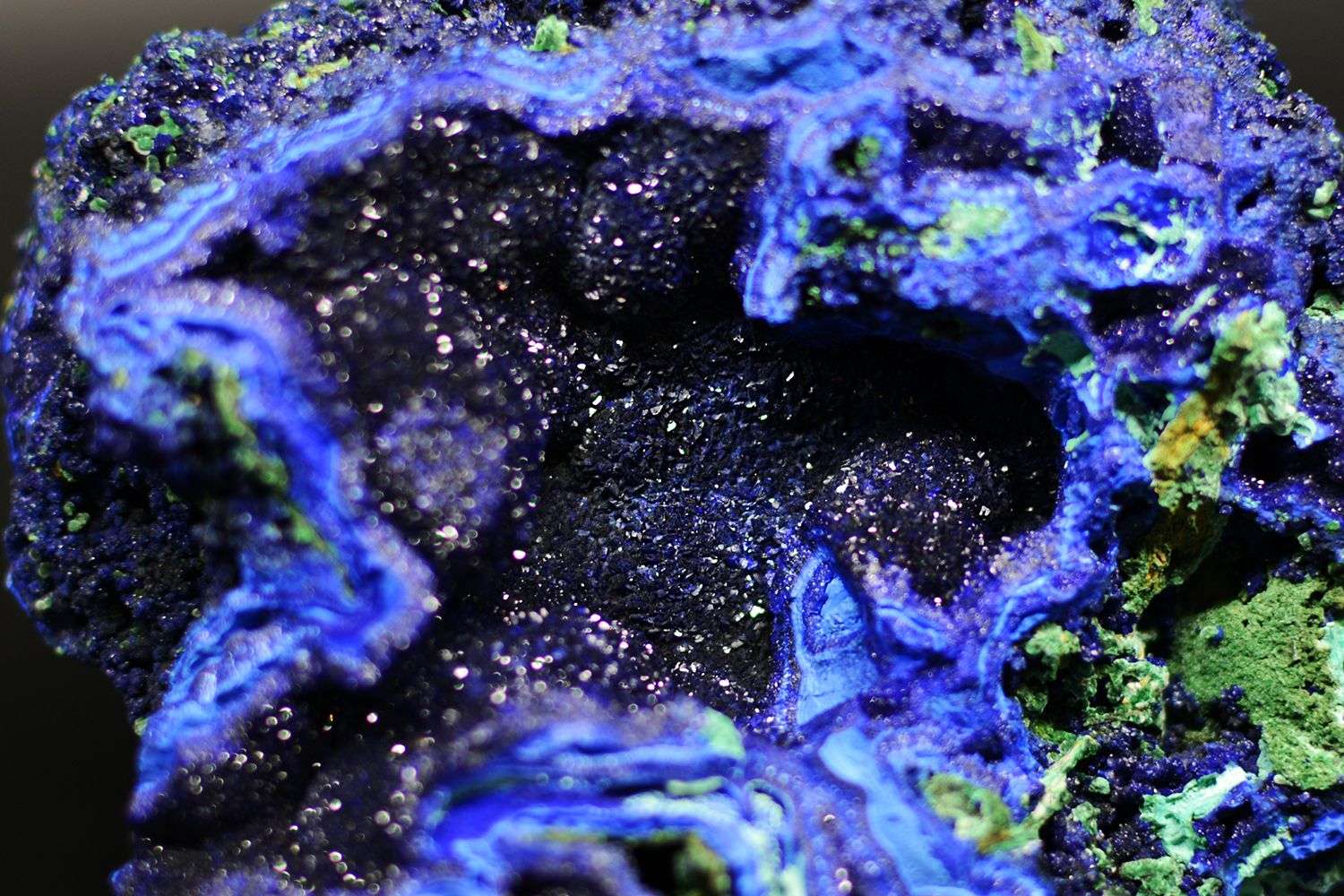
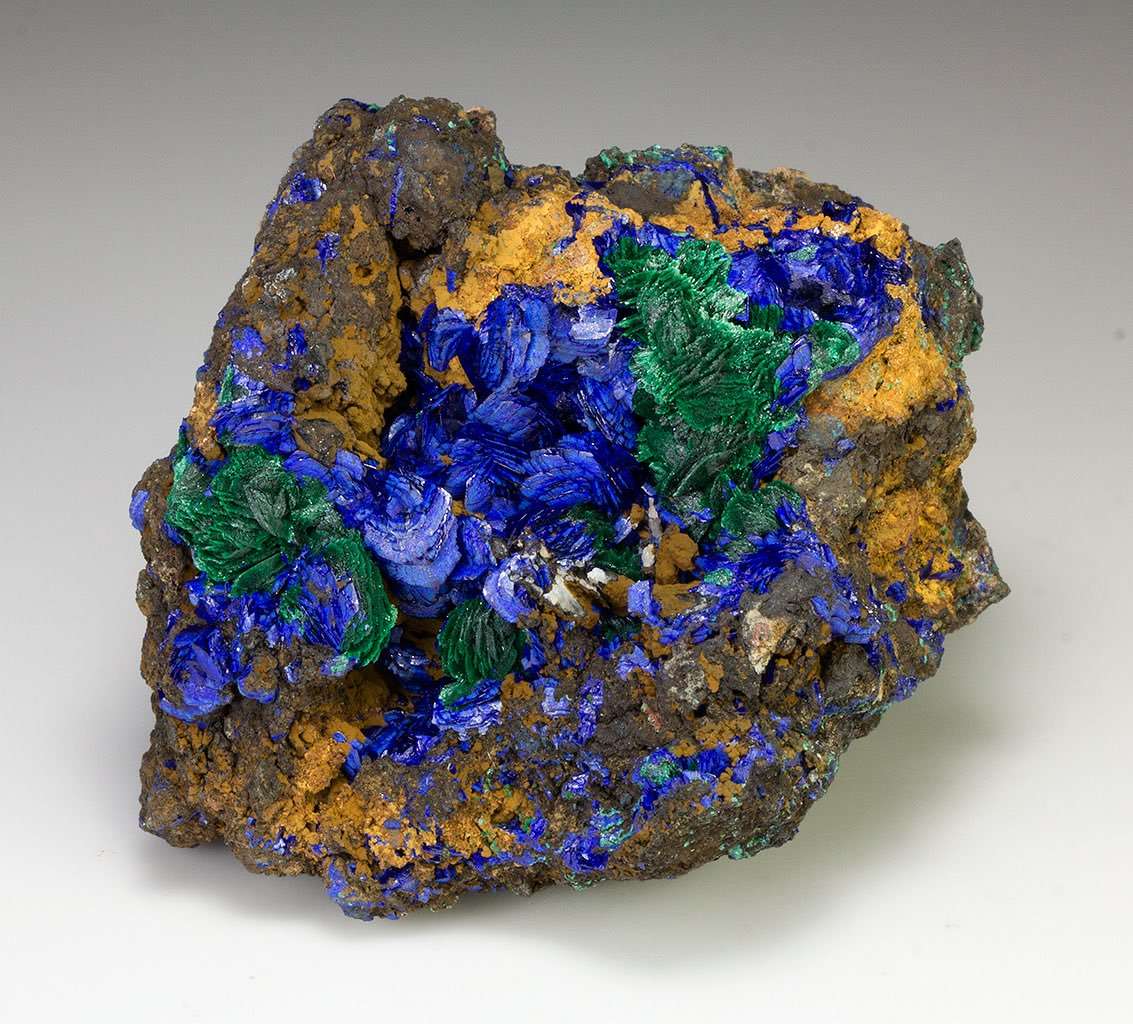
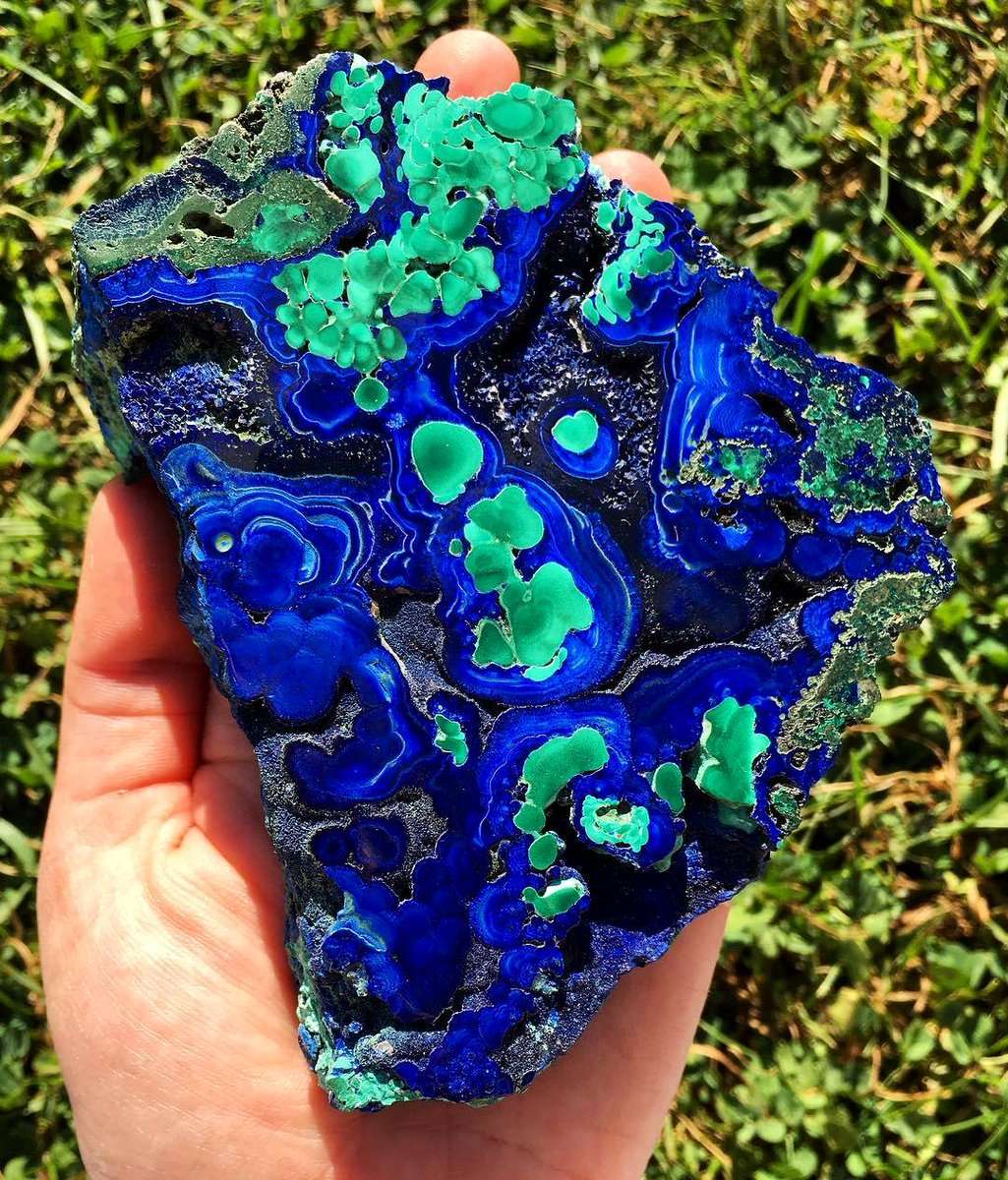
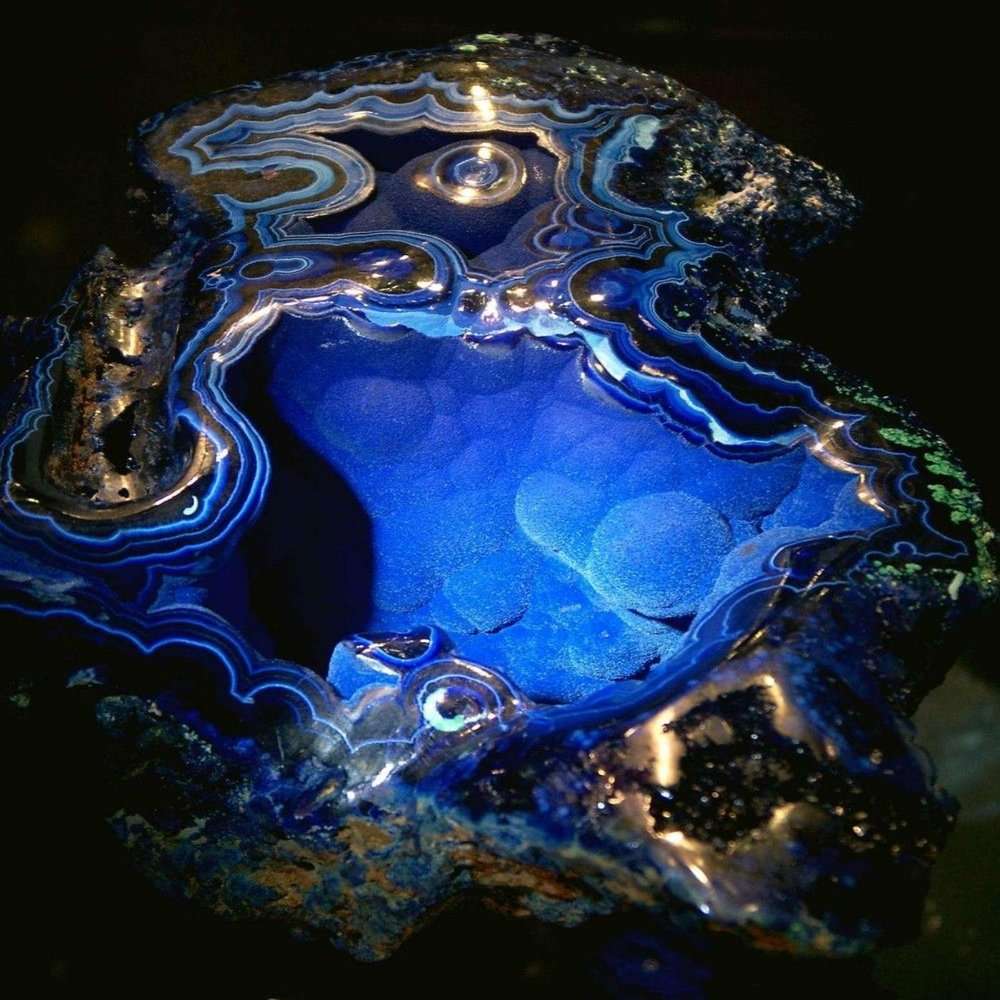
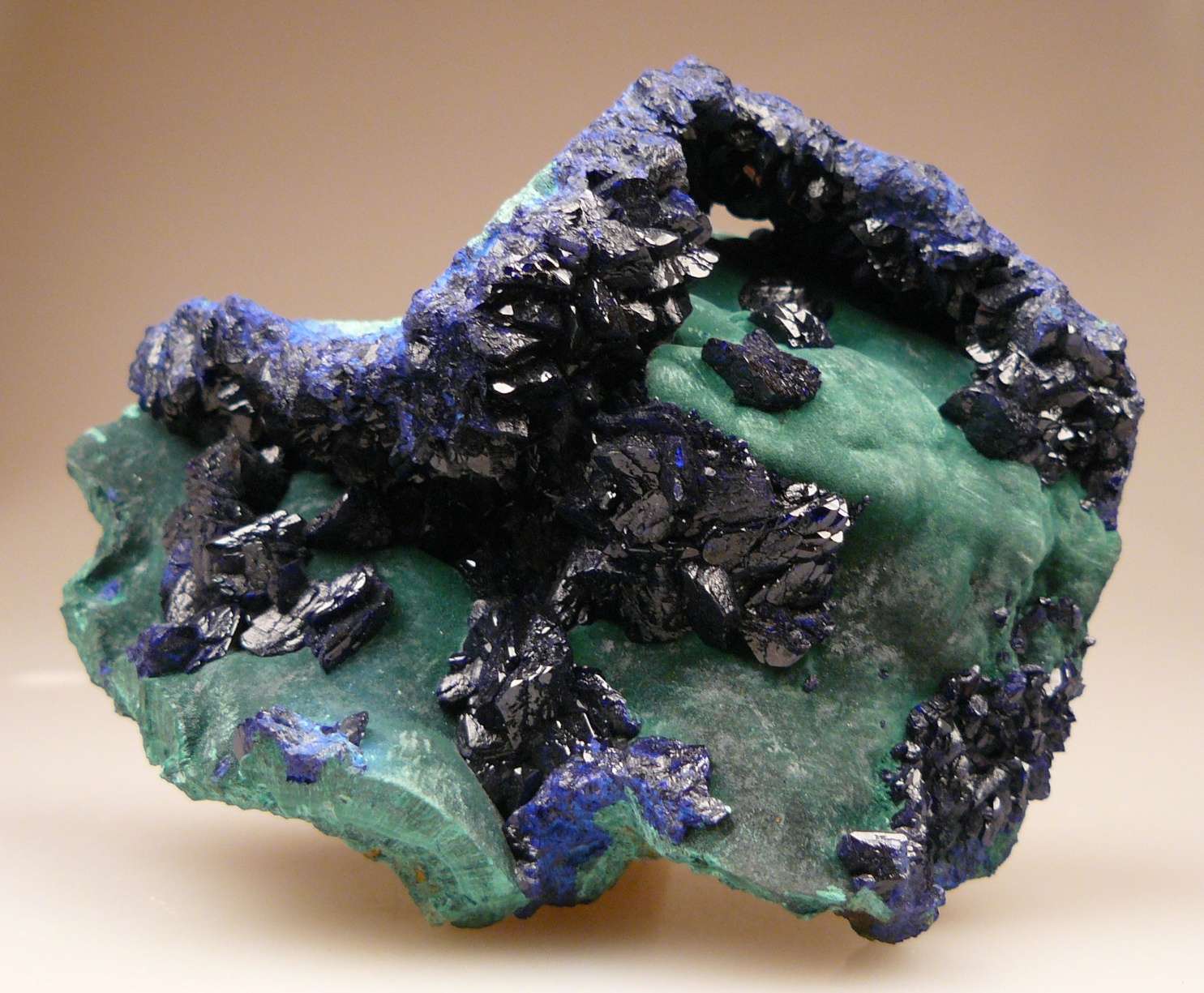
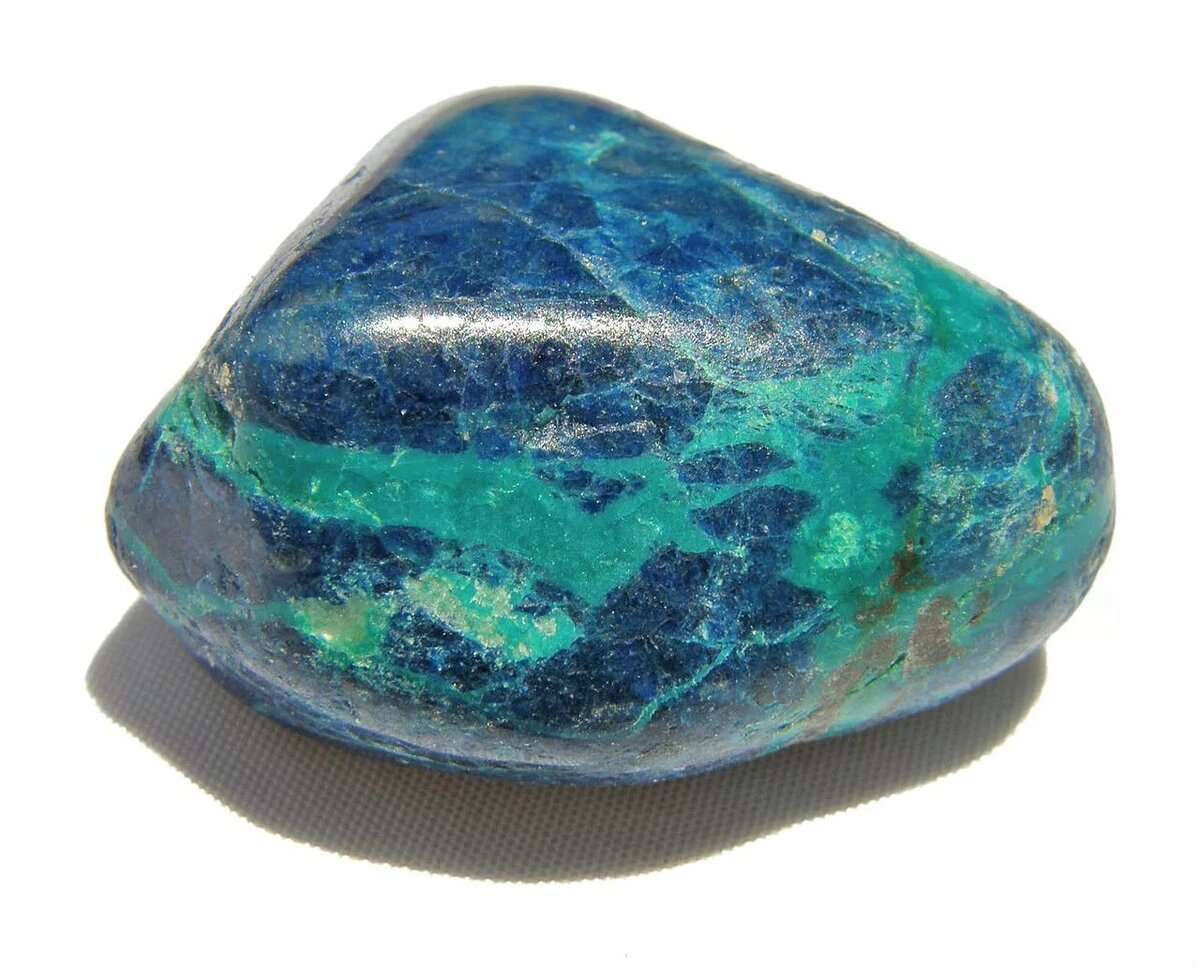
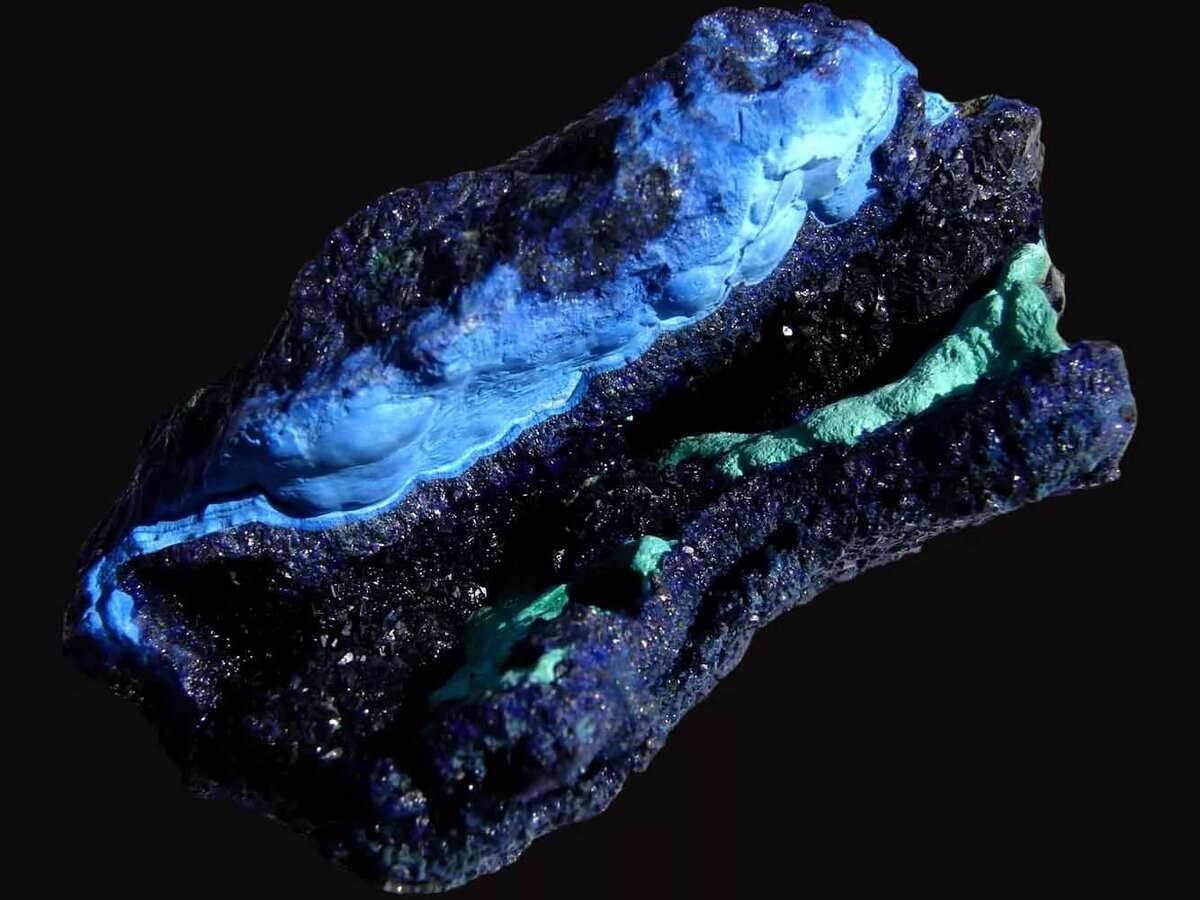
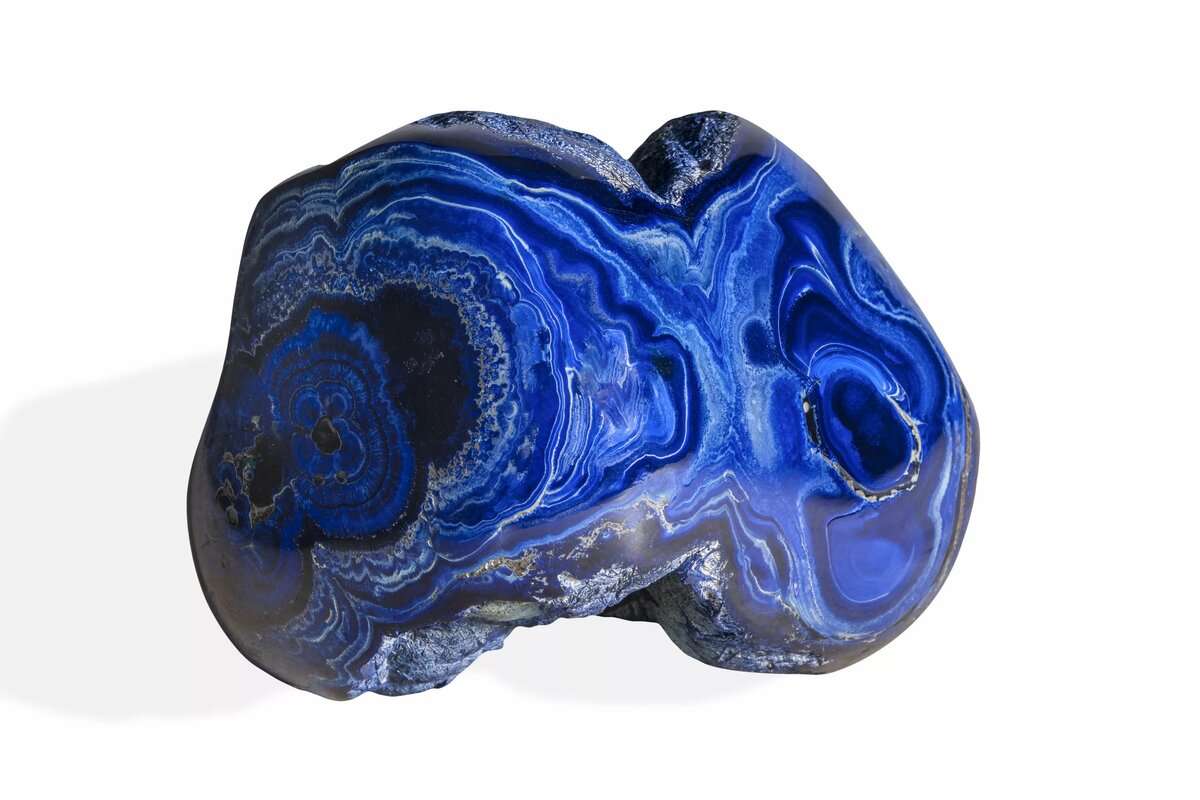
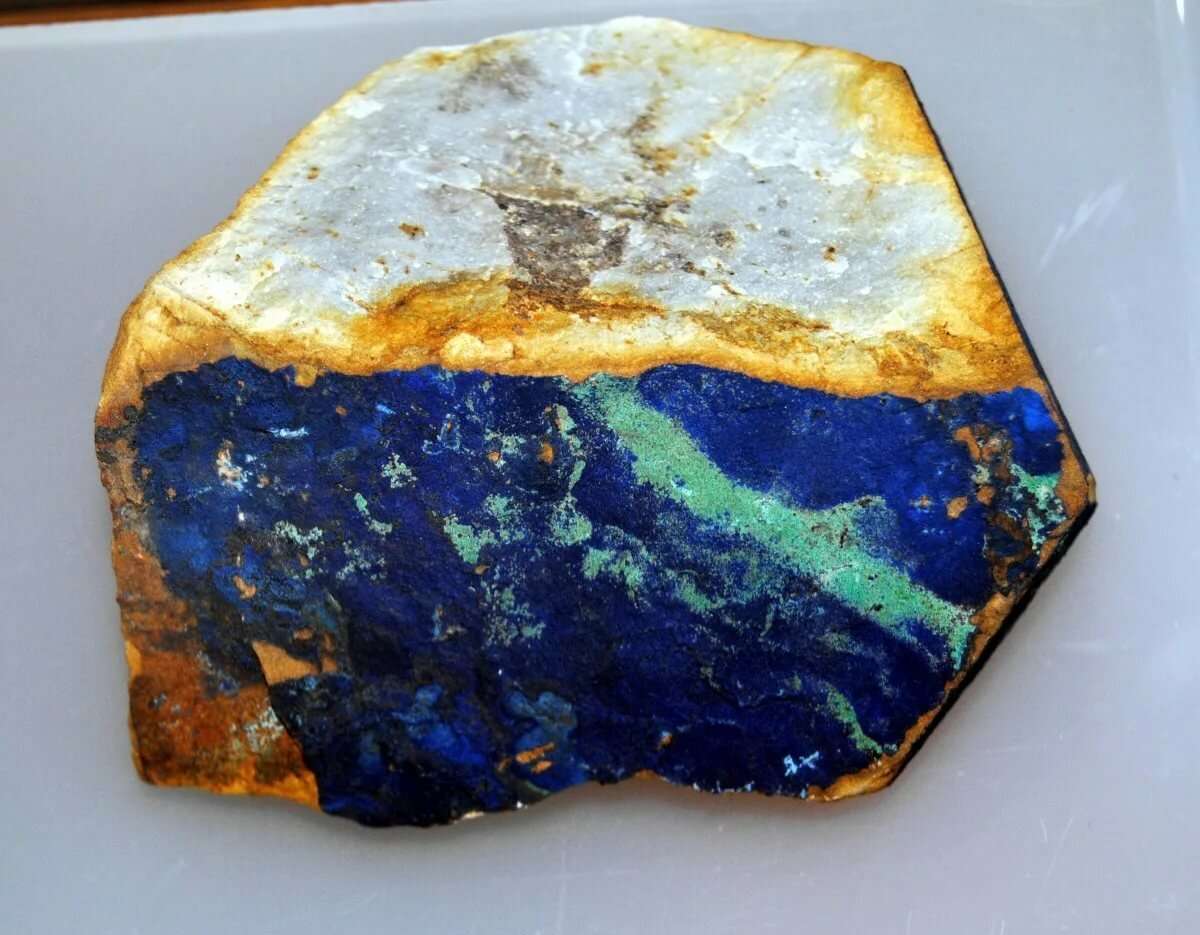
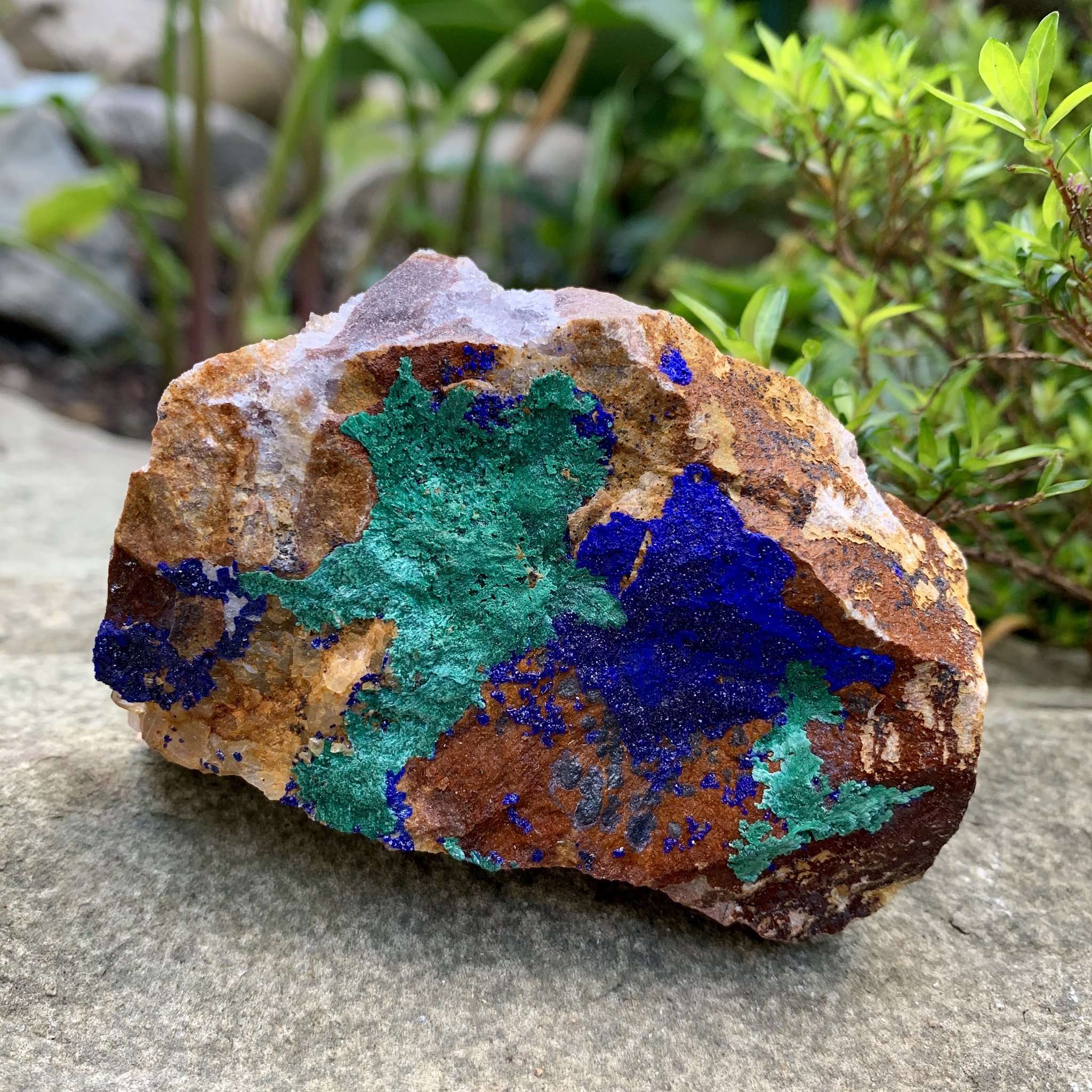
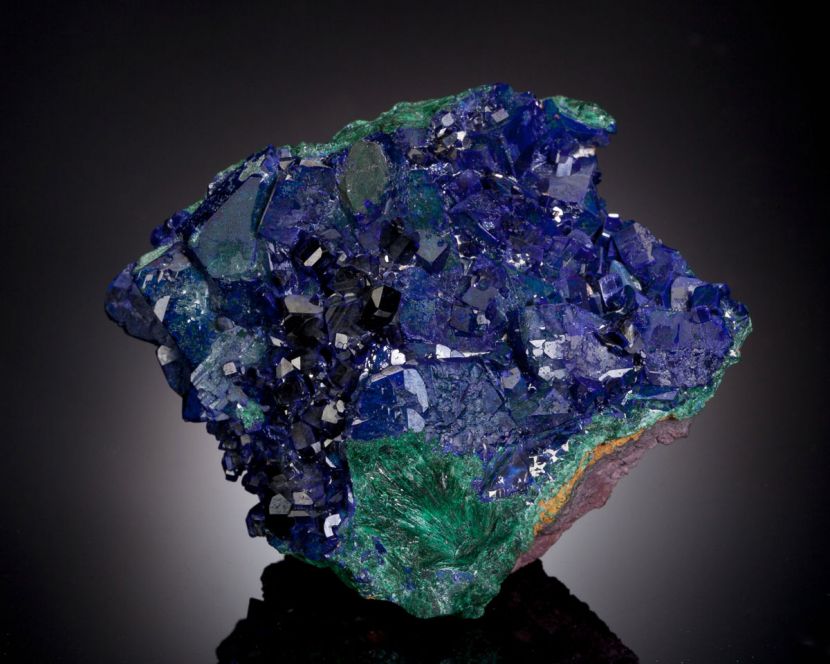
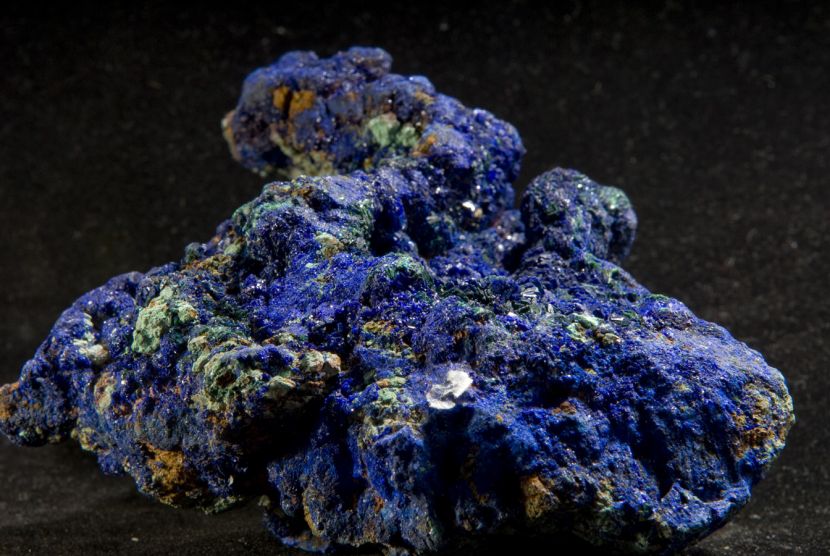
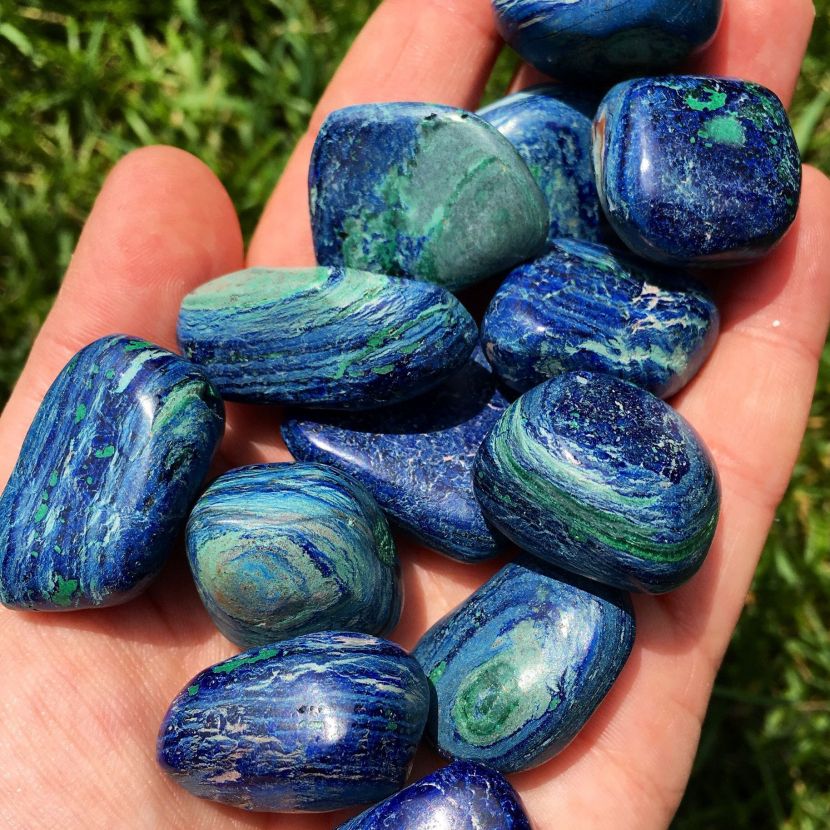
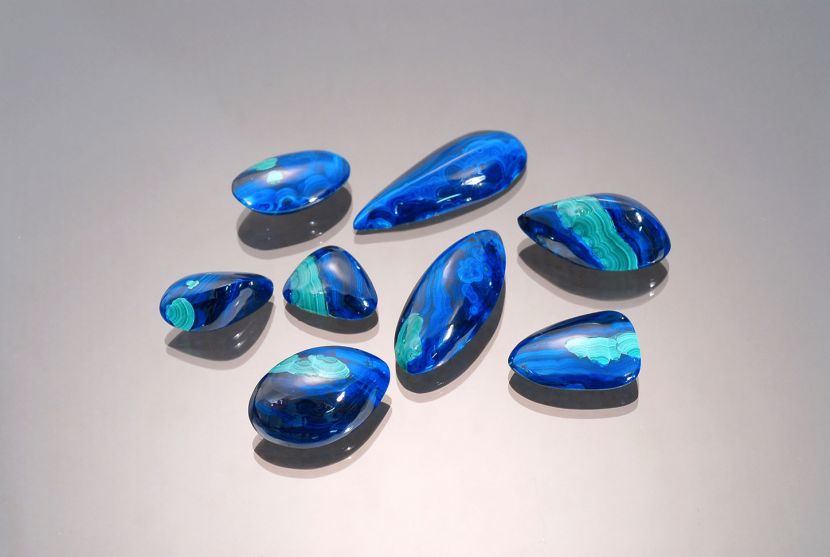
According to the chemical composition, azurite is very close to malachite Cu2CO3(OH)2, so it easily turns into it. Often both of these minerals are found in the same stone, forming unusually beautiful patterns of alternating green and bright blue layers and rings.
Varieties
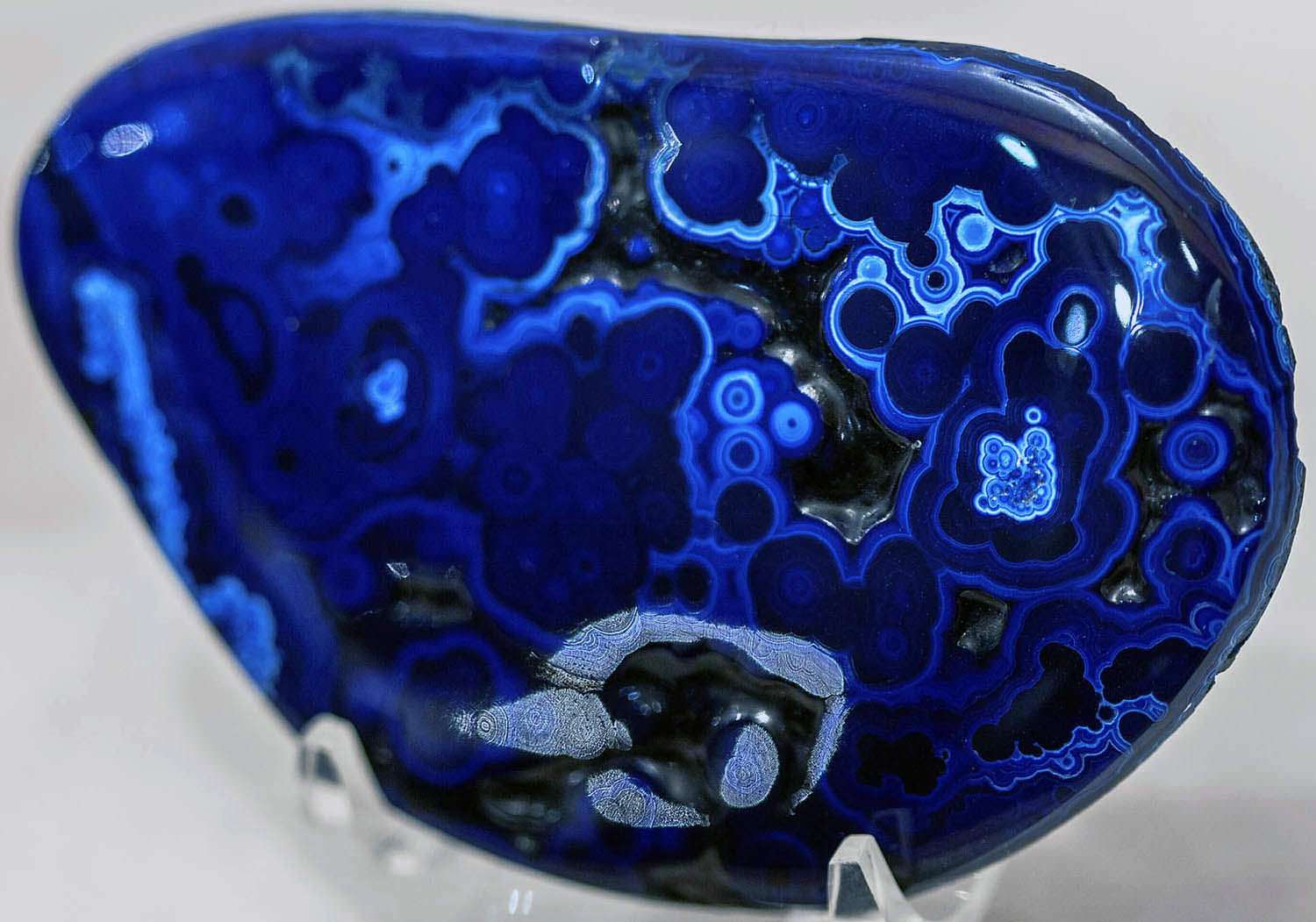
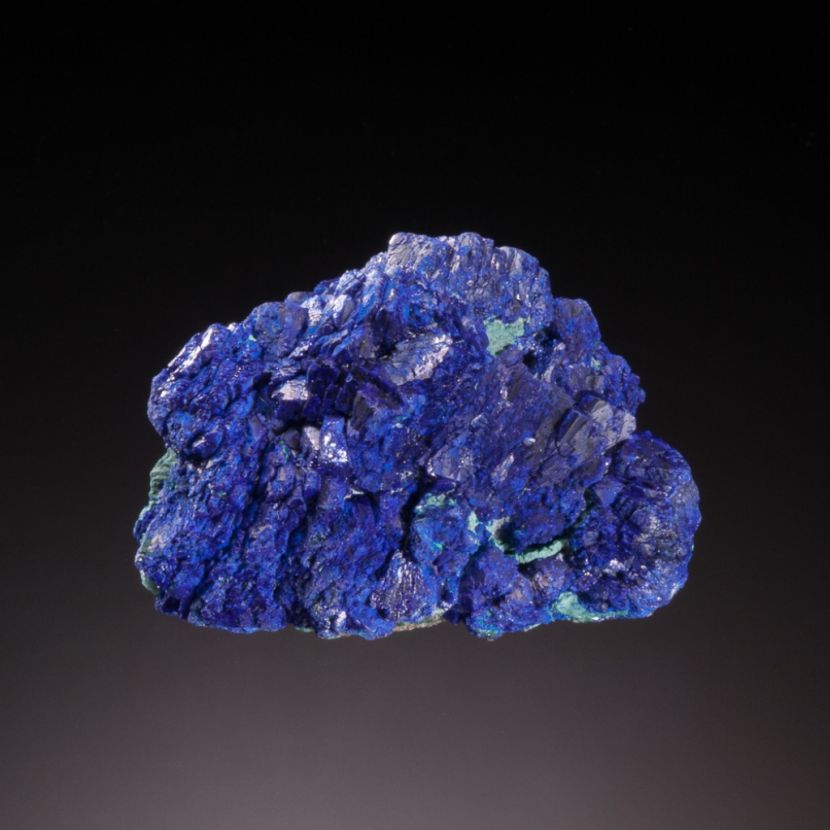
Usually azurites are divided by color. There are stones of deep blue, blue-blue, bluish-green, less often blue-blue. Sometimes it can meet onyx-like varieties from alternating layers of different colors, but unlike it, they are not so contrasting.
Minerals, in which azurite is included with other copper-containing stones, have independent names:
- azuromalachite - the most common combination with green malachite, there are intergrowths of crystals, amorphous nodules and similar in structure to onyx;
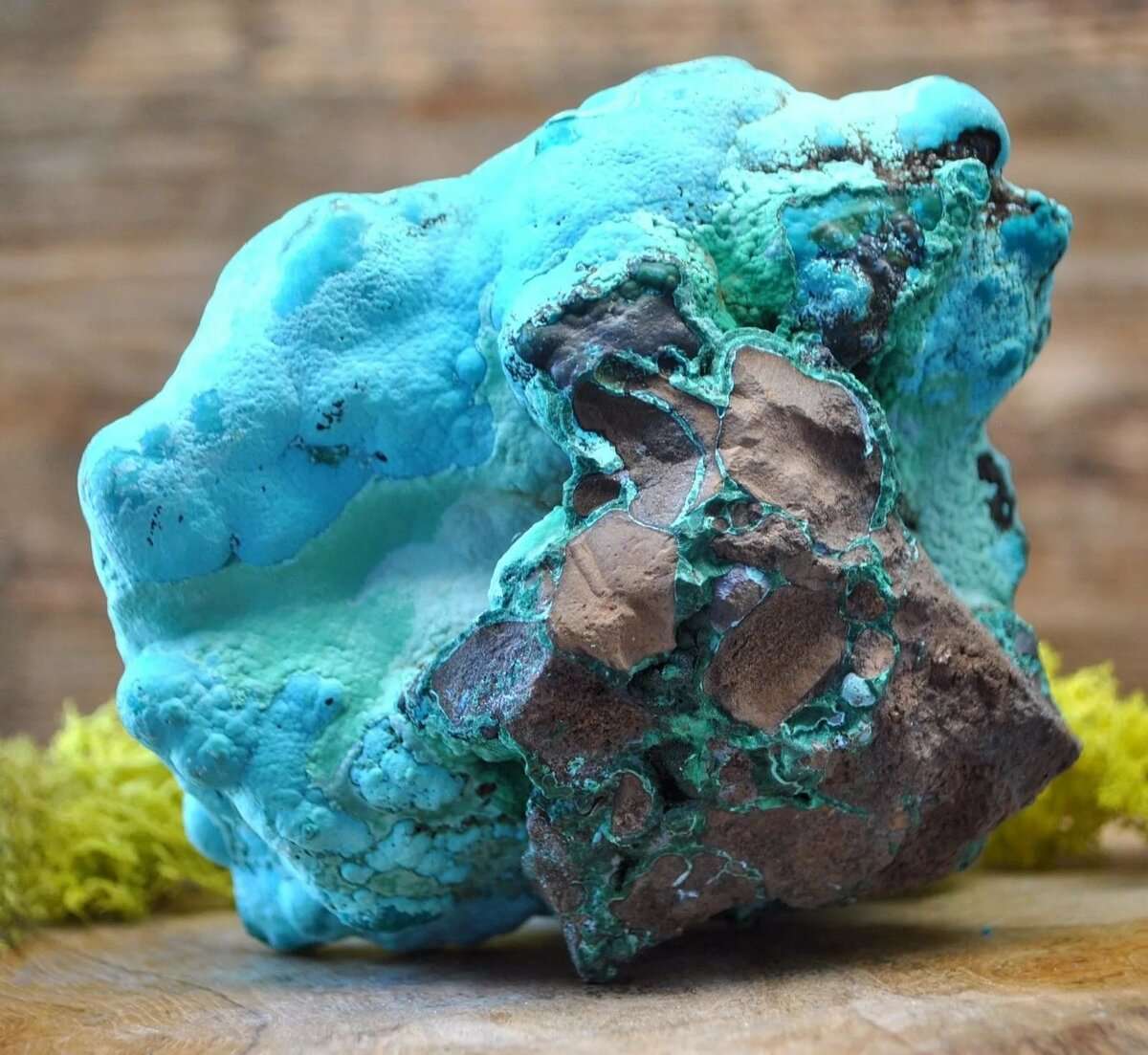
- blue copper is a very bright and shiny mixture of azurite and chrysocolla.
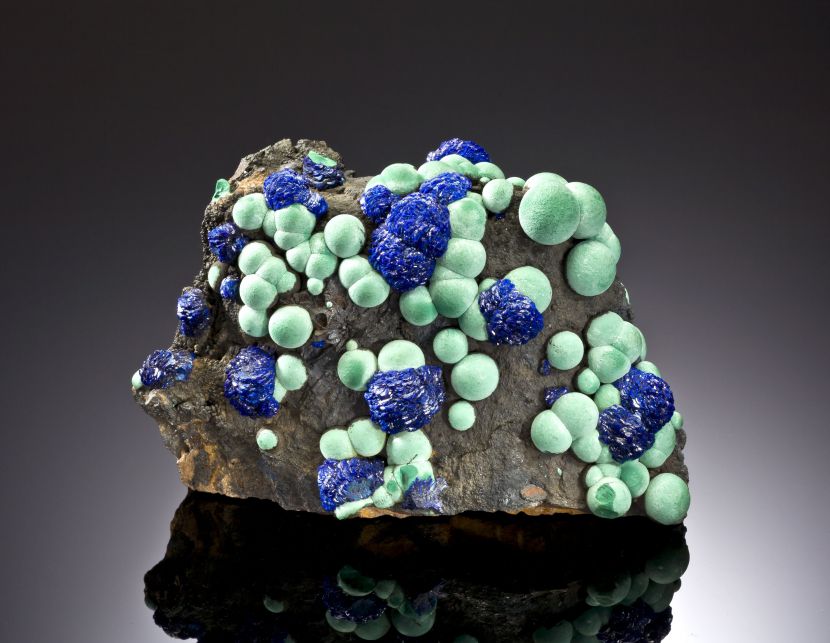
fakes
Azurite is a very inexpensive stone, products with it are forged quite rarely. The exception is collectibles. To distinguish real azurite from a painted fake, you can scratch it in an inconspicuous place. The color of the line will be the same saturated, and the fake will be very different in color. Glass imitation will not be scratched at all.
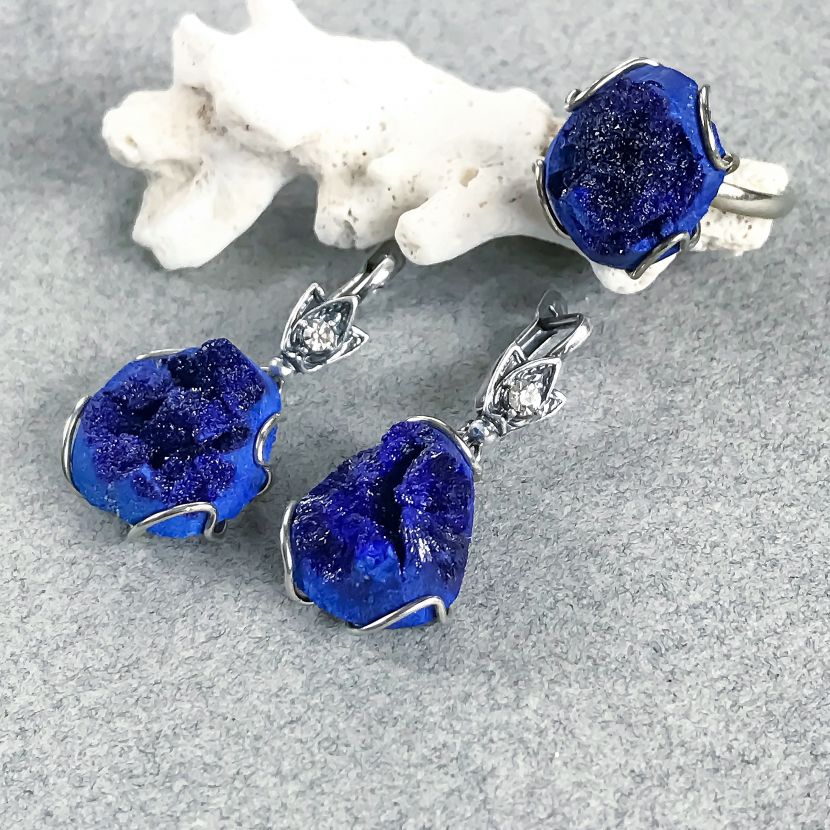
A reliable but pointless way is to lower the stone into hydrochloric acid. In it, azurite will dissolve with a hiss, coloring the solution blue.
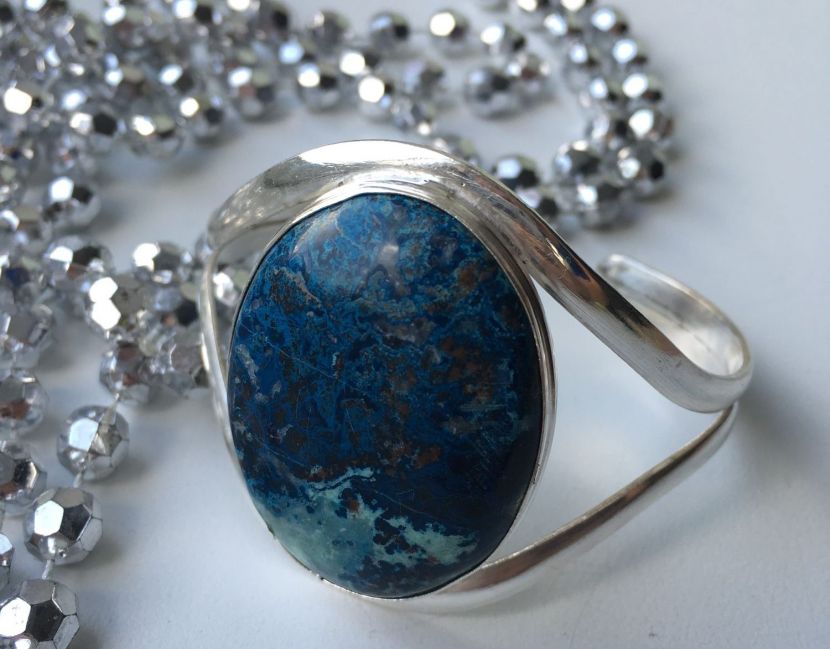
The easiest way is to carefully examine the stone, preferably under a magnifying glass. On a real stone, stripes or rings are visible that create a unique pattern, while on a fake they are monotonous or completely absent.
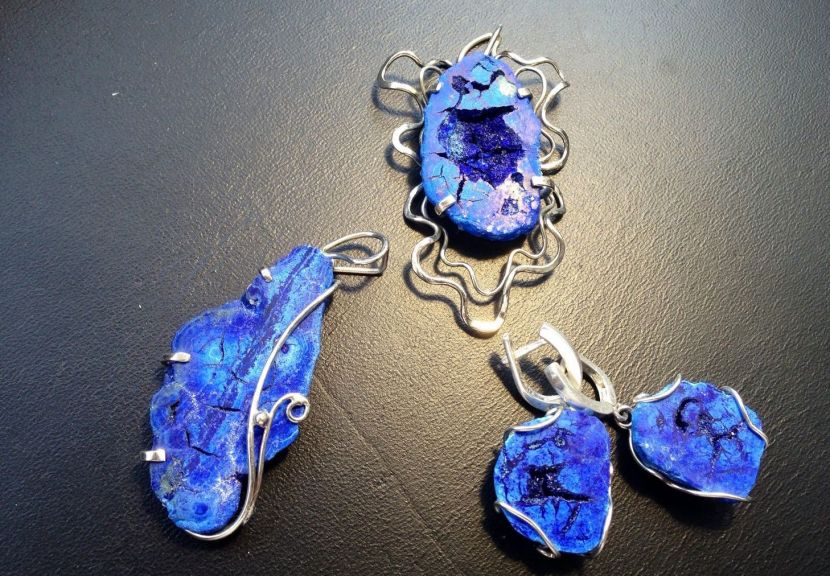
magical properties
Azurite will give you the ability to easily establish contact with people around you and a good mood, so you should wear jewelry with it for an exam, an interview.
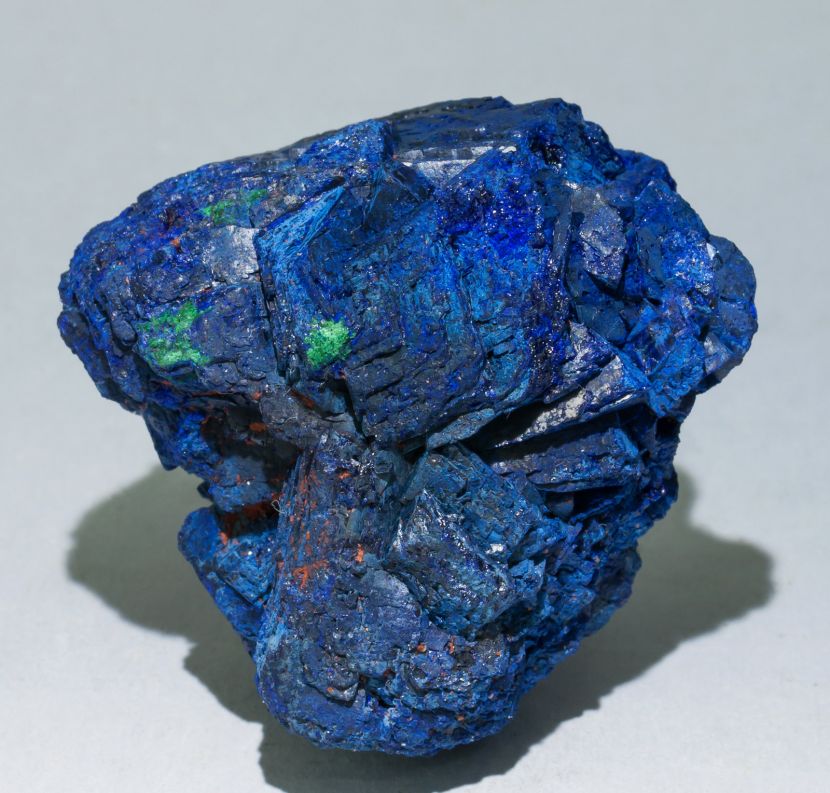
Since ancient times, the magical properties of azurite have been valued by priests and shamans, whom he helped to enter into a trance and communicate with otherworldly forces.
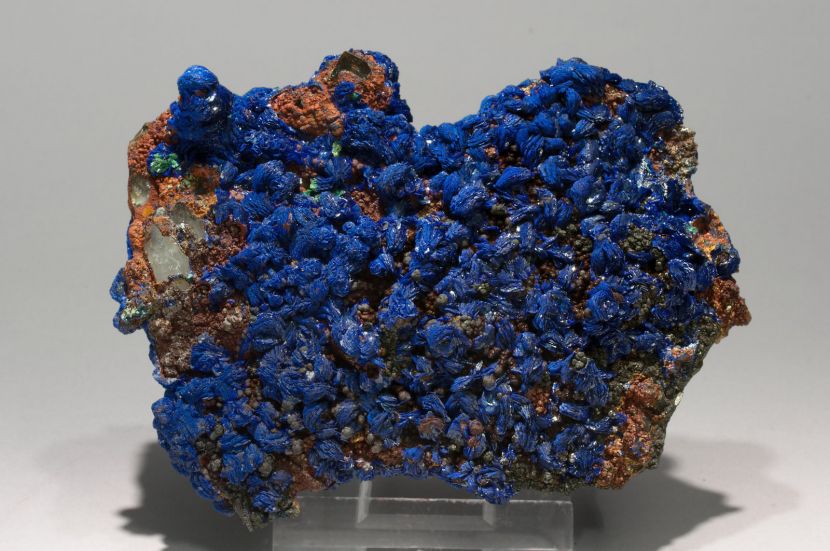
Azurite will teach you to understand your inner world and reveal your intellectual potential, it can even open your third eye, but it requires the efforts of the person himself.
Medicinal properties
Azurite helps with epilepsy, neurosis, hysteria and melancholy. It cleanses the blood of toxins, helps to heal bones in case of fractures. In order for azurite to show its healing properties, it is recommended not only to apply it to a sore spot, but to meditate on it, imagining the healing effect of the stone.
Zodiac signs
Azurite is ideal for those born under the sign of Libra and Aquarius. He will give Libra good luck, and Aquarius - wisdom and peace of mind.
Good for Sagittarius, who will be rewarded with self-control and self-confidence, and Pisces will teach patience and optimism.
It is not suitable only for Gemini, and other signs can wear it without fear.
Compatibility
It is well compatible with emerald, alexandrite, pearls, selenite, opal, chrysolite and topaz.
Azurite should not be worn with ruby, garnet, heliodor and diamonds.
stone care
Azurite should be protected from drops due to its brittleness, and its low hardness makes it unstable to scratches. Therefore, it should be stored wrapped in cloth.
It should be protected from the bright sun and moisture, so it is better to wear it on a cloudy and not rainy day. Boxes are best stored in a cabinet behind glass, away from batteries and other heat sources.
You can wash it with water or a mild soapy solution, and then immediately dry it with a dry cloth.
Azurite is a very inexpensive stone that has so many wonderful properties that it is worth having at home in the form of beautiful crafts, but it is better to purchase jewelry with it.
Azurite stone photo