Very ancient stone Malachite - what are the varieties, facts from the history of the stone, amazing properties and photo collection
Malachite is a stone that is one of the first gems known to mankind since antiquity. For thousands of years, it was the main copper ore from which copper was smelted from the beginning of the Bronze Age until the 17th-18th centuries, when a replacement was found for it. Since that time, malachite has been valued as an ornamental stone.
History and origin of the name
The name "Malachite" is derived from the Greek word "malakos" - "soft". According to another version - from "moloch" - "mallow".
The oldest decoration made of this beautiful stone in the form of a pendant was found in Iraq and is about 10,500 years old. A little younger are Jericho beads made of malachite, which are only 9 thousand years old.
Then came the time to use this beautiful stone as an ore from which bronze was smelted, and a lot of it was required before the onset of the Iron Age. They made weapons, utensils, tools and jewelry from it. It was malachite that was the main copper ore of the Bronze Age.
Then it was time to use this beautiful stone as an ore from which bronze was smelted, which required a lot before the Iron Age. They made weapons, utensils, tools and jewelry from it.It was malachite that was the main copper ore of the Bronze Age.
The mystery of the green color of the sky in the paintings of the masters of the Renaissance and later times is associated with malachite. Even in the Sistine Chapel, the sky in the frescoes is green. This happened due to the fact that artists used cheaper, but unstable azurite, which turns into malachite under the influence of moisture, instead of expensive ultramarine, to convey blue and blue colors.
Malachite itself has been used as a green pigment since ancient Egypt. It can be found in the paintings on the walls of Egyptian tombs, on icons and paintings by masters of painting. This durable deep green paint is still superior in beauty to artificial dyes and is used in icon painting.
Interesting: In antiquity, fashionistas used powdered malachite for makeup as eye shadow.
Place of Birth
Deposits in the Urals have been known since the 16th century, although finds of jewelry made from this stone date back to the 1st millennium BC.
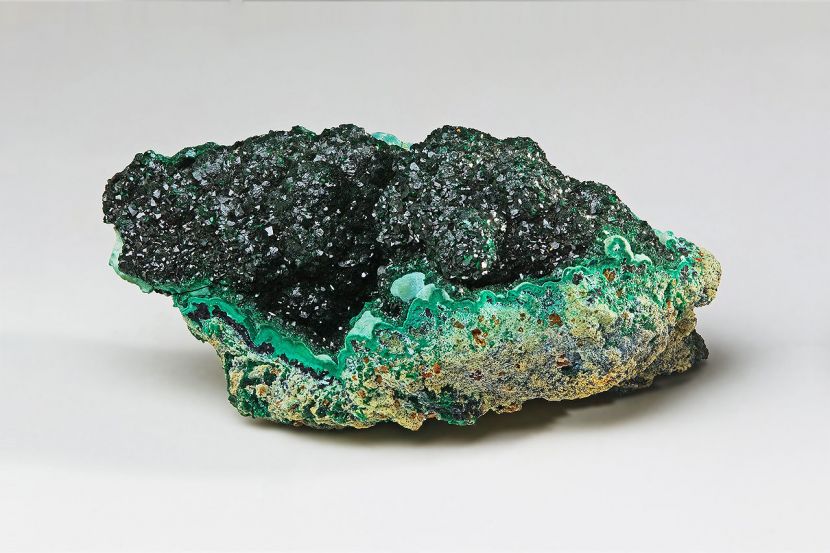
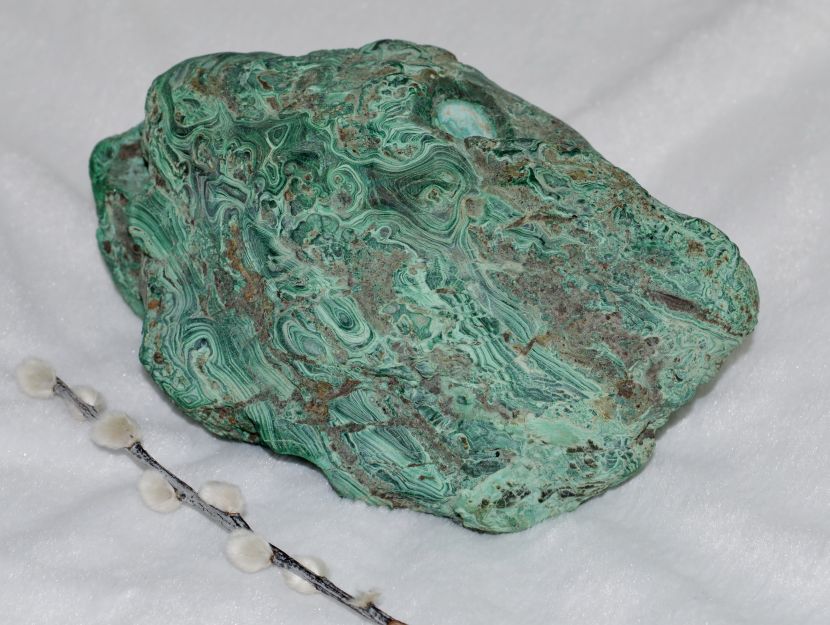
Malachite is widely distributed and found in many places, but more often in the form of small masses.
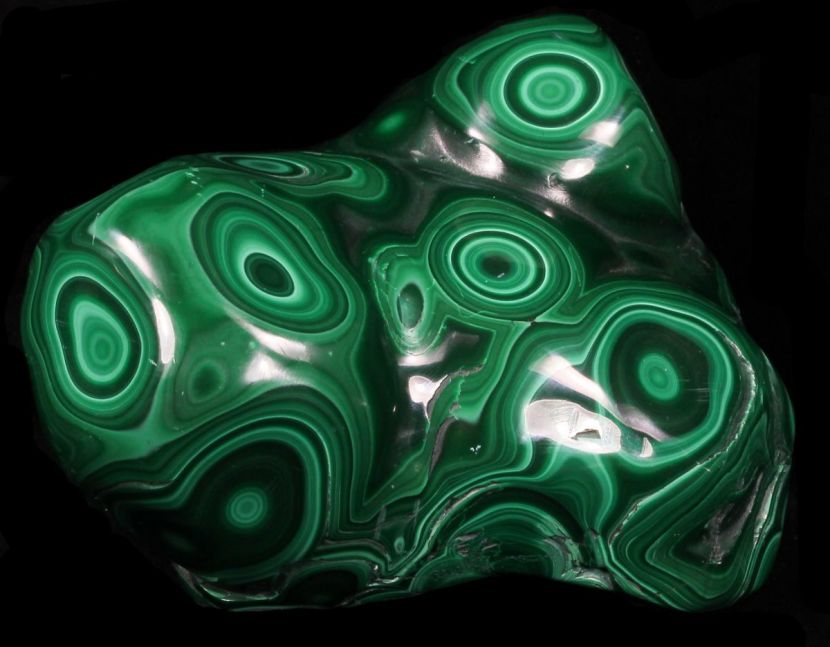
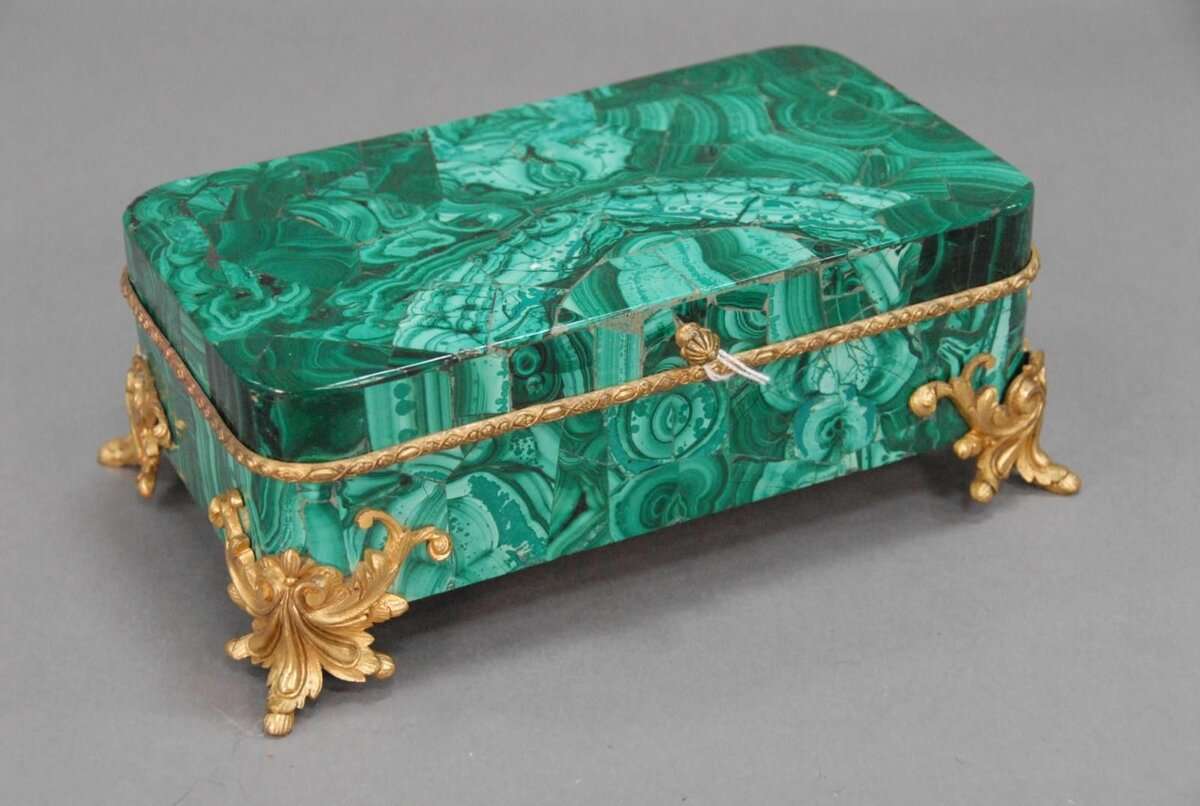
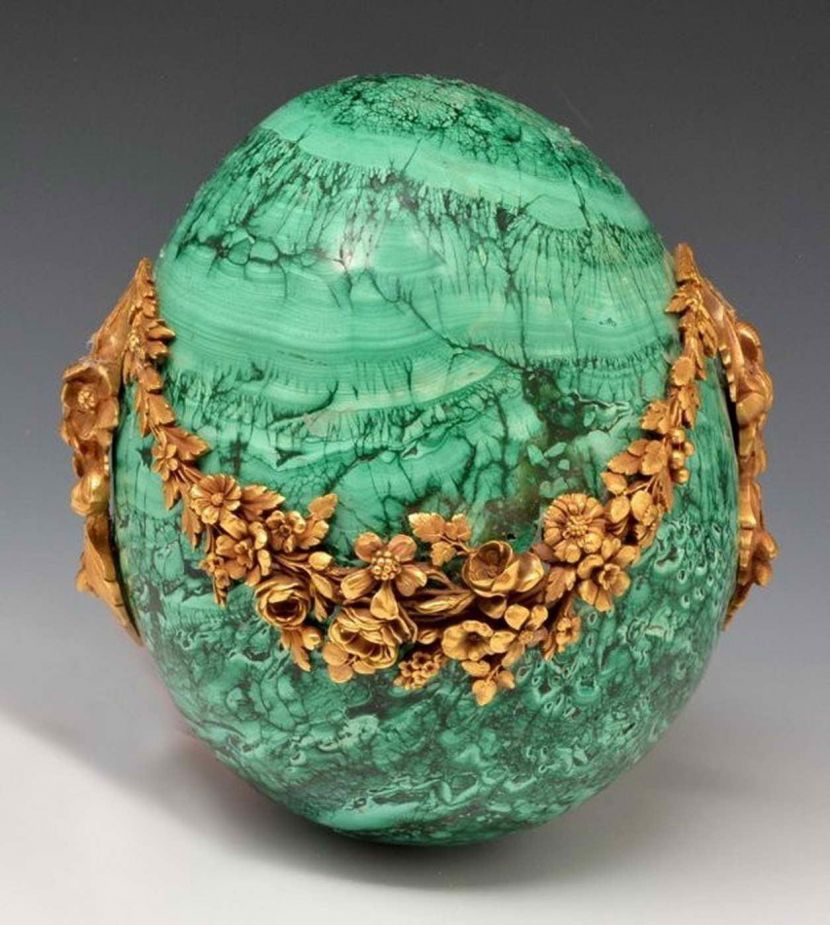
The largest deposits in Russia are located in the Urals. Most of all malachite was mined at the Mednorudyansky mine near Nizhny Tagil. In second place is the fully depleted Gumeshevskoye deposit, where a huge block of gem weighing about 1.5 tons was found, which is located in the Leningrad Mining Institute. Huge vases and the Malachite Hall in the Hermitage were made of Ural malachite, columns inside St. Isaac's Cathedral were lined with it. In addition to the Urals in Russia, the mineral was found in Altai.
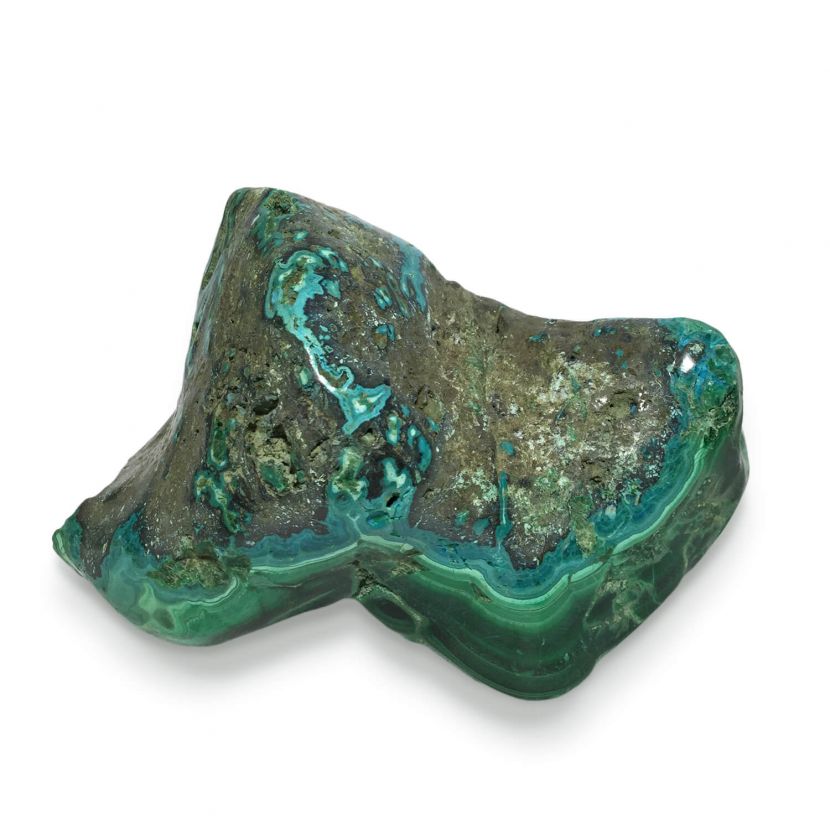
Quite a lot of it is in Kazakhstan, where there are large deposits in Dzhezkazgan and Chokpak.
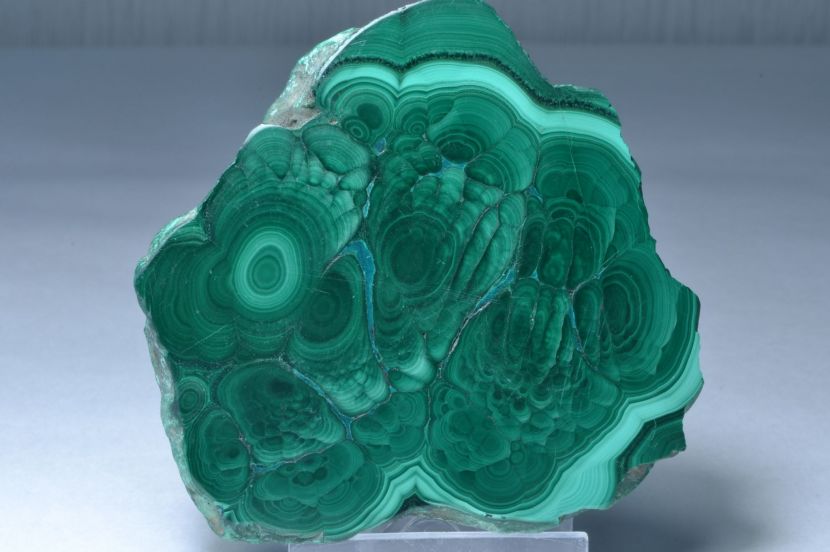
In Europe, there are deposits of malachite in France near Lyon, in Britain on the Cornwall peninsula and in many other countries.
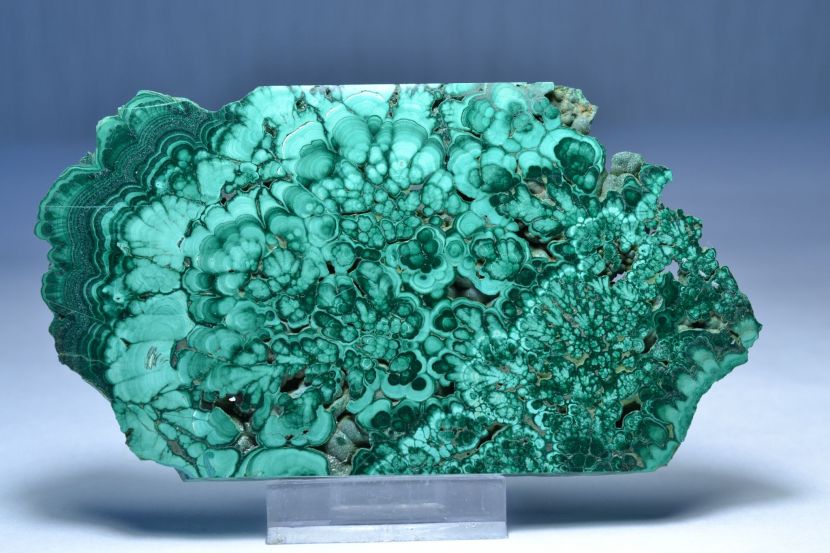
Almost all gem-quality malachite now enters the world market from South Africa, where the largest deposits have been found in the Congo and Zaire.
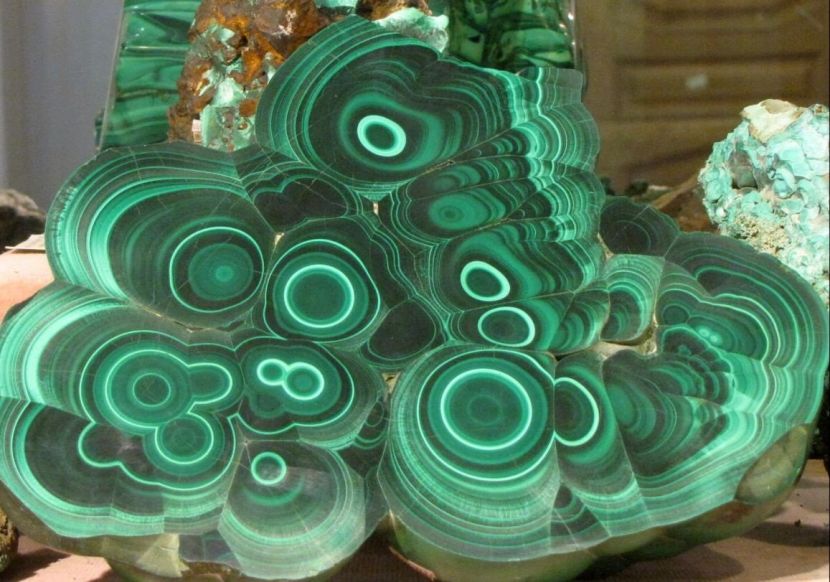
Malachite always accompanies copper ores. It is formed from them under the action of water and air. The green coating on copper and its alloys, which is formed during corrosion, is identical to malachite in composition.
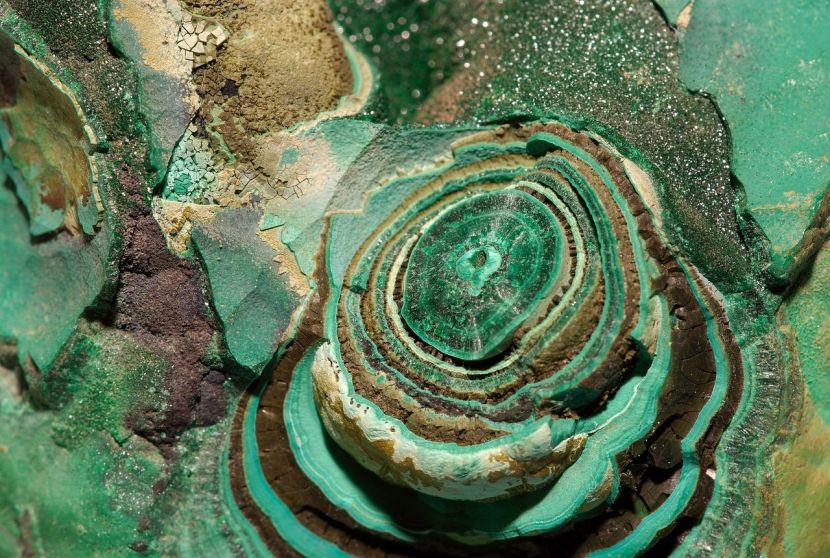
Physical Properties
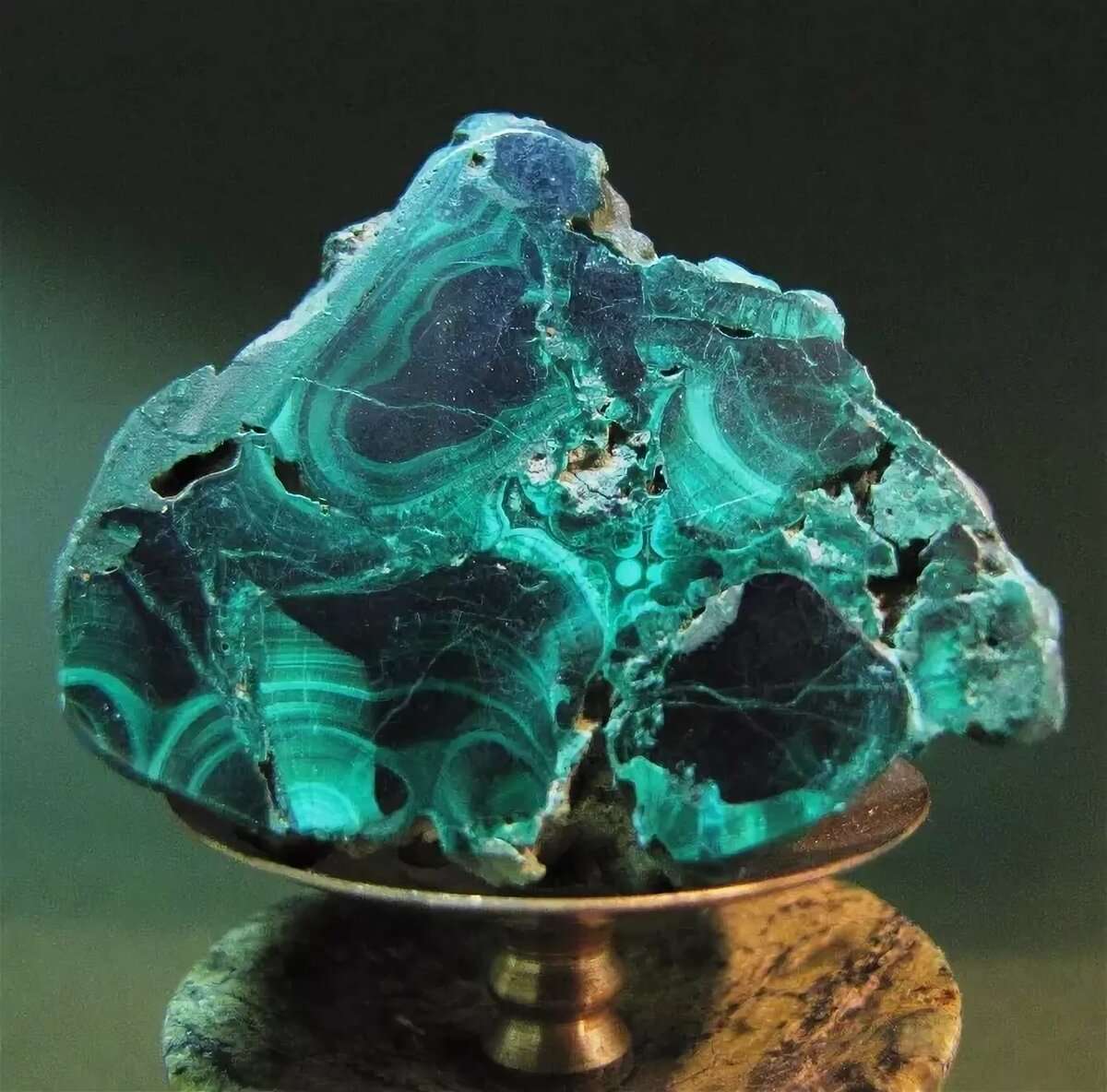
Malachite is very soft, its hardness is only 3.5-4, its luster is matte, in crystals it is glassy, and in large masses it can be silky. The syngony is monoclinic. Cleavage is perfect. The fracture is shelly or splintery. Density from 3.75 to 3.95 g/cm3. Malachites of a turquoise hue have the lowest density, dark areas can have a density of up to 4.1 cm3.
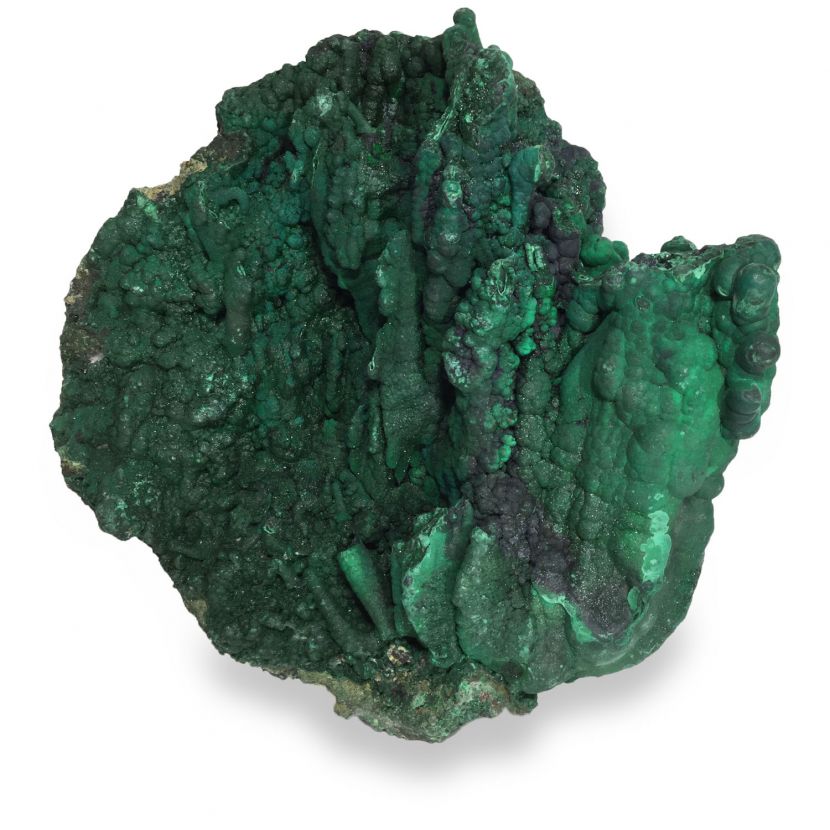
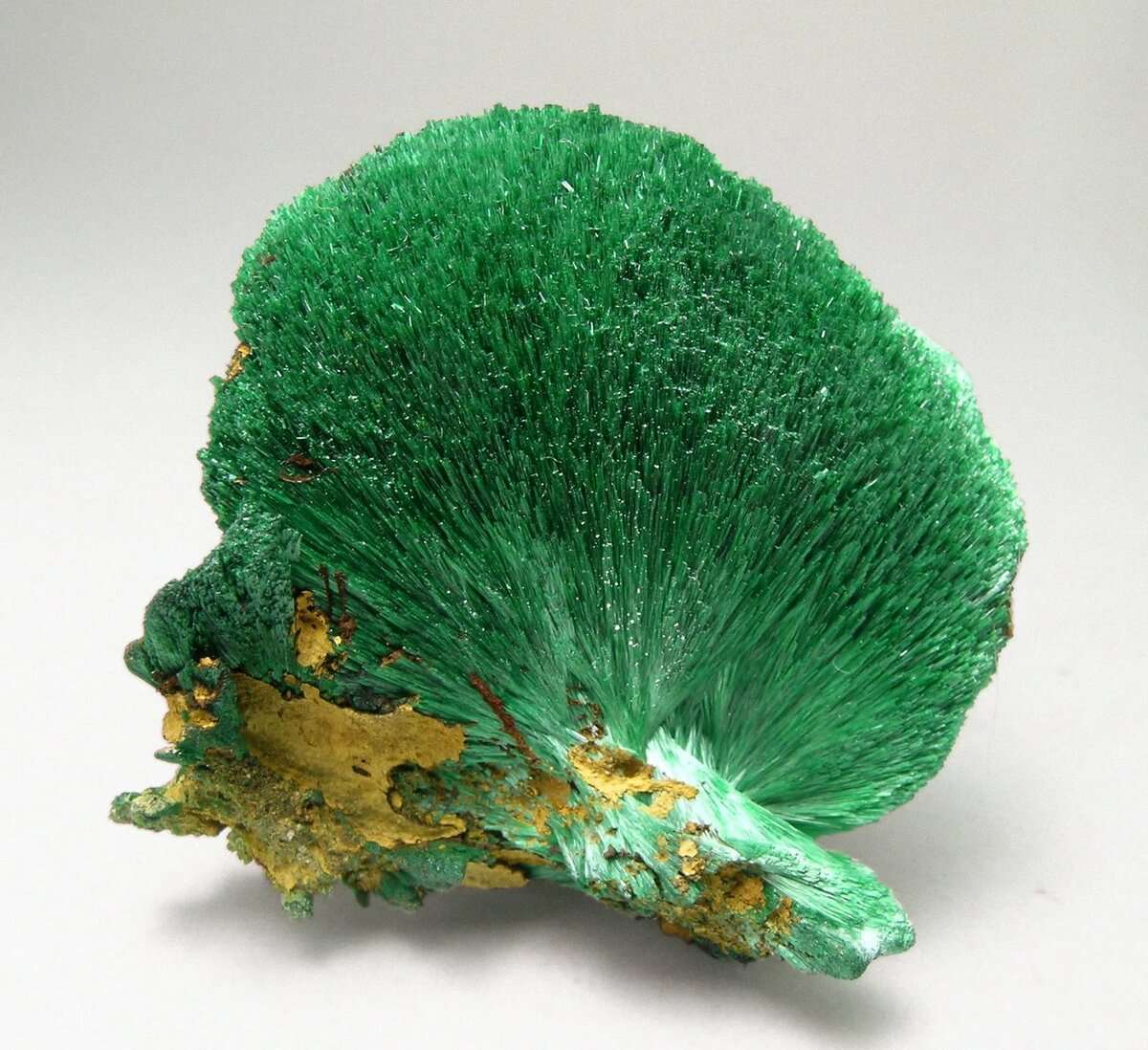
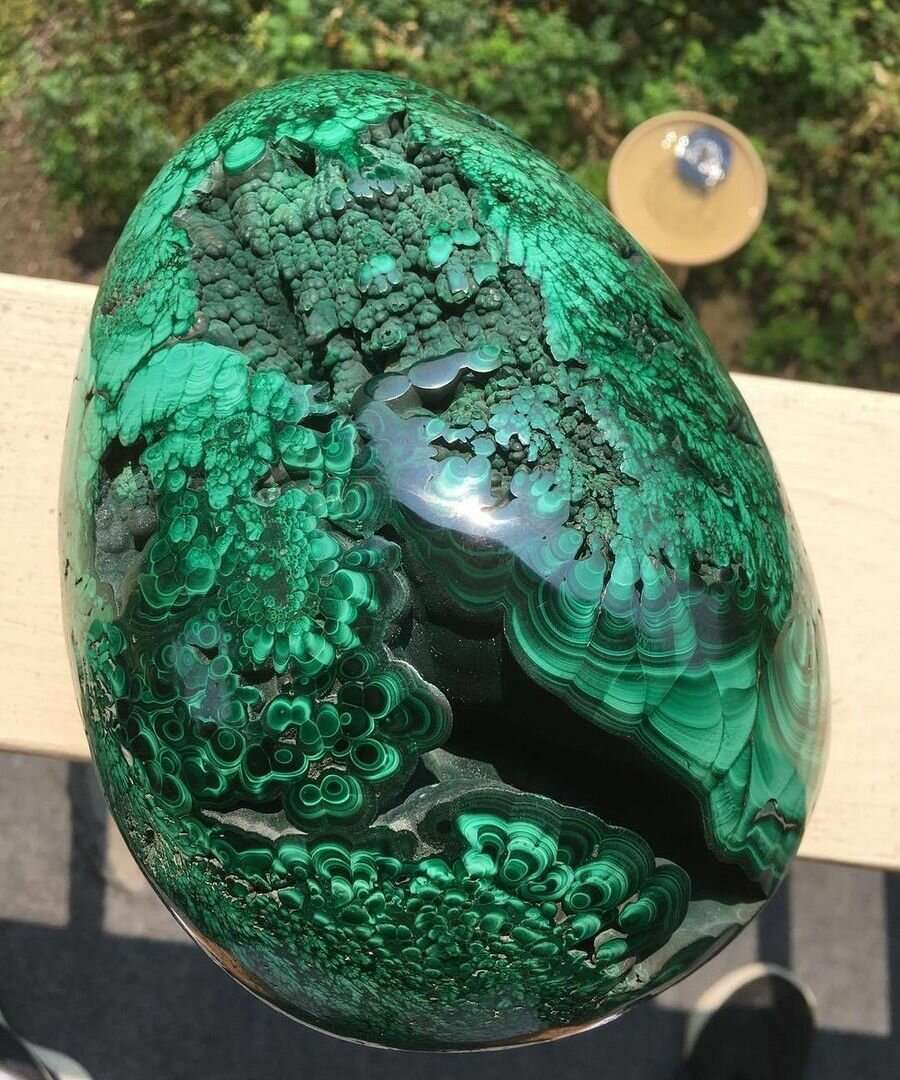
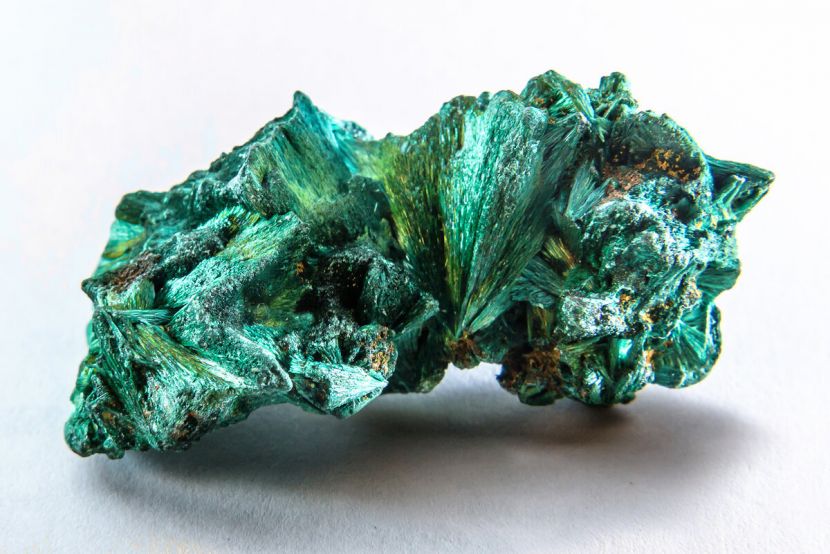
Very characteristic of malachite is the intergrowth of crystals, more often in the form of prisms, but occasionally one can find crystals of an acicular or lamellar type.
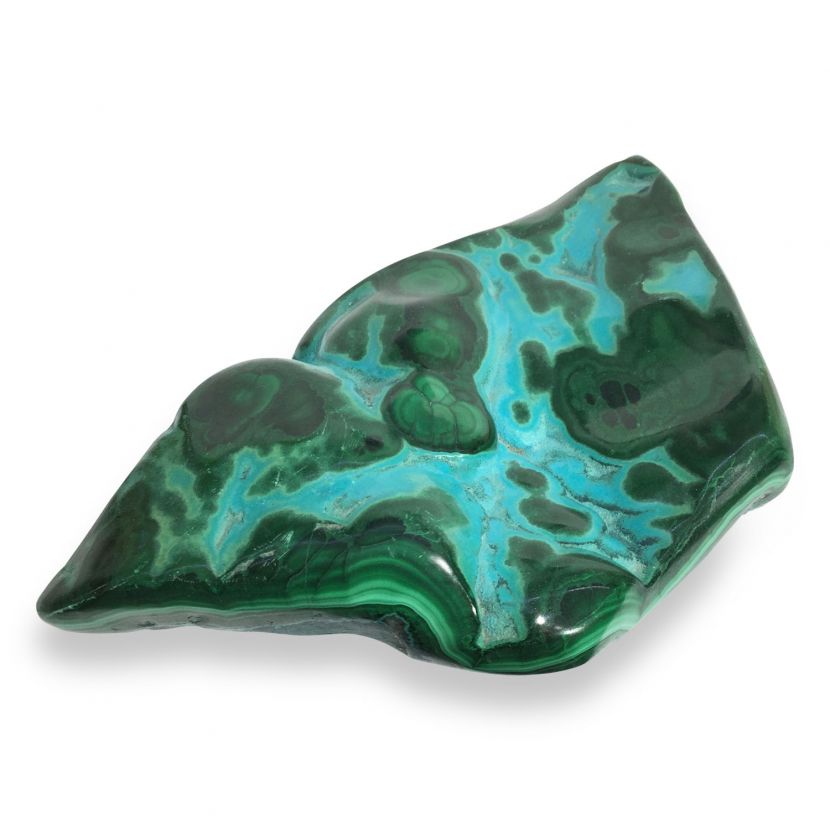
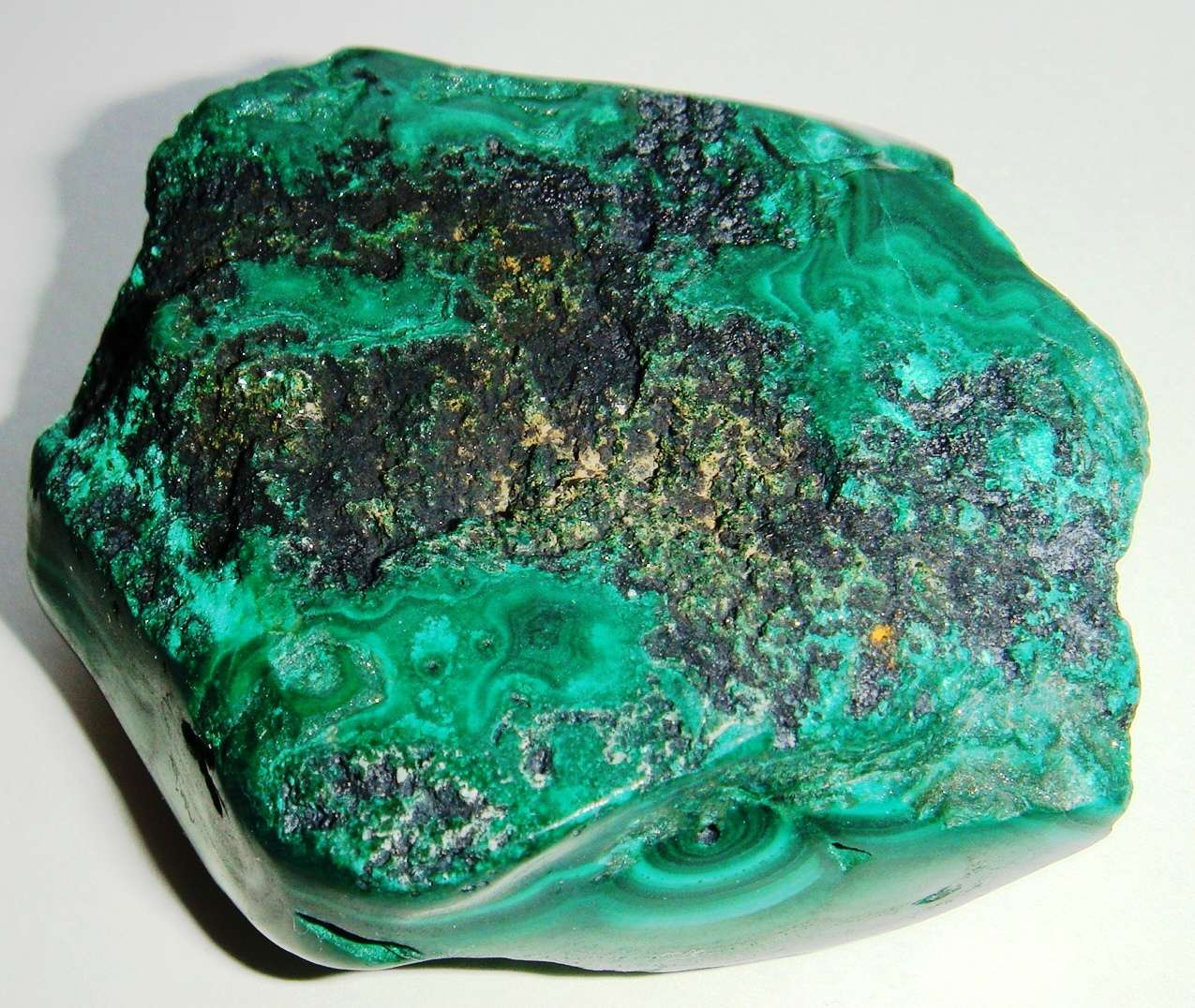
Malachite is slightly translucent in thin layers. The color can be green in various shades from bright green and turquoise to dark green, almost black. Refractive index 1.66-1.91.
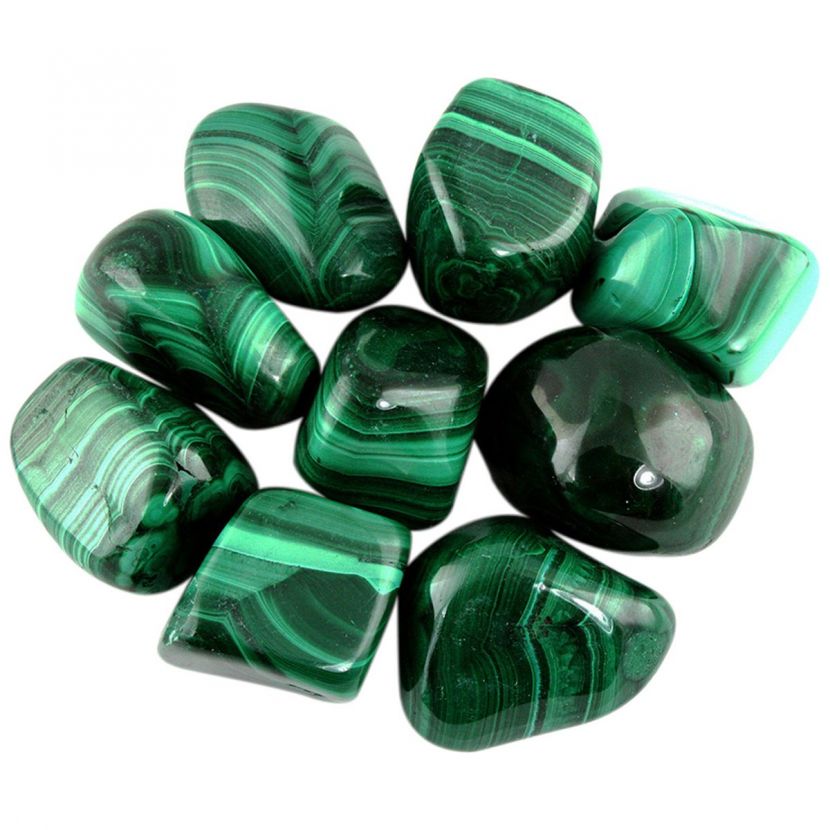
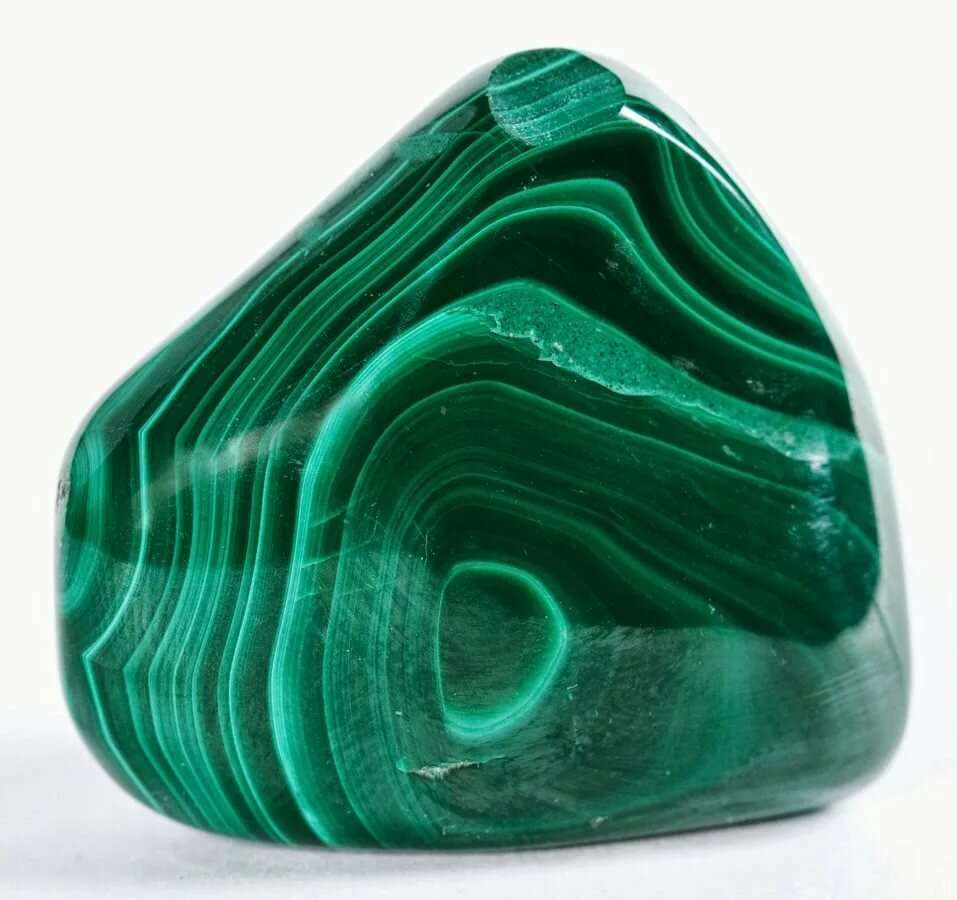
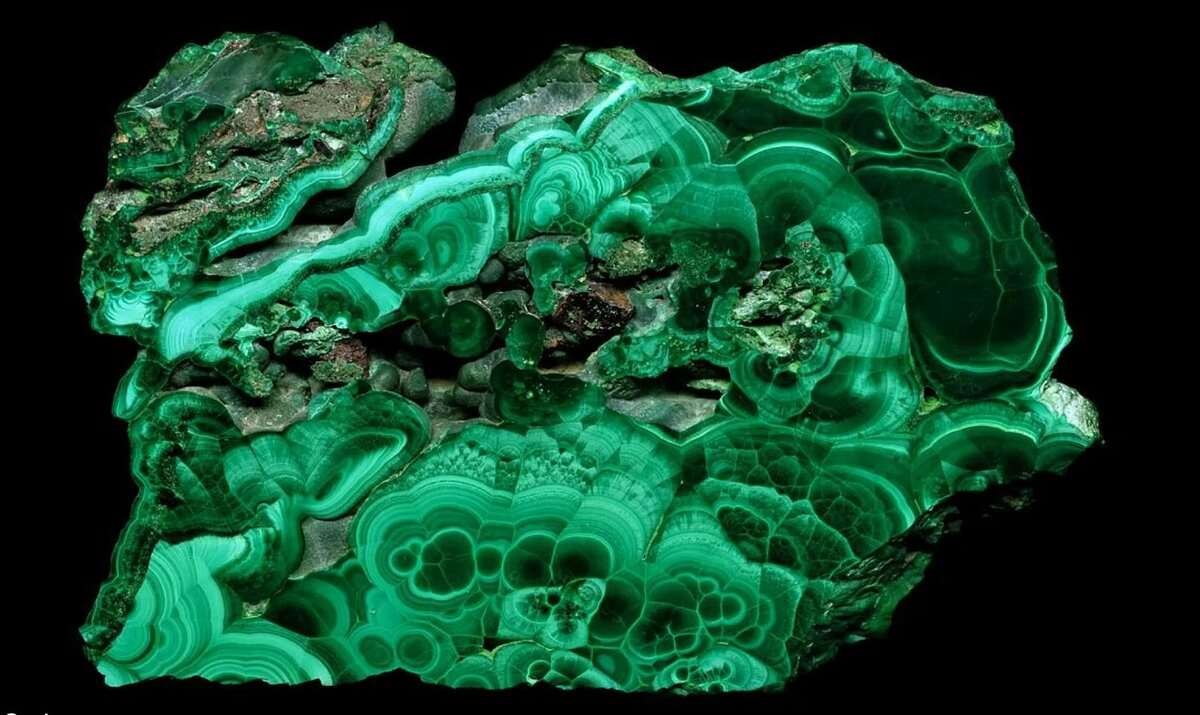
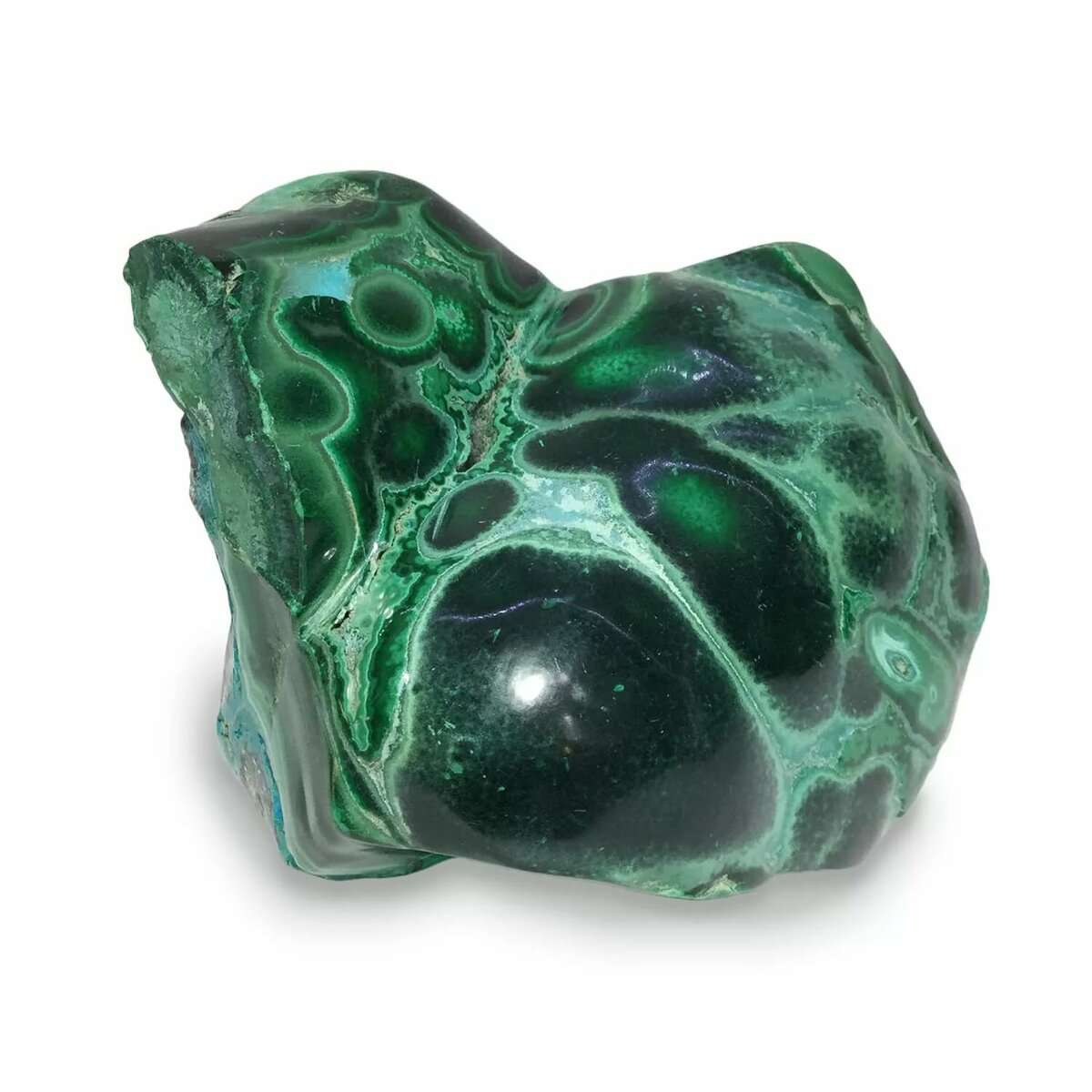
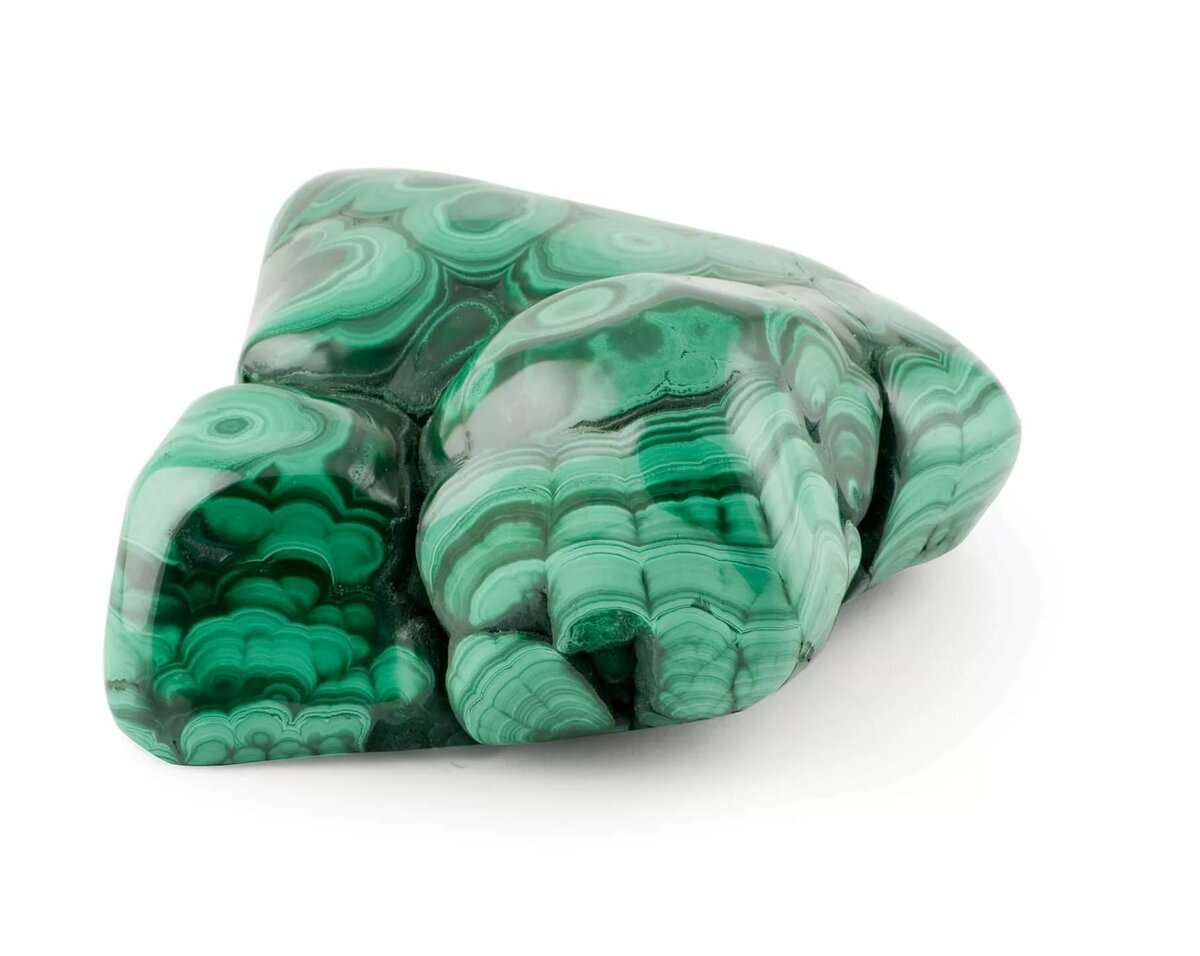
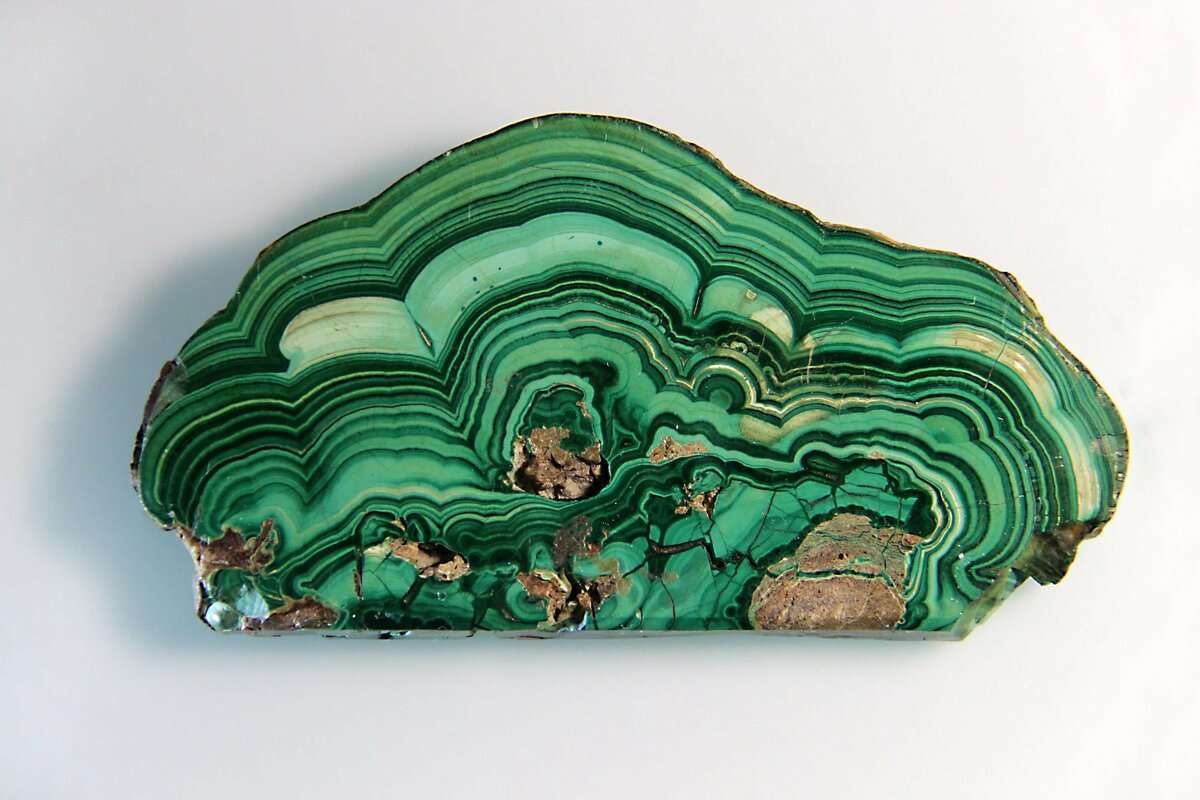
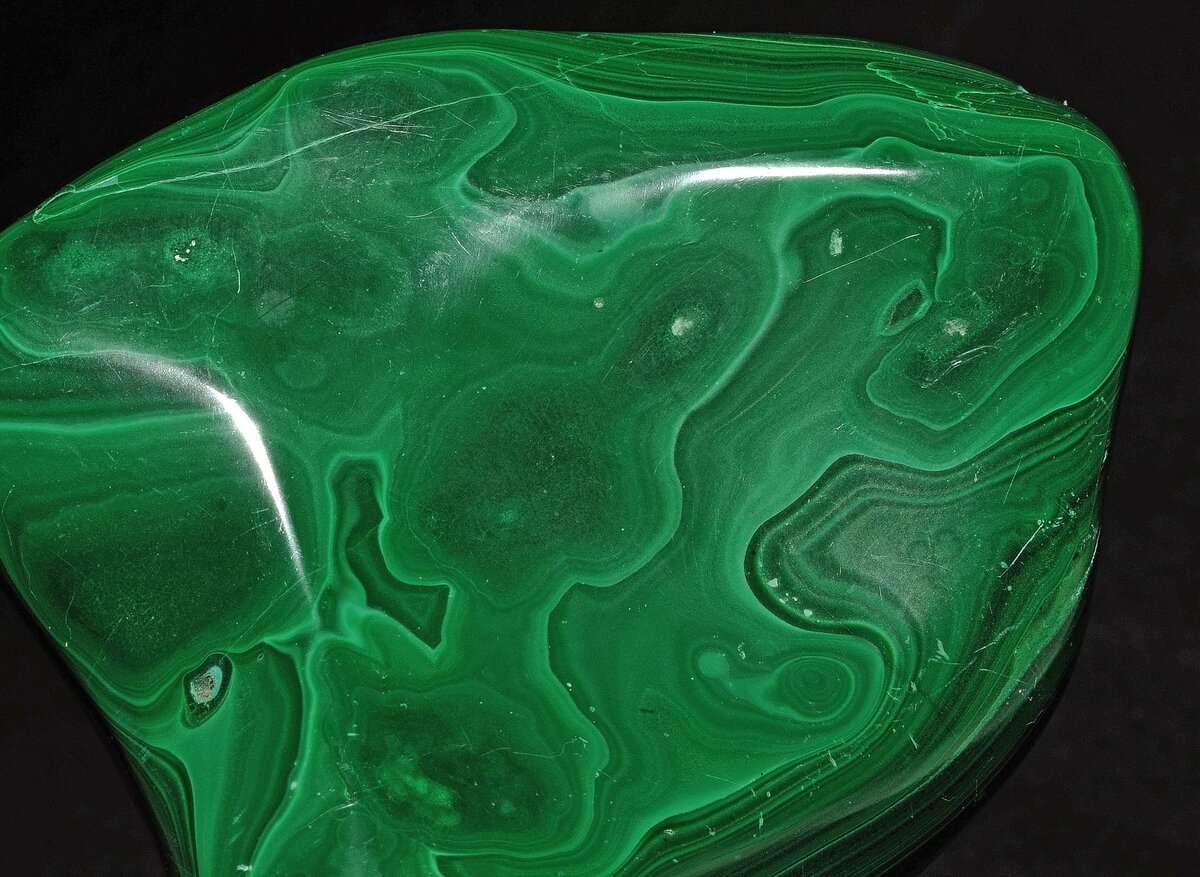
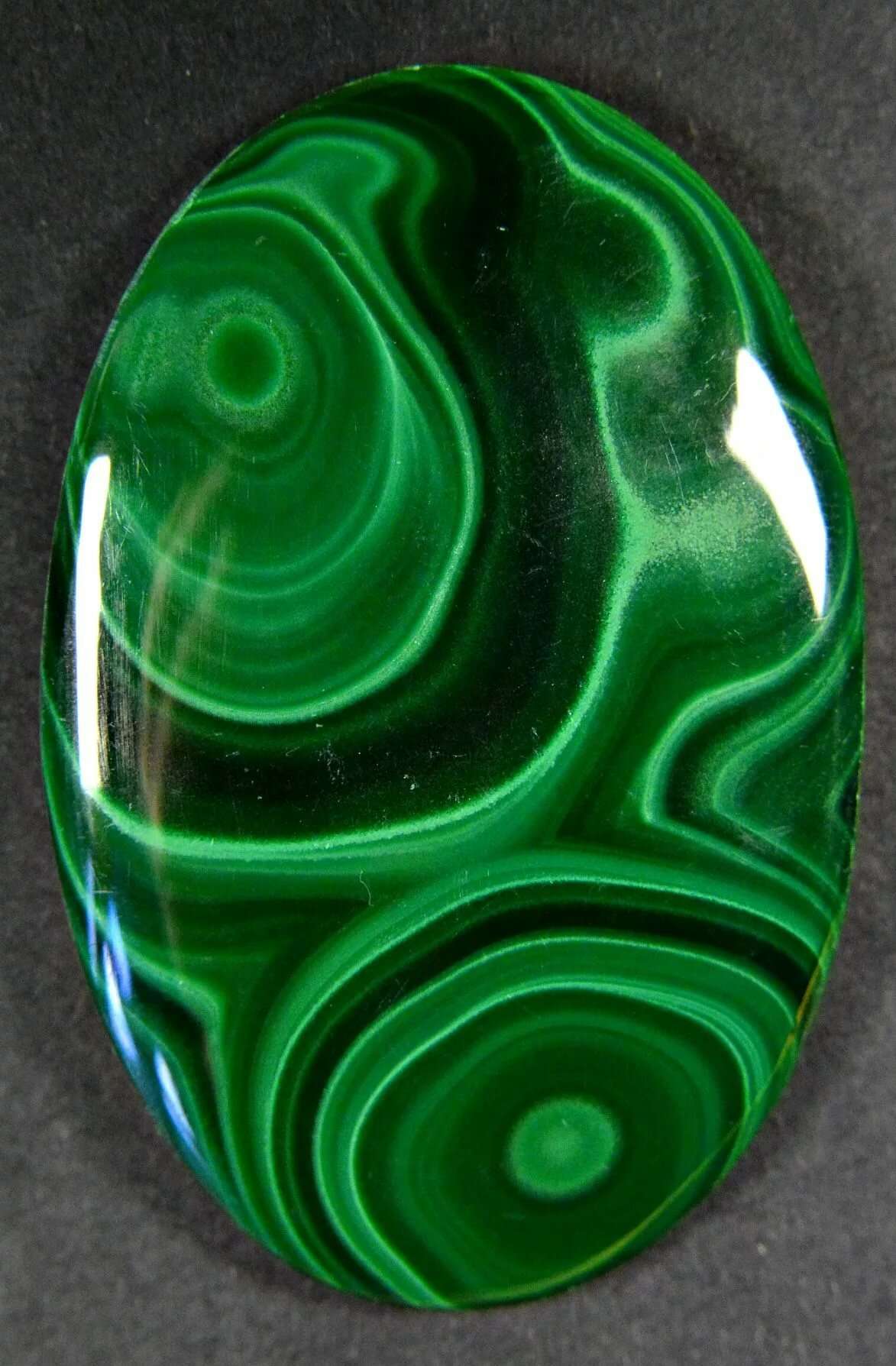
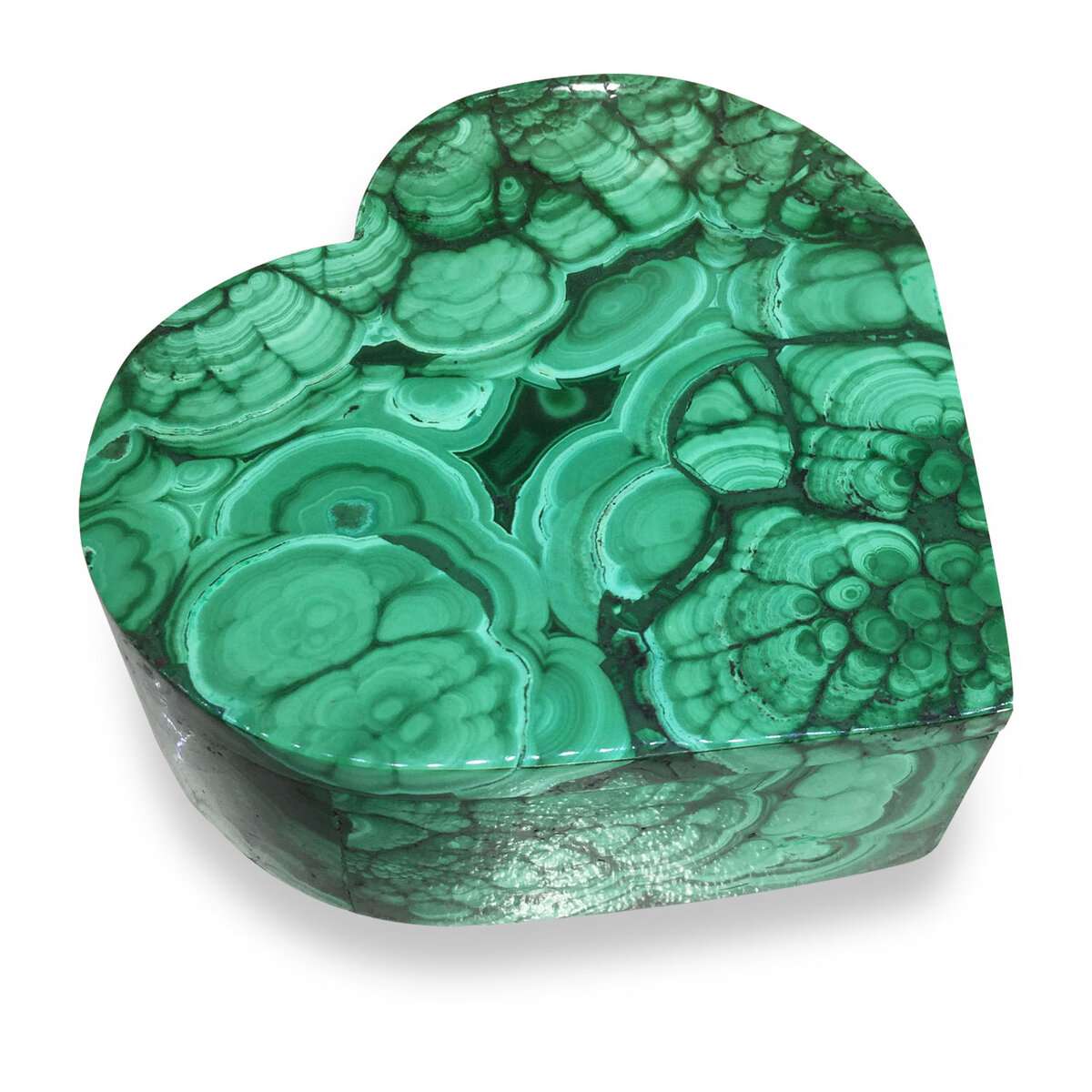
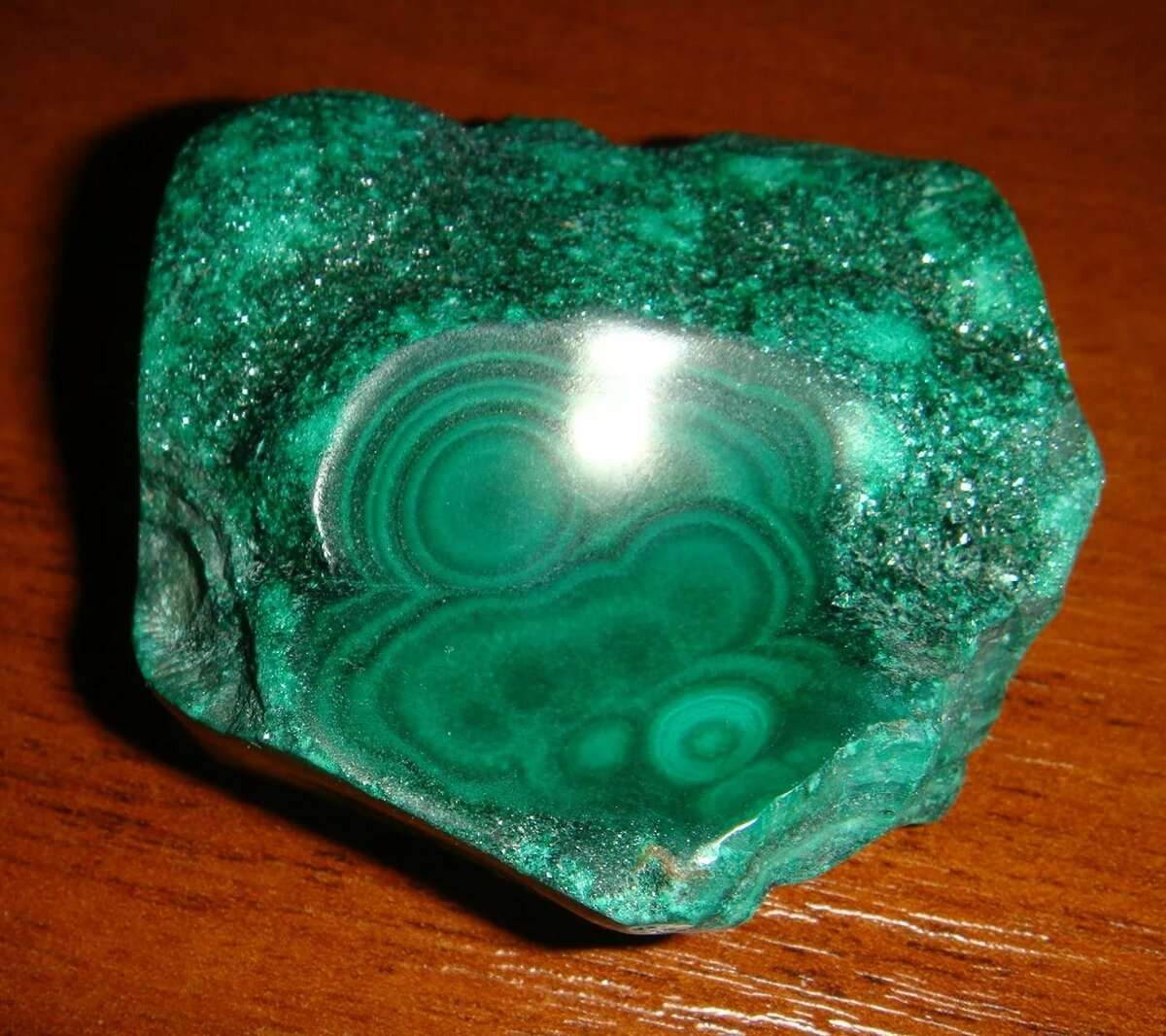
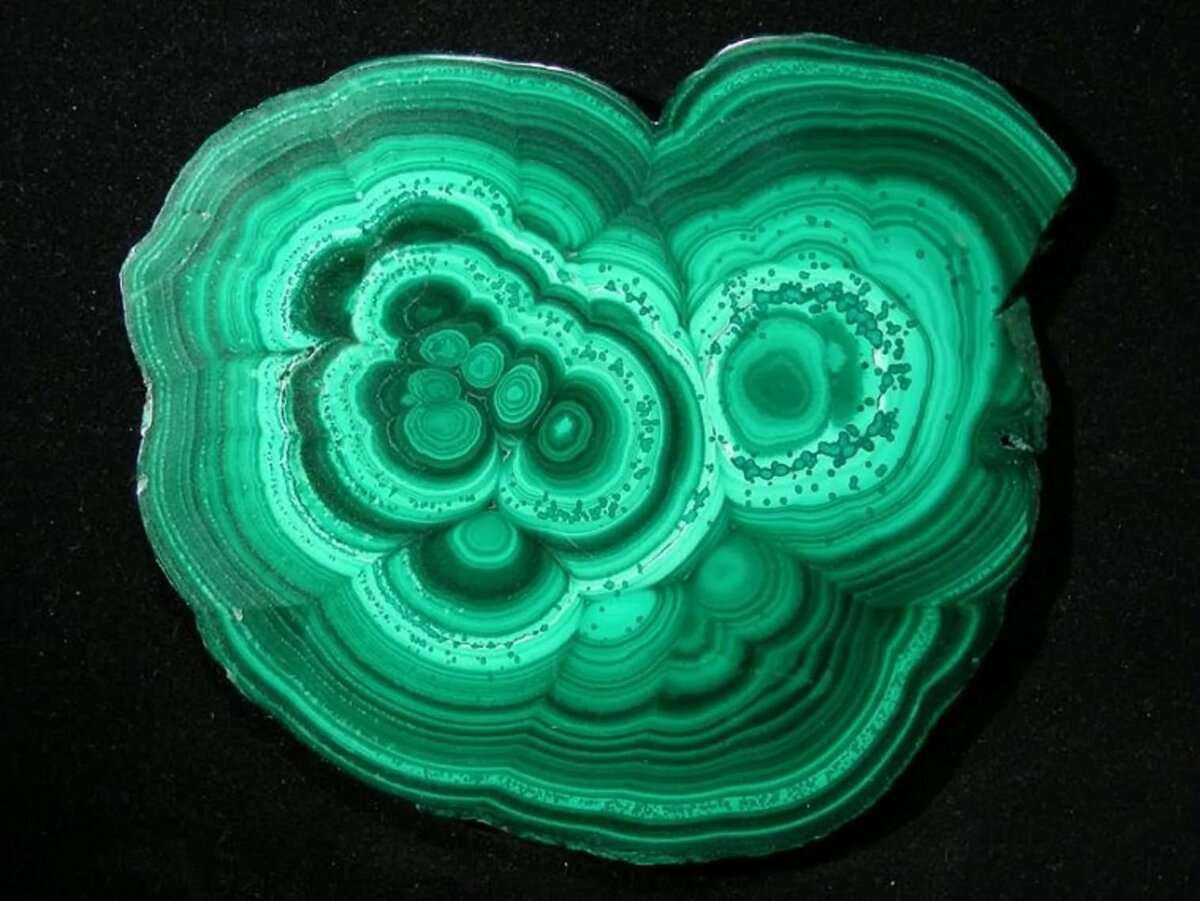
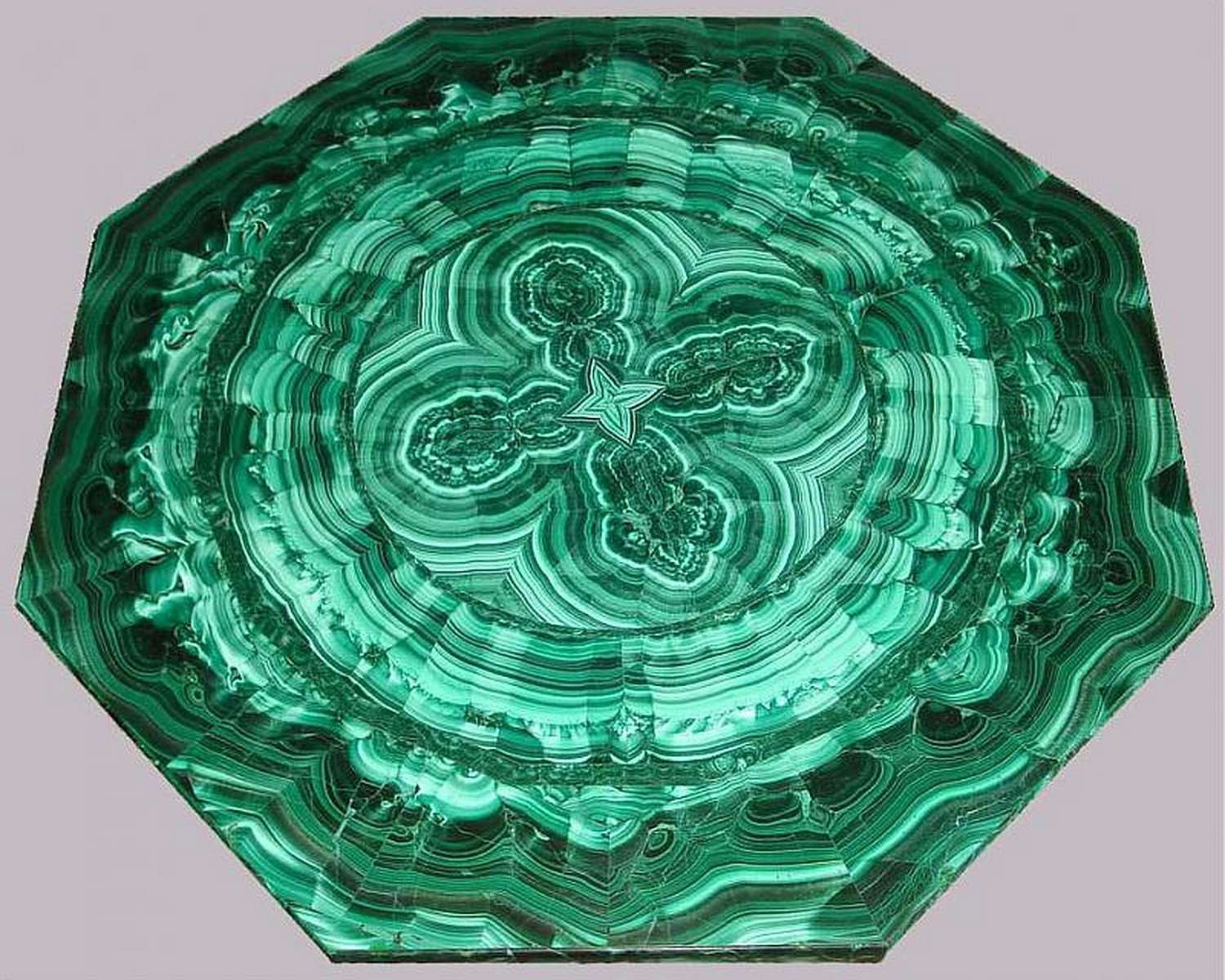
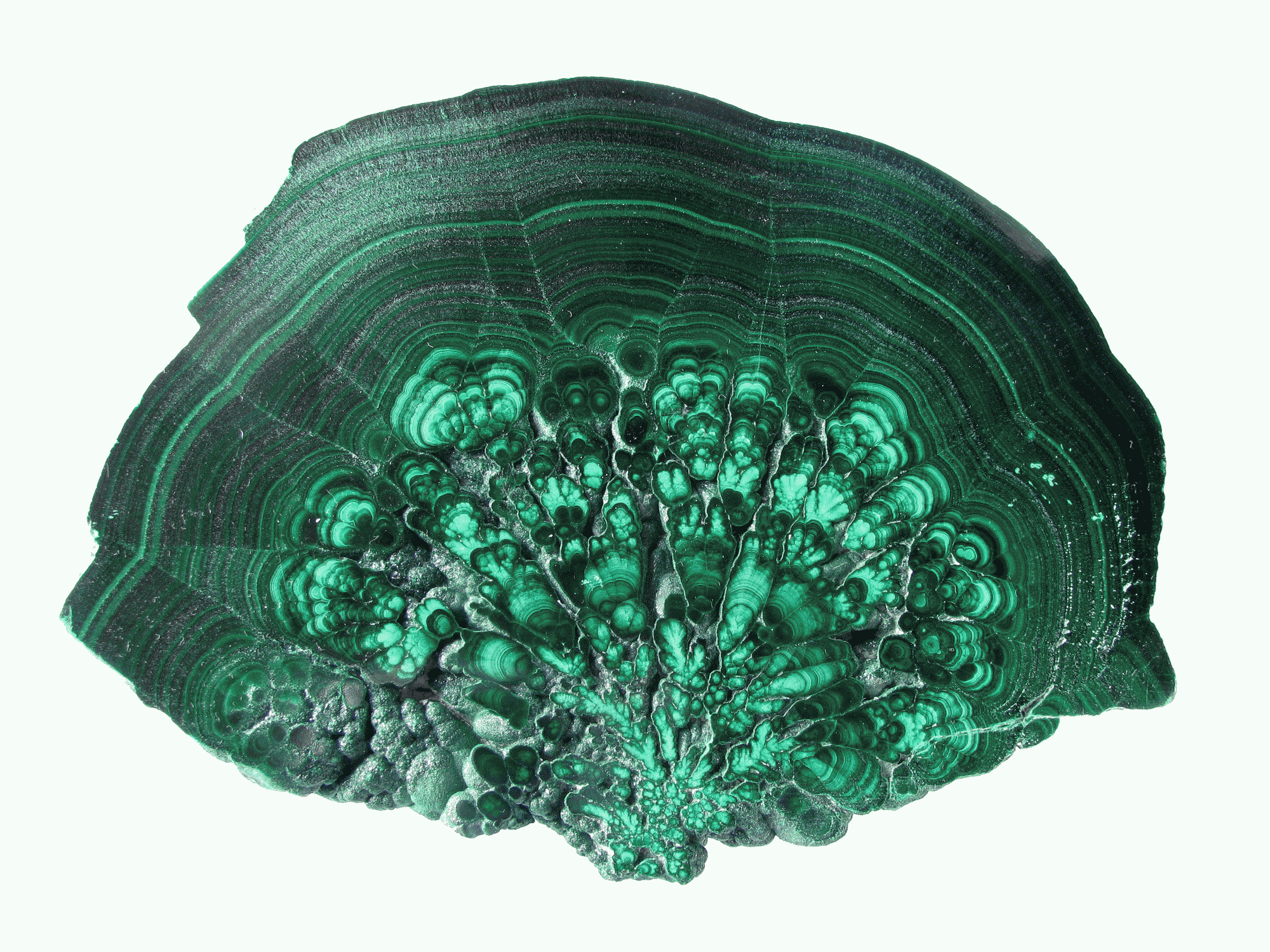
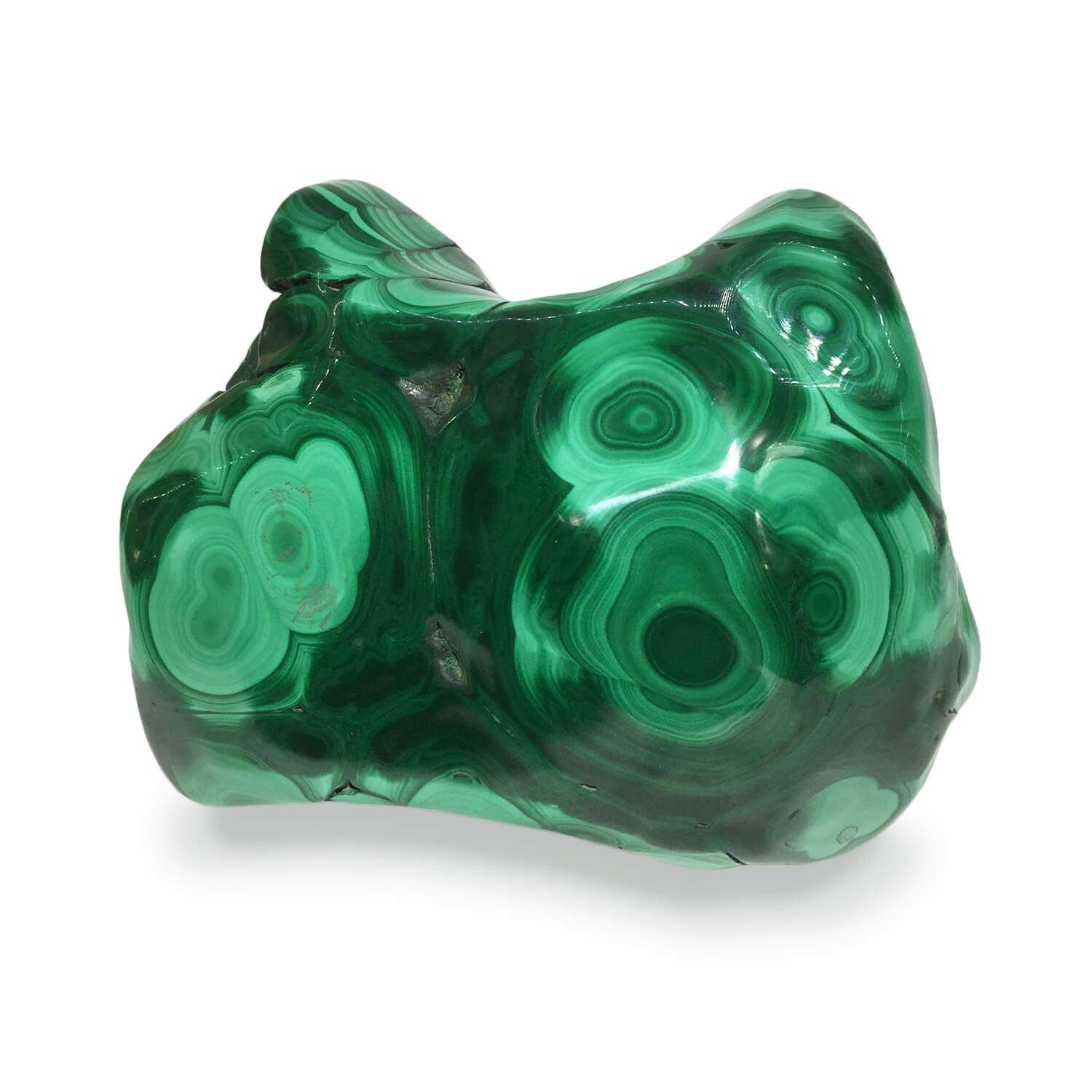
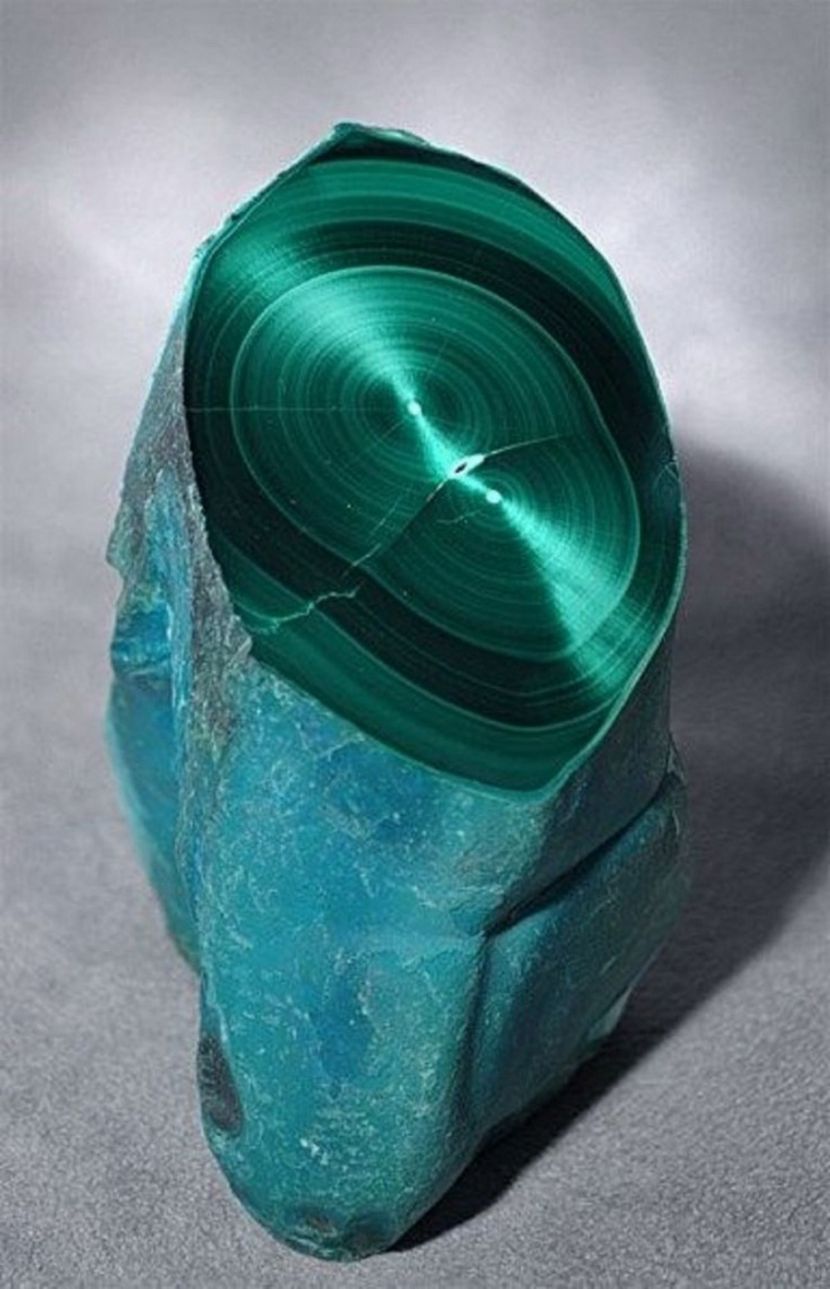
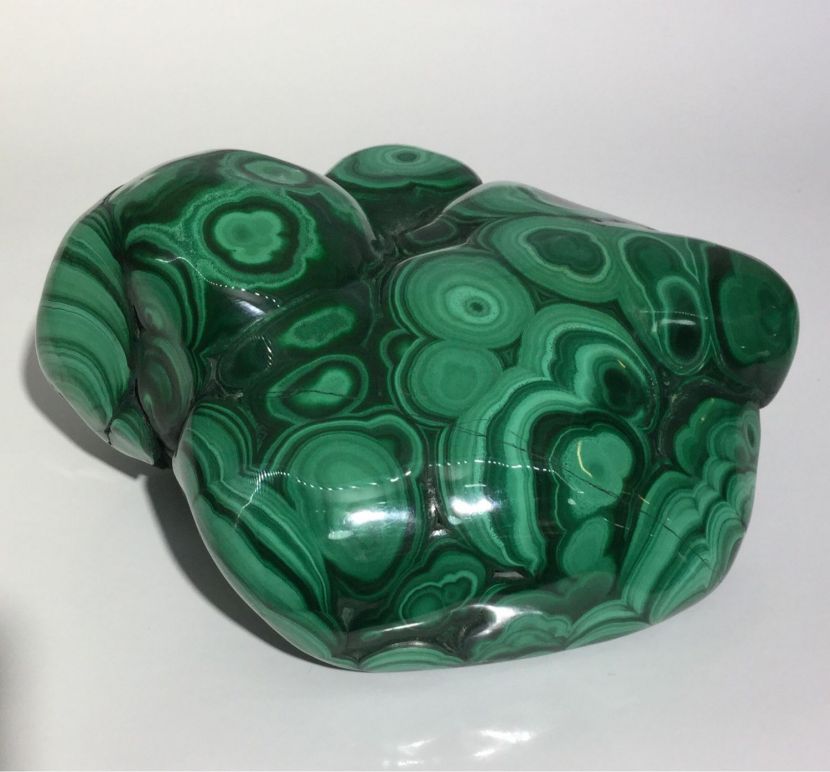
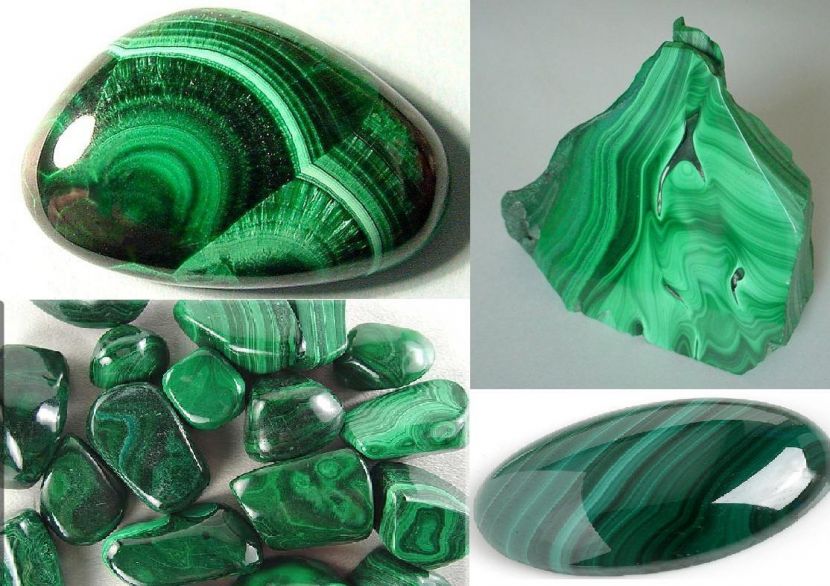
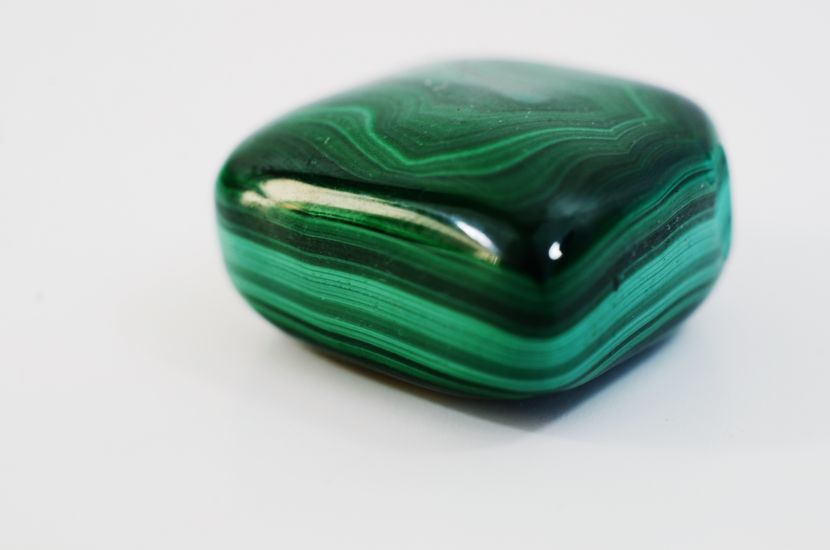
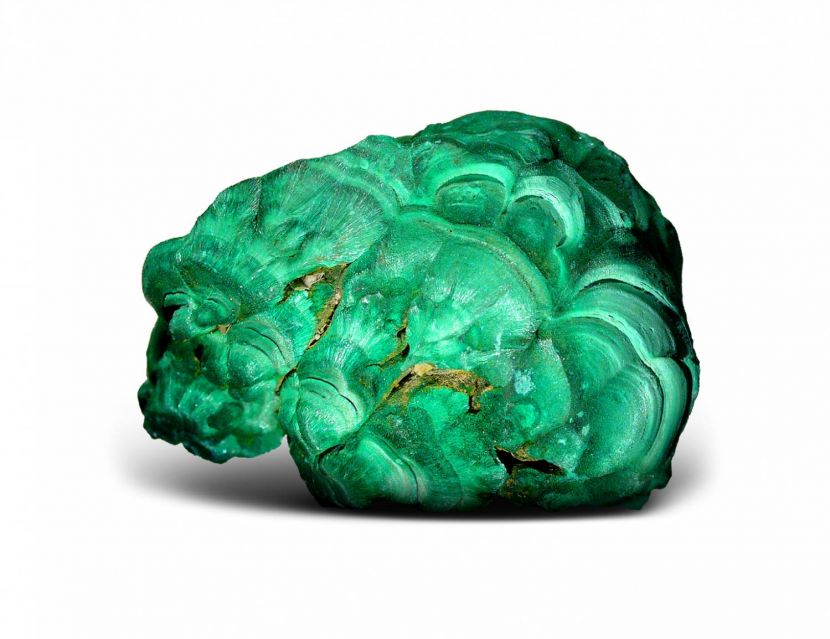
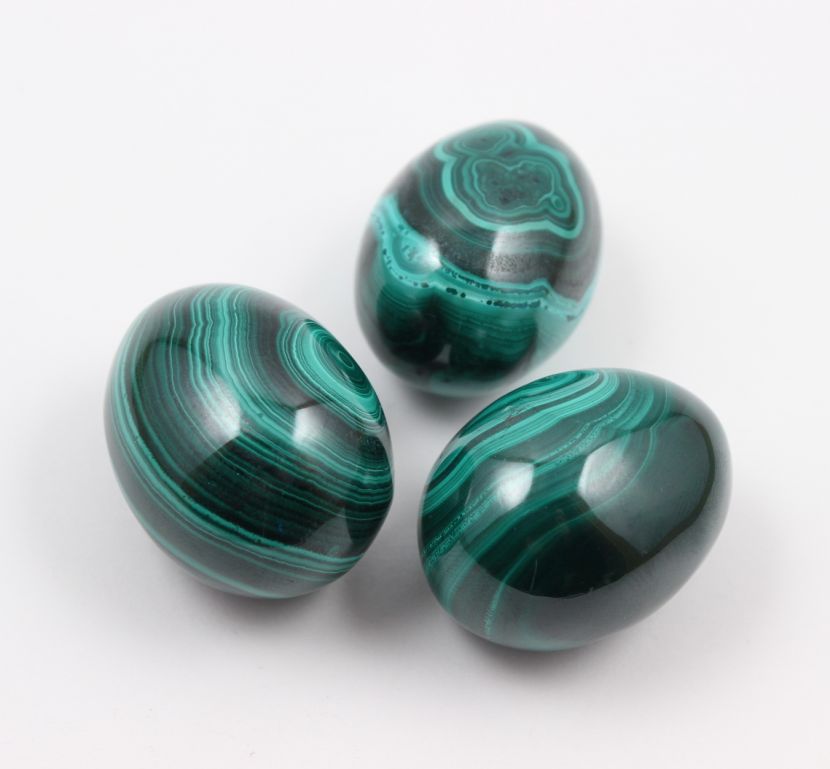
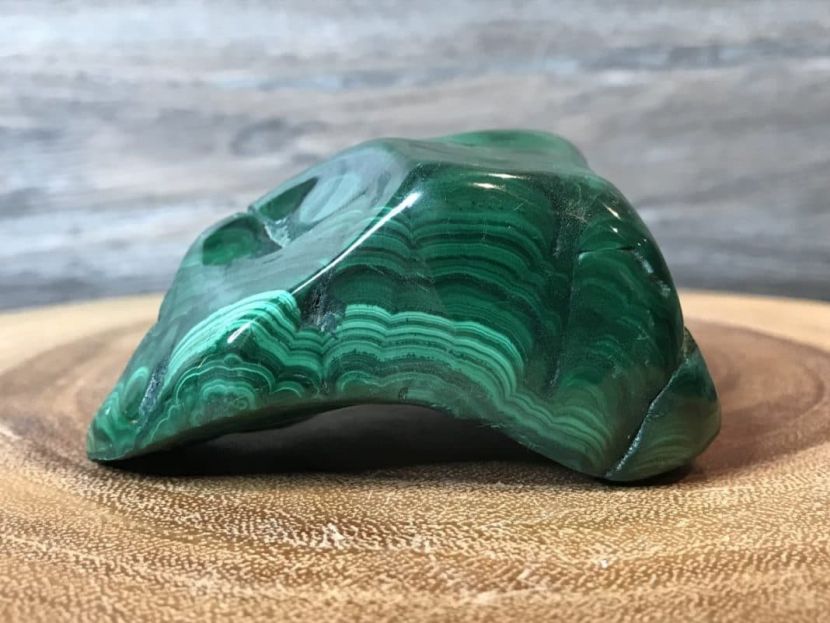
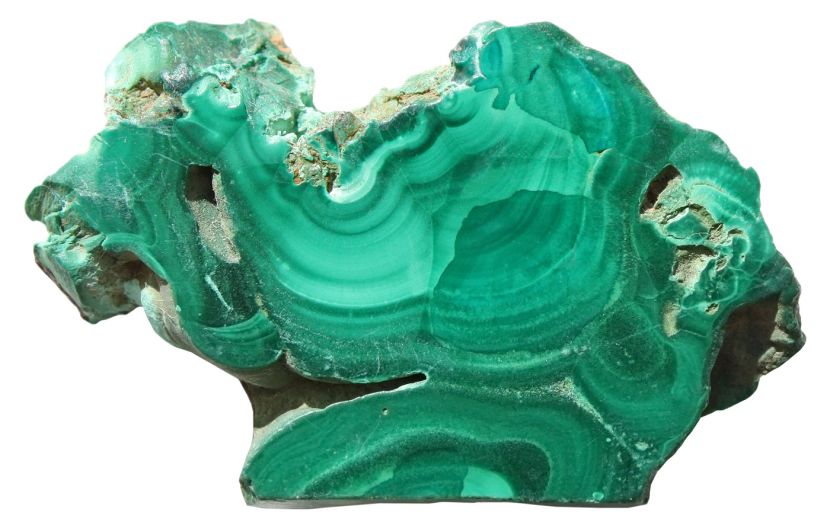
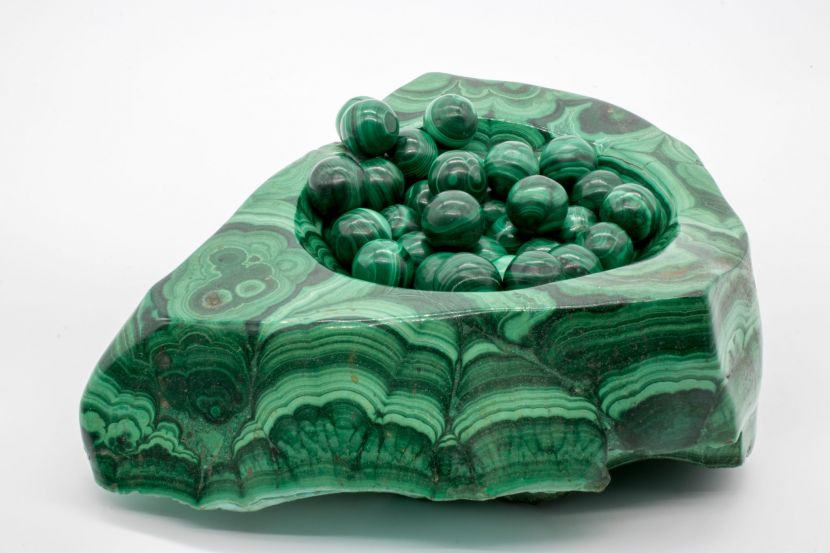
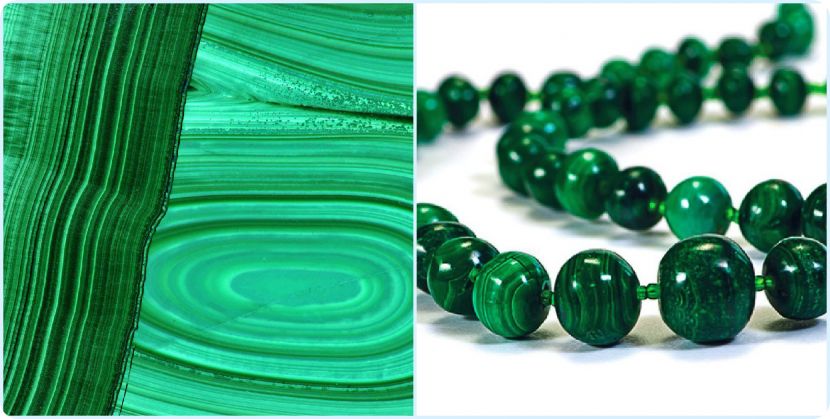
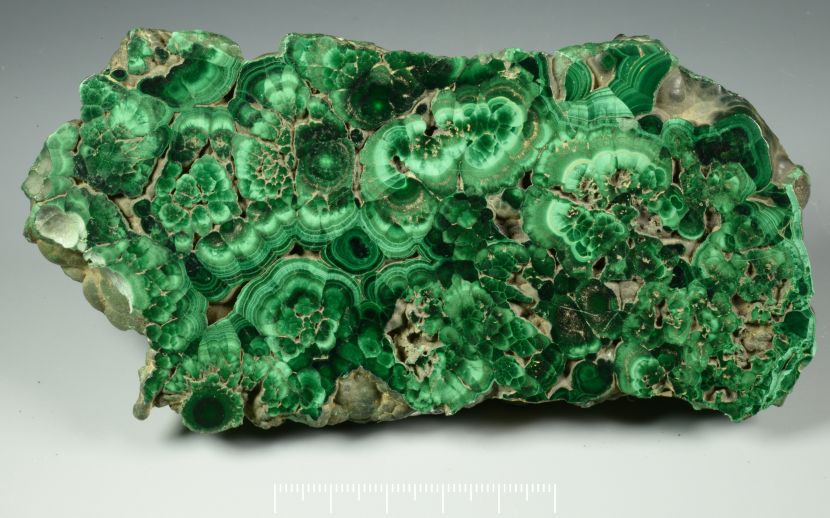
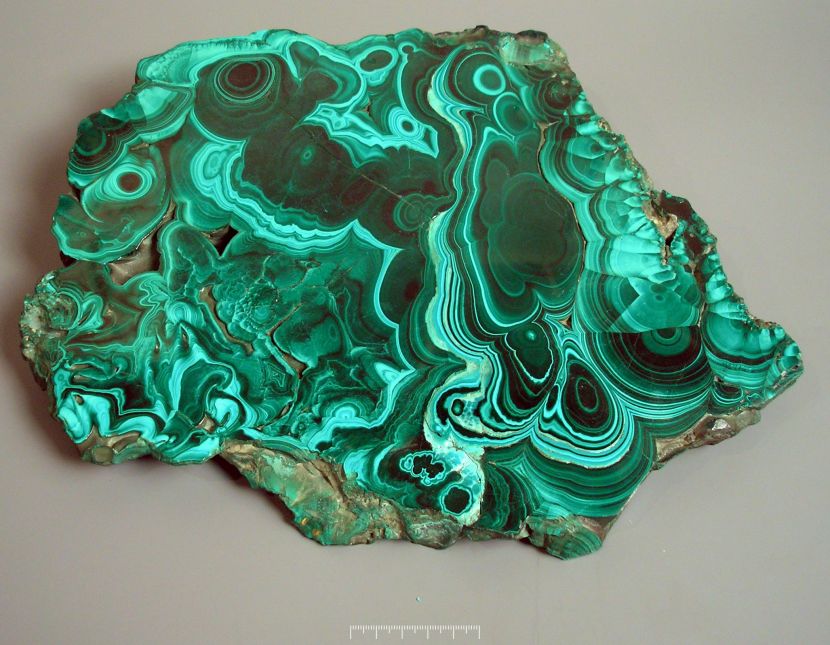
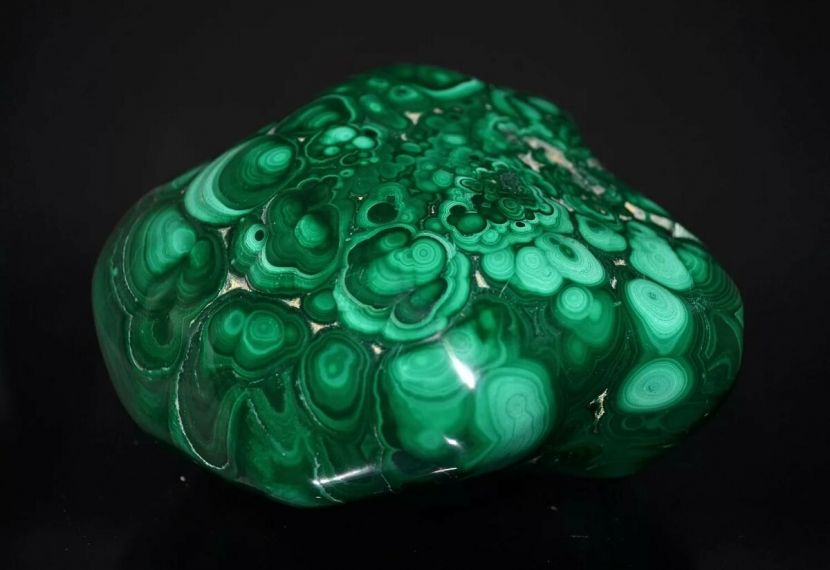
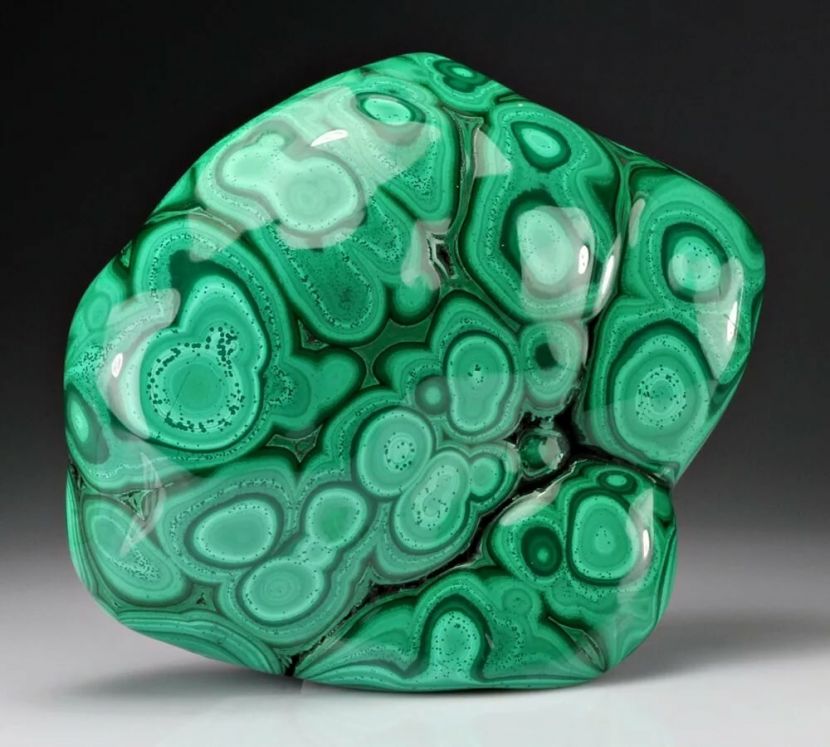
Patterns of natural malachite are characterized by concentric rings, most often connected to each other.
Chemical properties and composition
Malachite is the main silicate of copper. May contain impurities of nickel, cobalt and zinc.
The chemical formula is Cu2CO3(OH)2.
Under the action of hydrochloric and other strong acids, it releases carbon dioxide. When heated to 150-200°C, it decomposes with the release of carbon dioxide and water. In this case, black copper oxide CuO is formed.
Under the action of ammonia, malachite becomes light blue, in ammonia it dissolves to form a deep blue or bright blue solution.
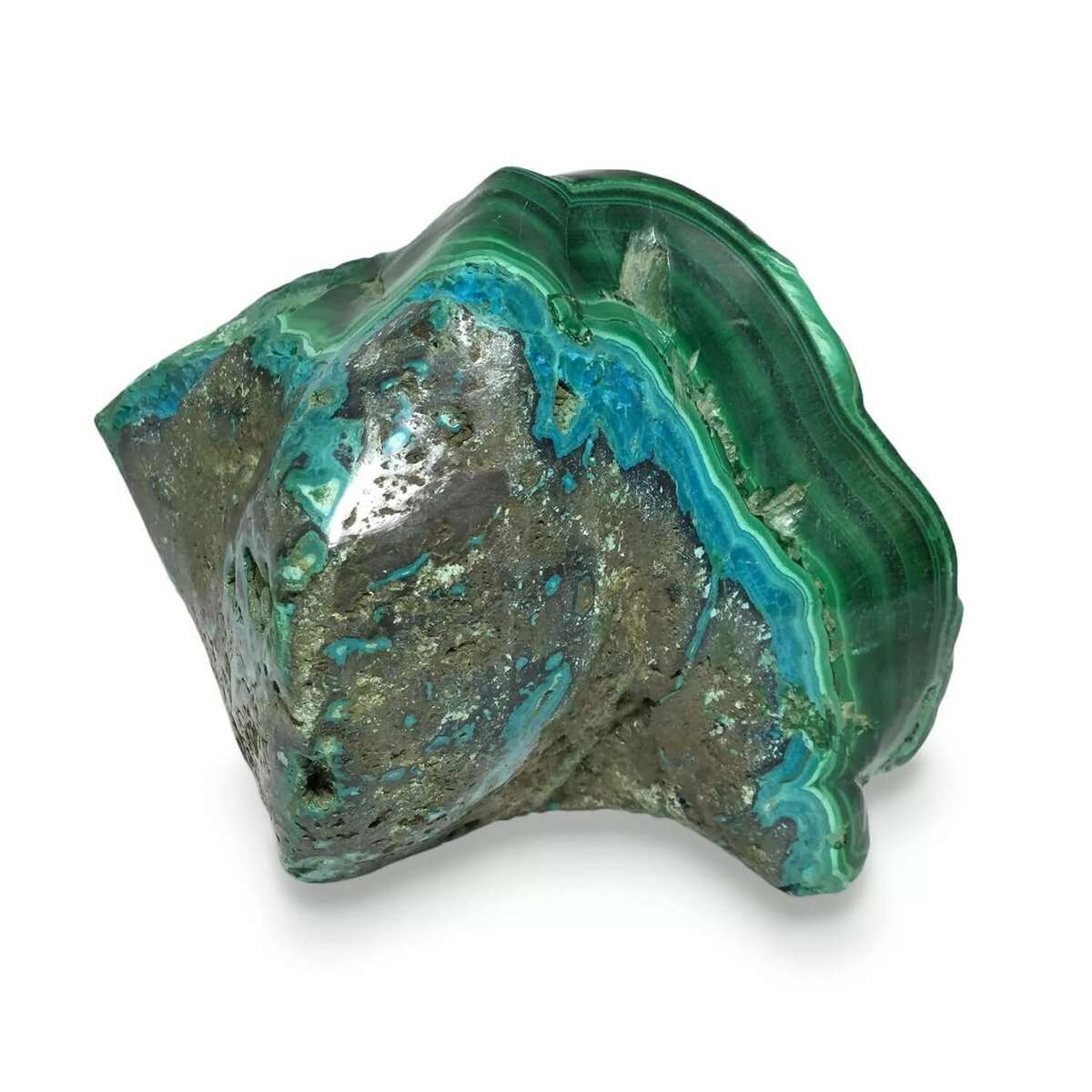
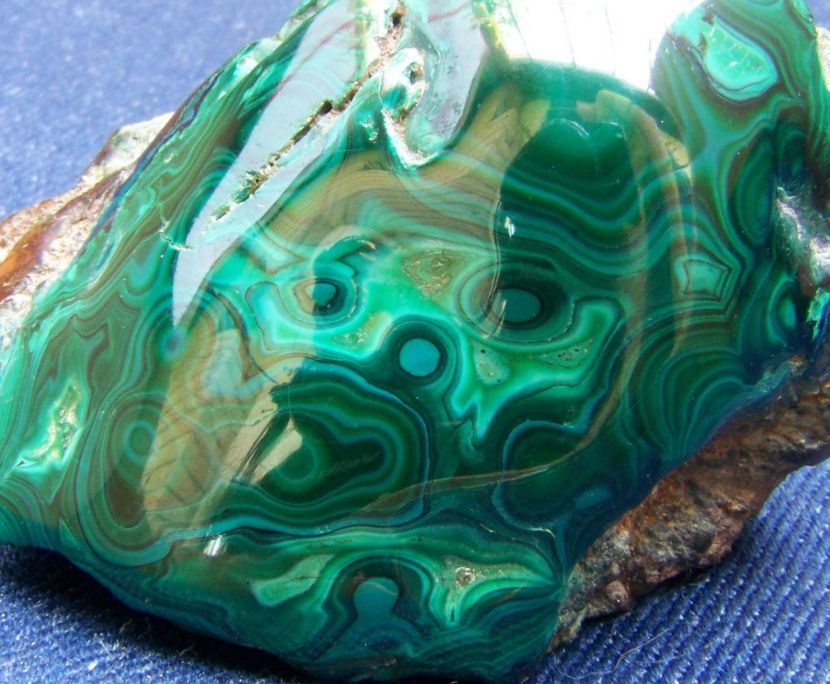
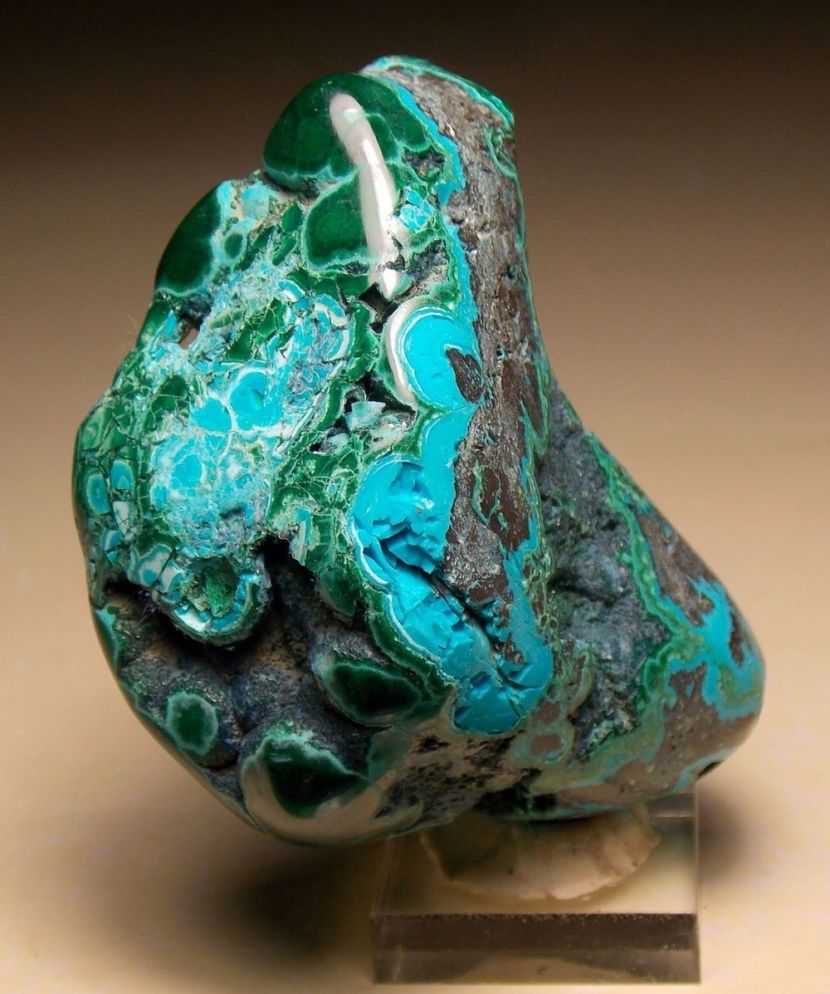
In terms of chemical composition, malachite is very close to azurite Cu3(CO3)2(OH)2, which easily transforms into malachite in nature and in paints. Often both of these minerals are found in the same stone, forming unusually beautiful patterns of alternating green and bright blue layers and rings.
Varieties
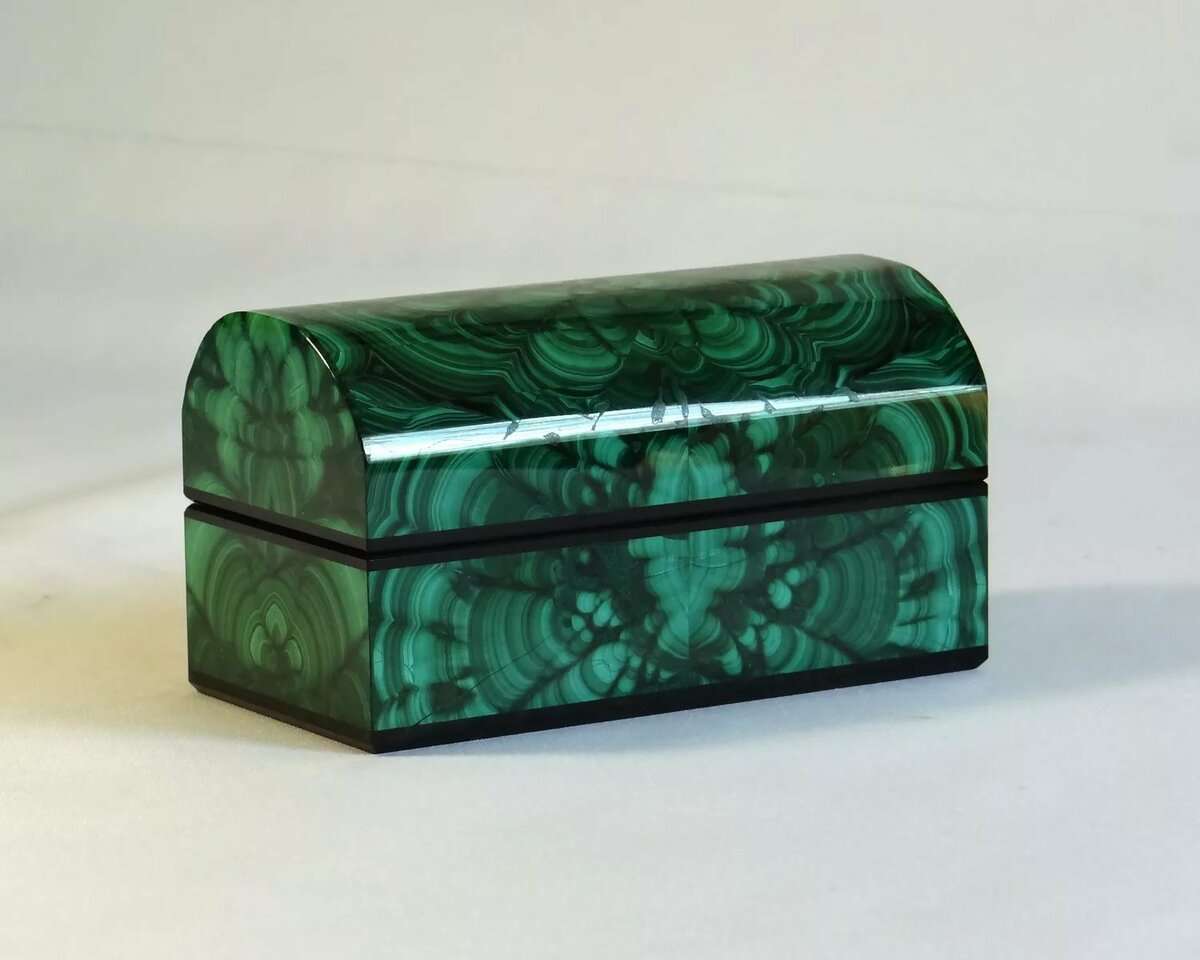
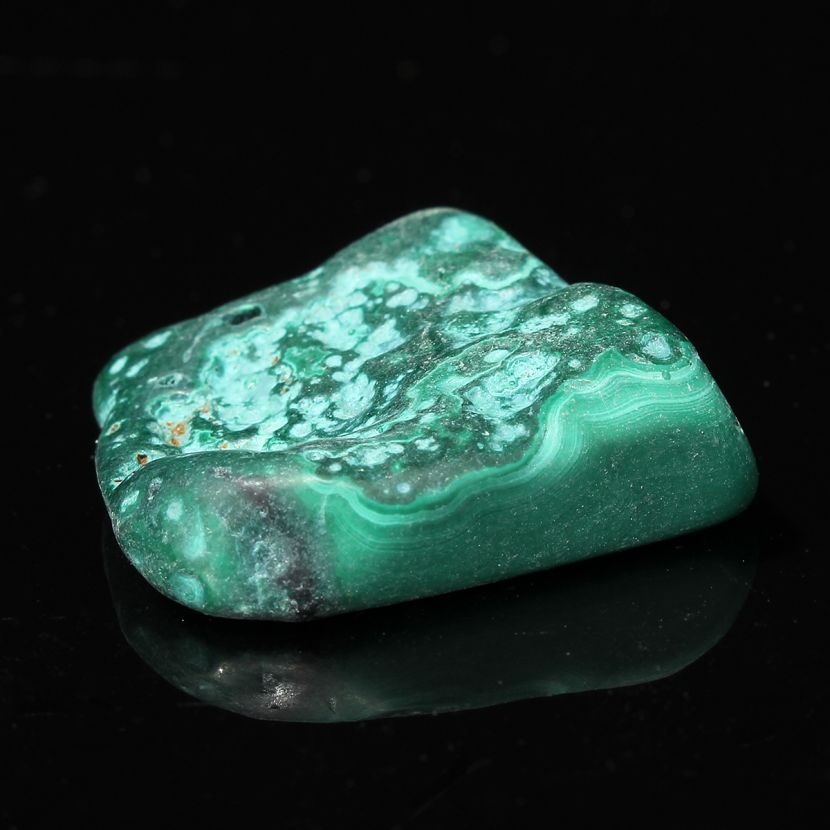
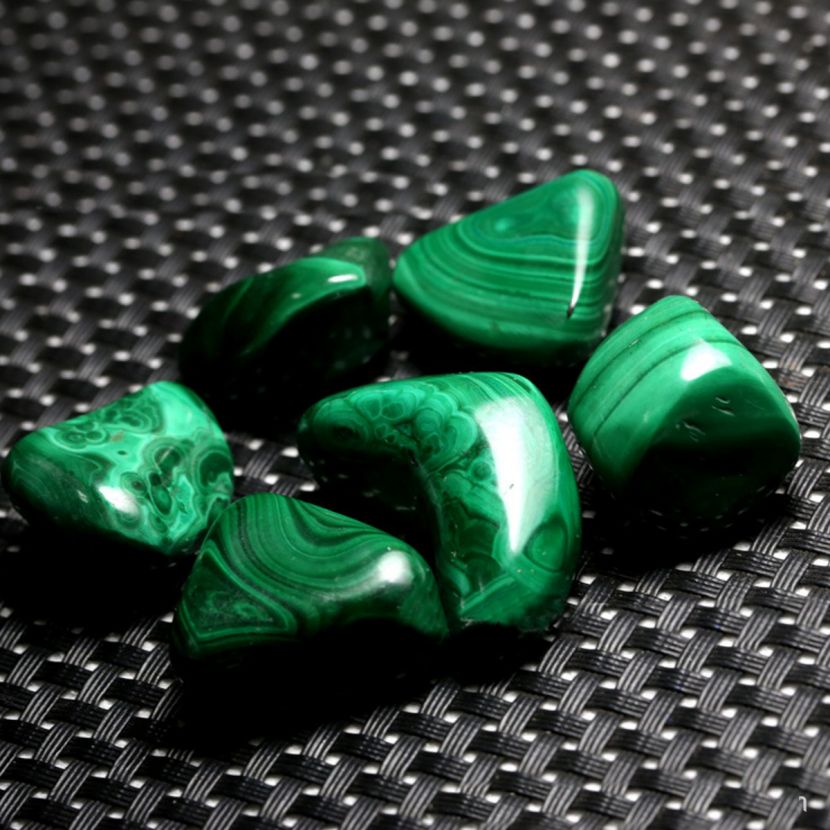
Malachites vary depending on where they are found. Stones from the Congo have concentric rings with strong contrast between adjacent layers. The pattern on the Ural malachites is more intricate. and the transitions are much smoother.
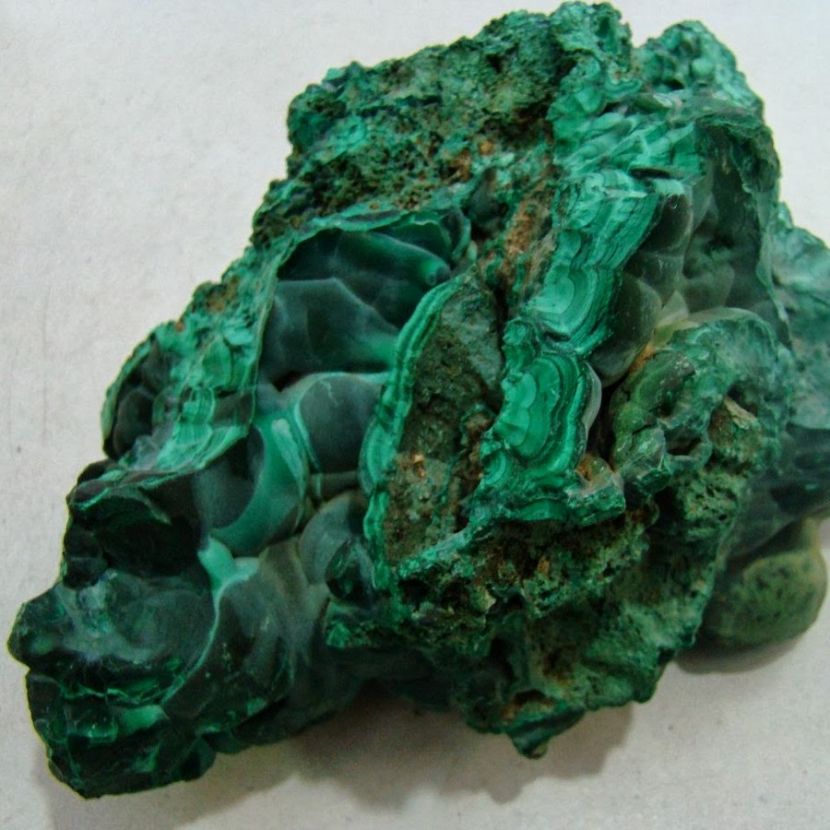
Among the Ural malachites, they were divided into three types:
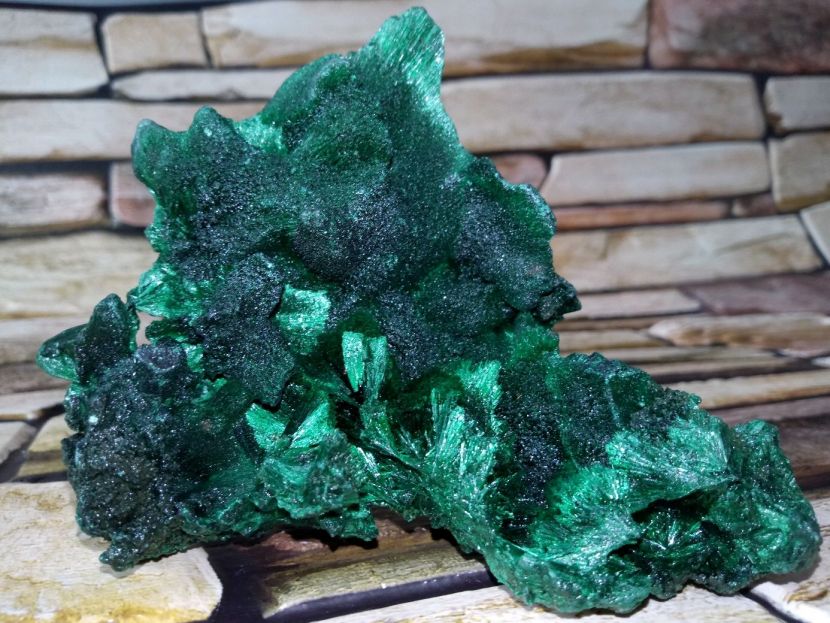
- Velvet or plush. The texture of this unusually beautiful subspecies resembles suede or velvet.
- Finely patterned. Similar in texture to birch leaves. Valued more than other varieties.
- Turquoise or pseudomalachite. Has a bluish tint. In fact, it is copper phosphate, not carbonate, like real malachites.
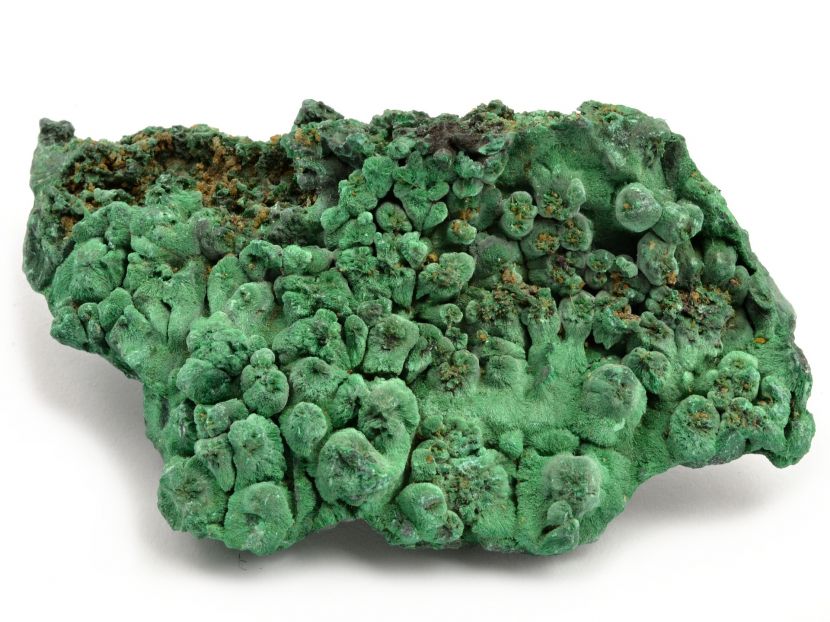
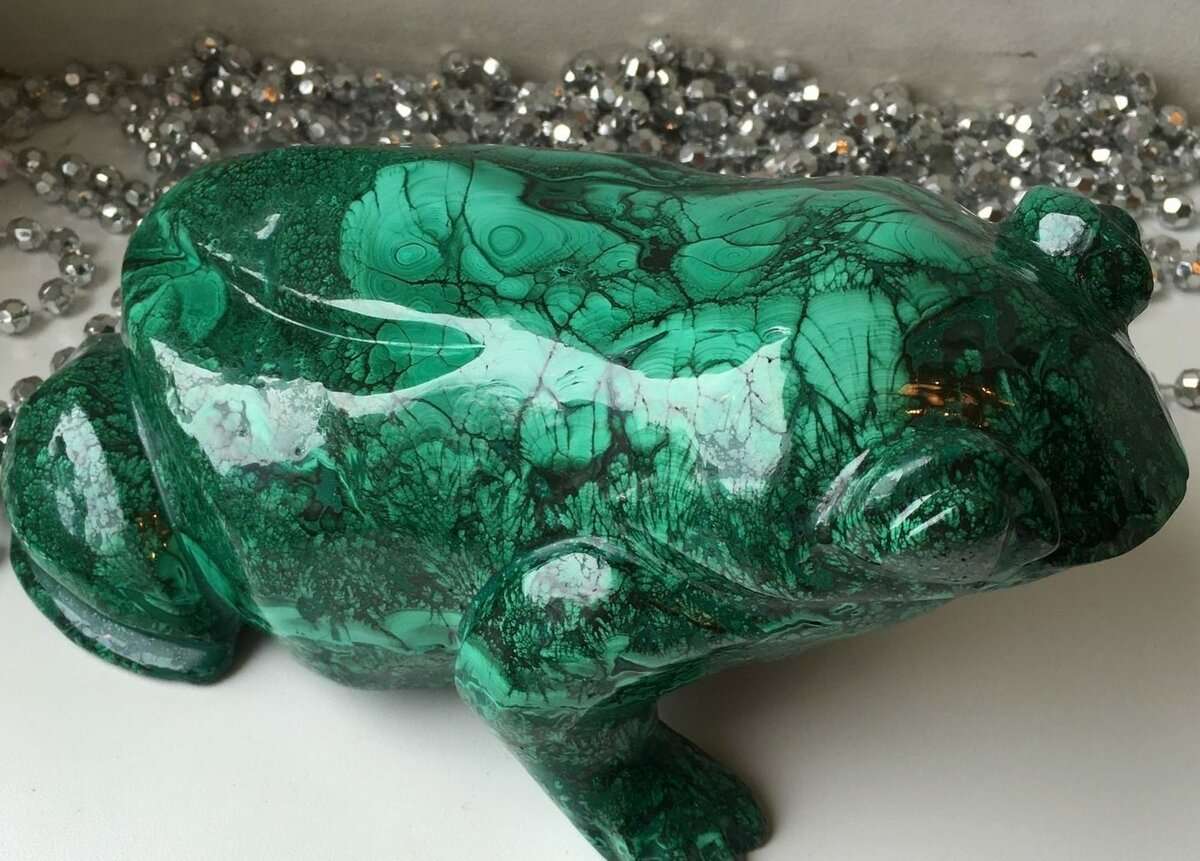
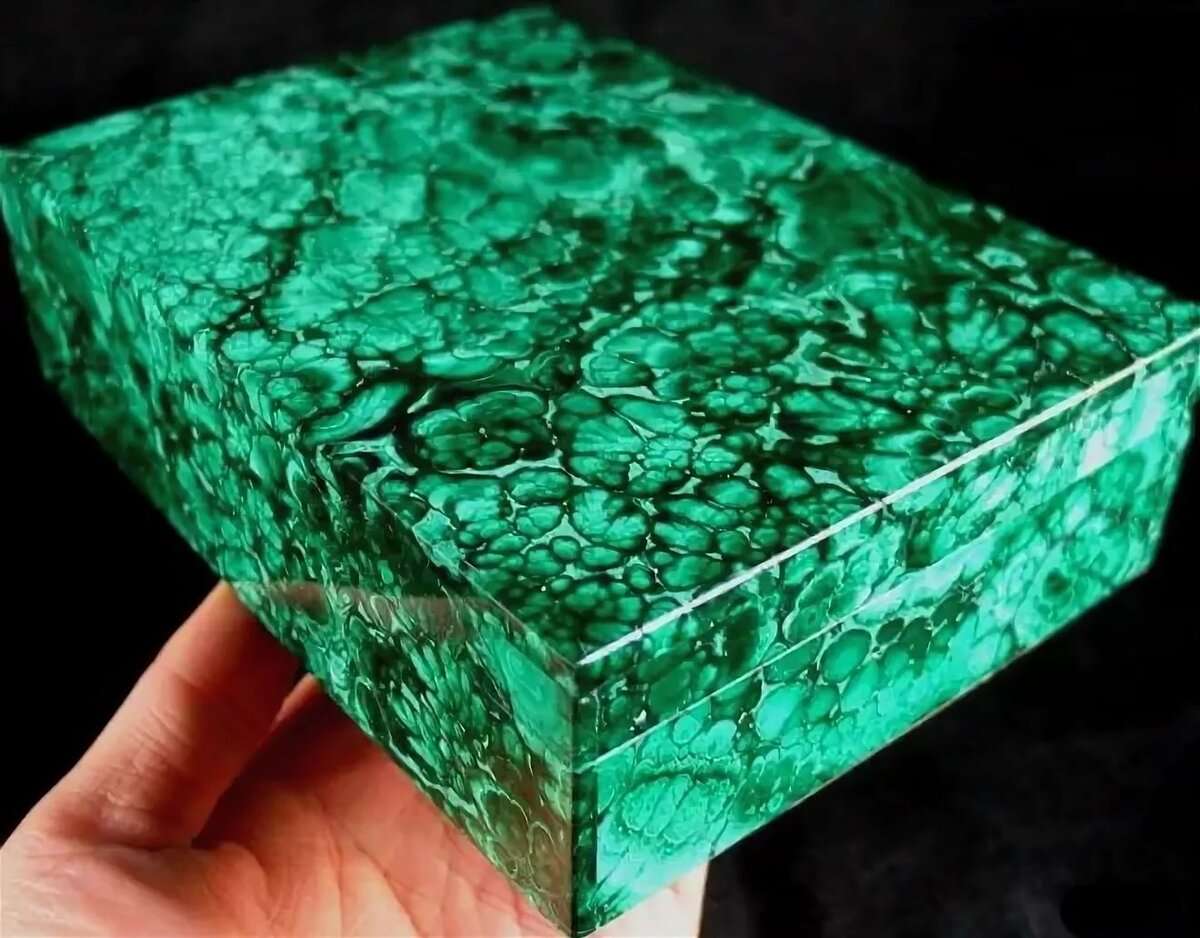
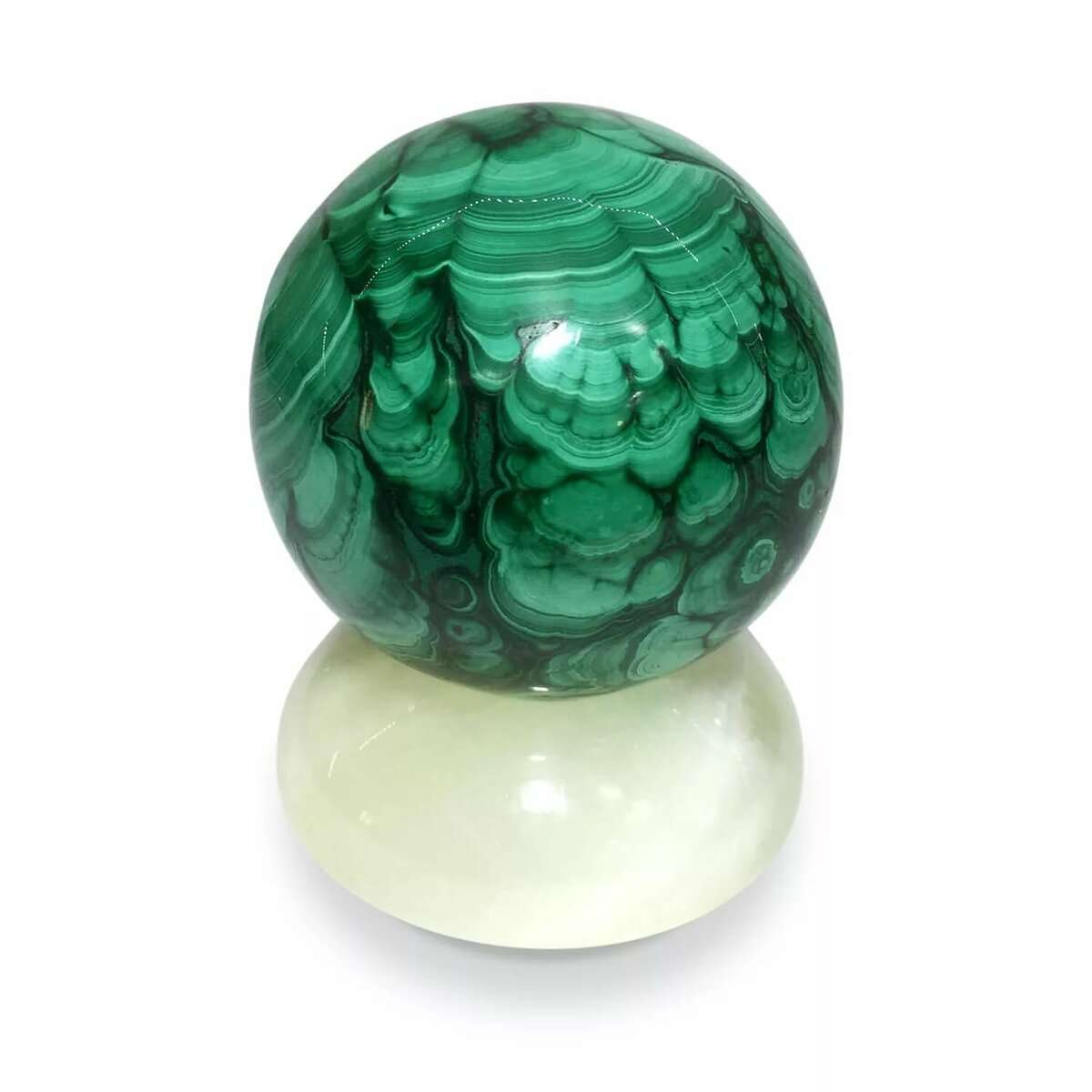
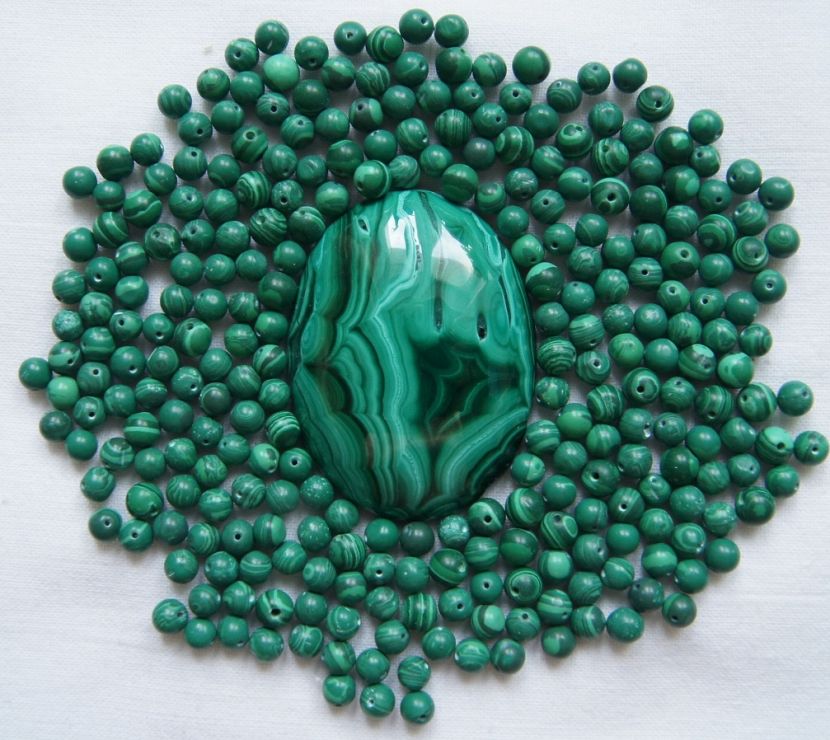
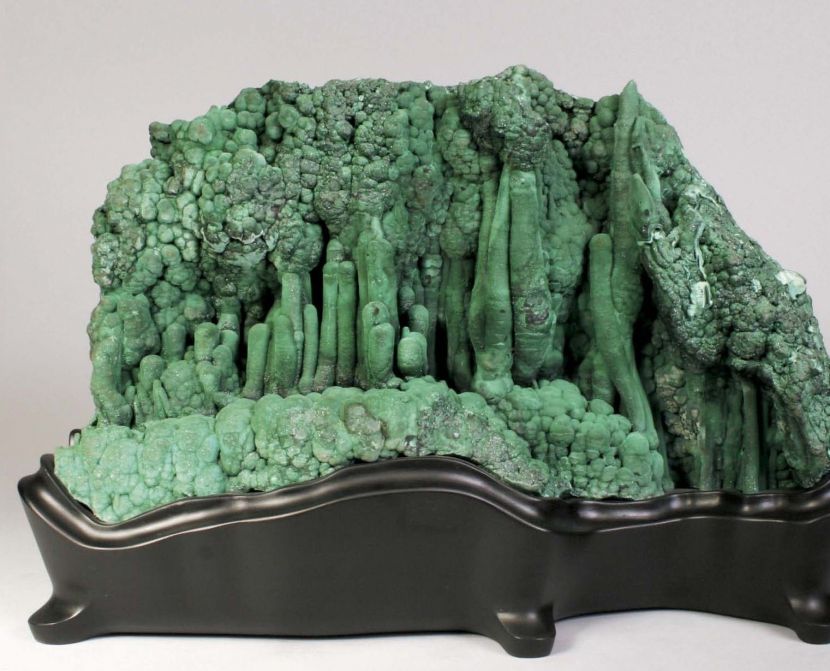
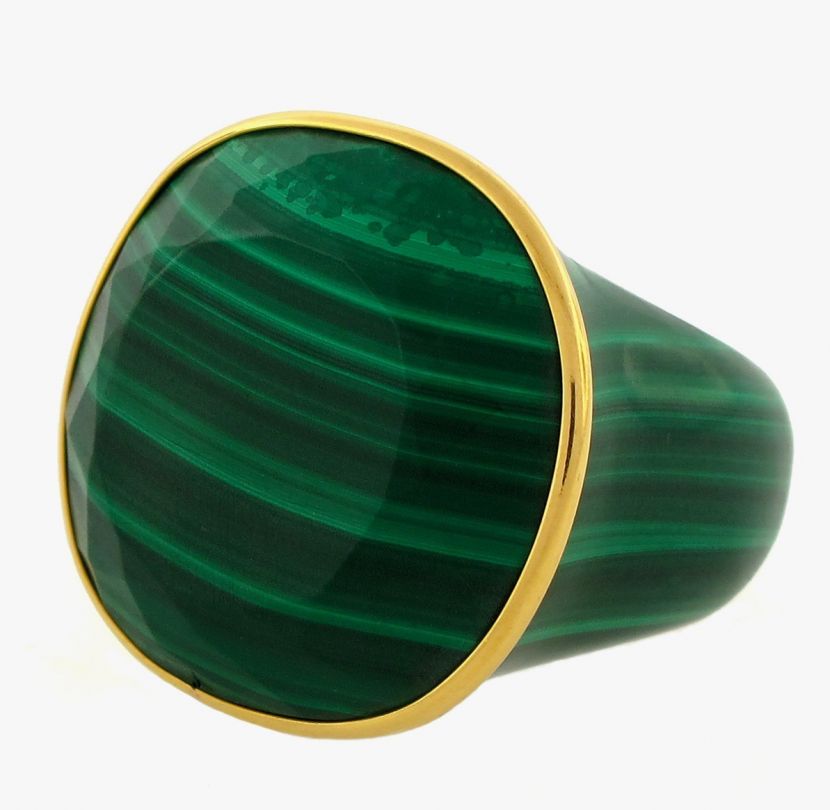
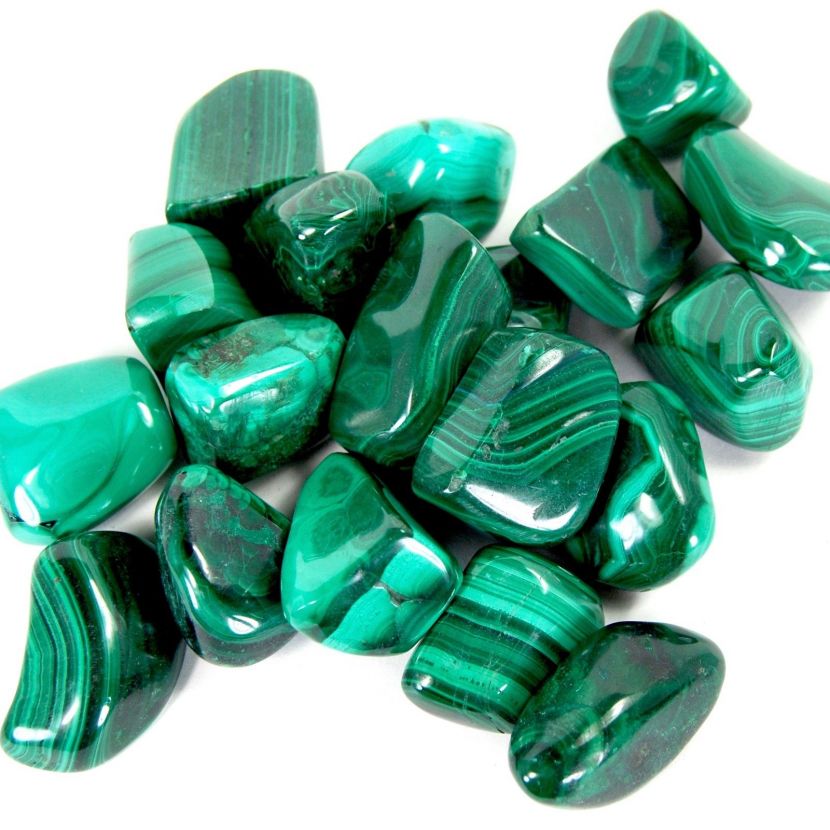
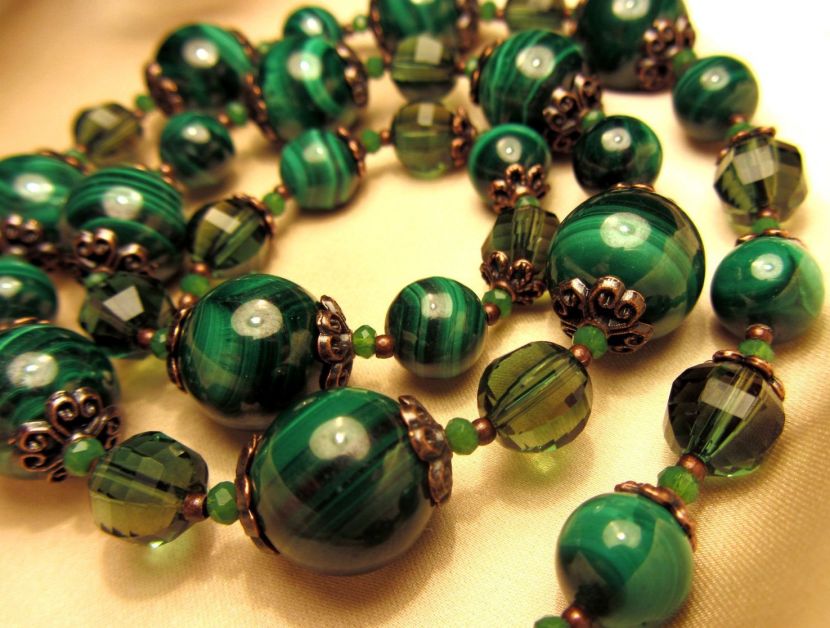
Malachite is a stone whose charm can be seen in the photo, but they only reflect its beauty to a small extent.
fakes
Malachite is a very inexpensive stone, with the exception of collectibles. It is easy to distinguish natural malachite from glass and even more so from plastic by its coldness from stone, if you hold it in your hand.
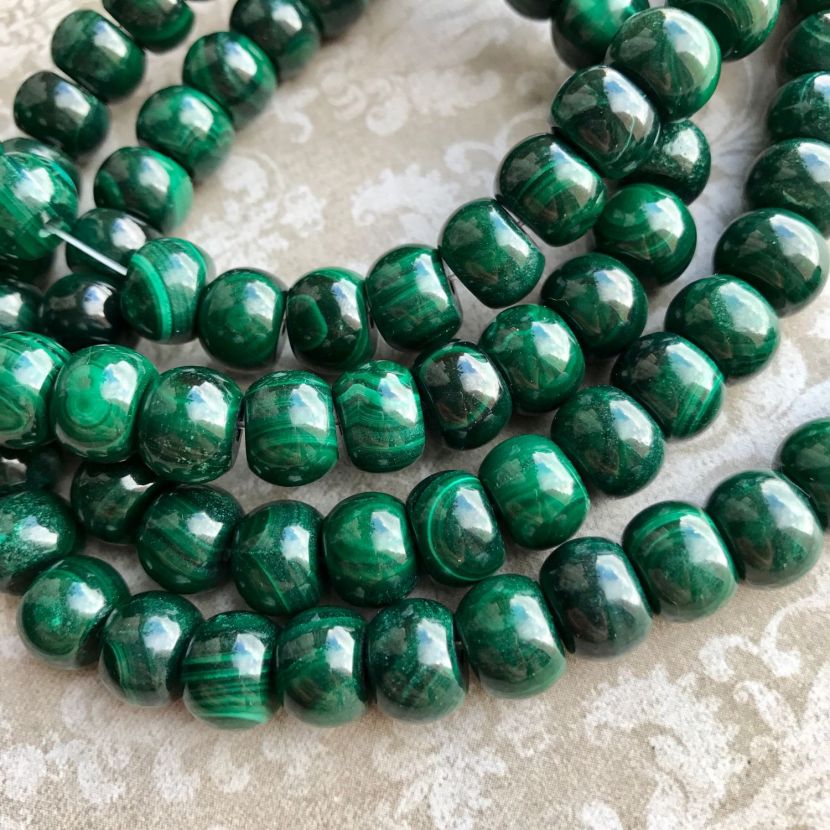
A reliable but absurd way is to lower the stone into hydrochloric acid. In it, malachite dissolves with a hiss, coloring the solution blue.
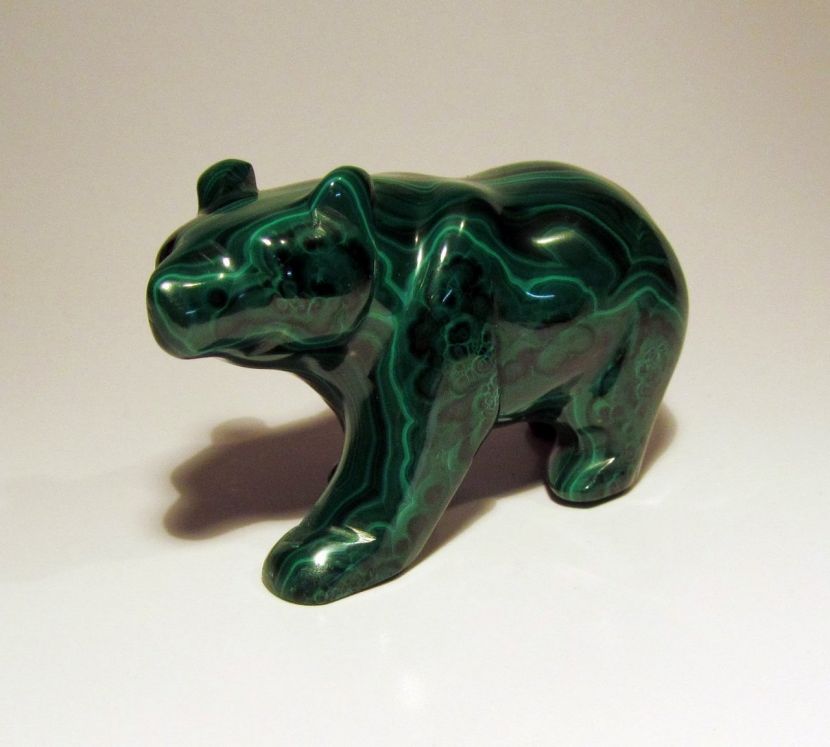
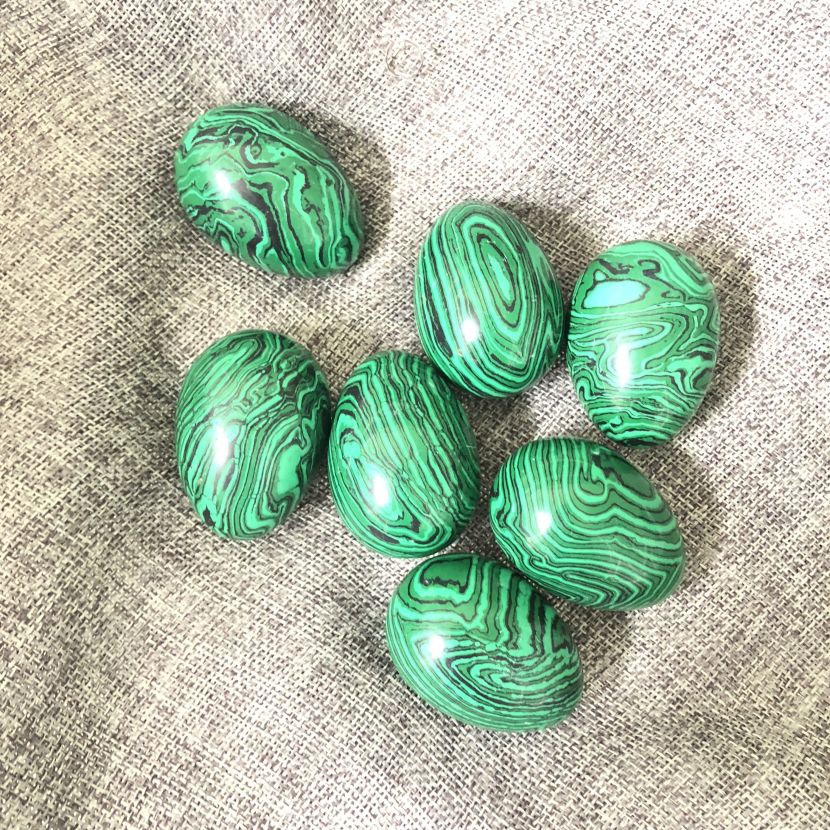
The easiest way is to carefully examine the stone, preferably under a magnifying glass. The pattern of natural stone never repeats; small chips and defects can be seen on the surface. On a fake, everything is perfect.
magical properties
According to existing beliefs, malachite as a talisman strengthens health and spiritual strength, favors the fulfillment of desires and making the right decisions.
In the legends of the Ural peoples there are stories that a stone can make a person invisible. A shaman who drinks water from a malachite bowl will be able to understand the language of birds and animals. In the beliefs of these peoples, malachite is attributed the property of purifying the human soul from sins. It absorbs all the evil committed by the wearer. True, at some point the cup of patience of malachite will overflow, and all the evil committed by a person will return to him tenfold.
Malachite symbolizes renewal, the search for new horizons. He loves people who are prone to risk, who are not afraid to abandon their usual way of life and rush to new perspectives. It is the stone of adventurers.
Malachite - this stone has a whole range of magical properties, so it is suitable as a talisman:
- teachers;
- scientists;
- writers;
- musicians;
- artists;
- travelers;
- climbers;
- pilots; firemen;
- military;
- rescuers.
For some, it will help to go beyond the usual views, for others it will prompt new creative ideas, for others it will protect from accidents and help maintain self-confidence in a difficult situation.
Medicinal properties
Malachite has the following healing properties:
- normalizes the emotional state;
- lowers blood pressure;
- protects against seizures;
- relieves joint pain;
- relieves asthma attacks;
- helps women in critical days.
Important! Malachite should not be worn by hypotensive patients! It lowers blood pressure.
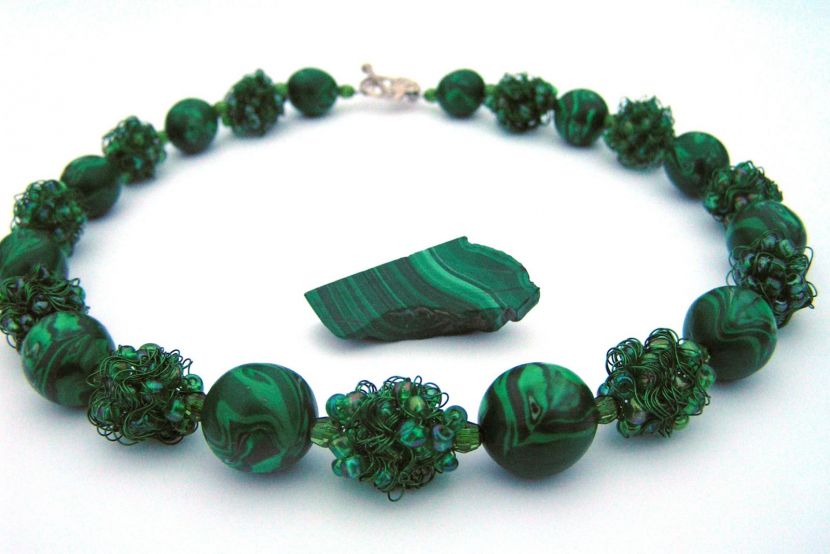
Zodiac signs
Malachite is ideal for those born under the sign of Libra, Taurus, Leo and Virgo.He will help these signs to realize their creative potential, smooth out negative character traits, give good luck and joy.
But for Cancers and Pisces, Malachite is contraindicated, because it can develop arrogance in them and incline them to unjustified risk and reckless actions, provoking trouble with the law and in relations with others.
Compatibility
Well compatible with turquoise, jasper, pearl, emerald, jet, selenite, chalcedony, jade, opal, aquamarine, aventurine.
You should not wear Malachite along with ruby, garnet, pyrope and diamonds.
stone care
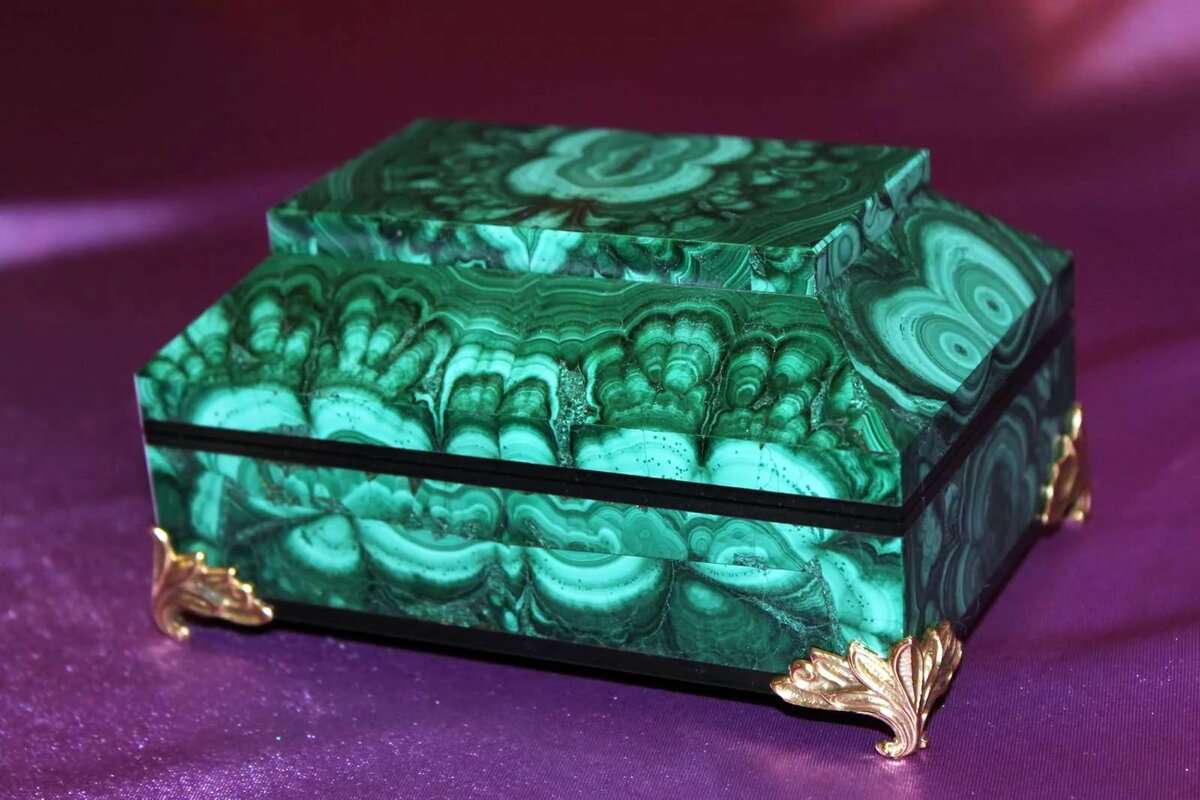
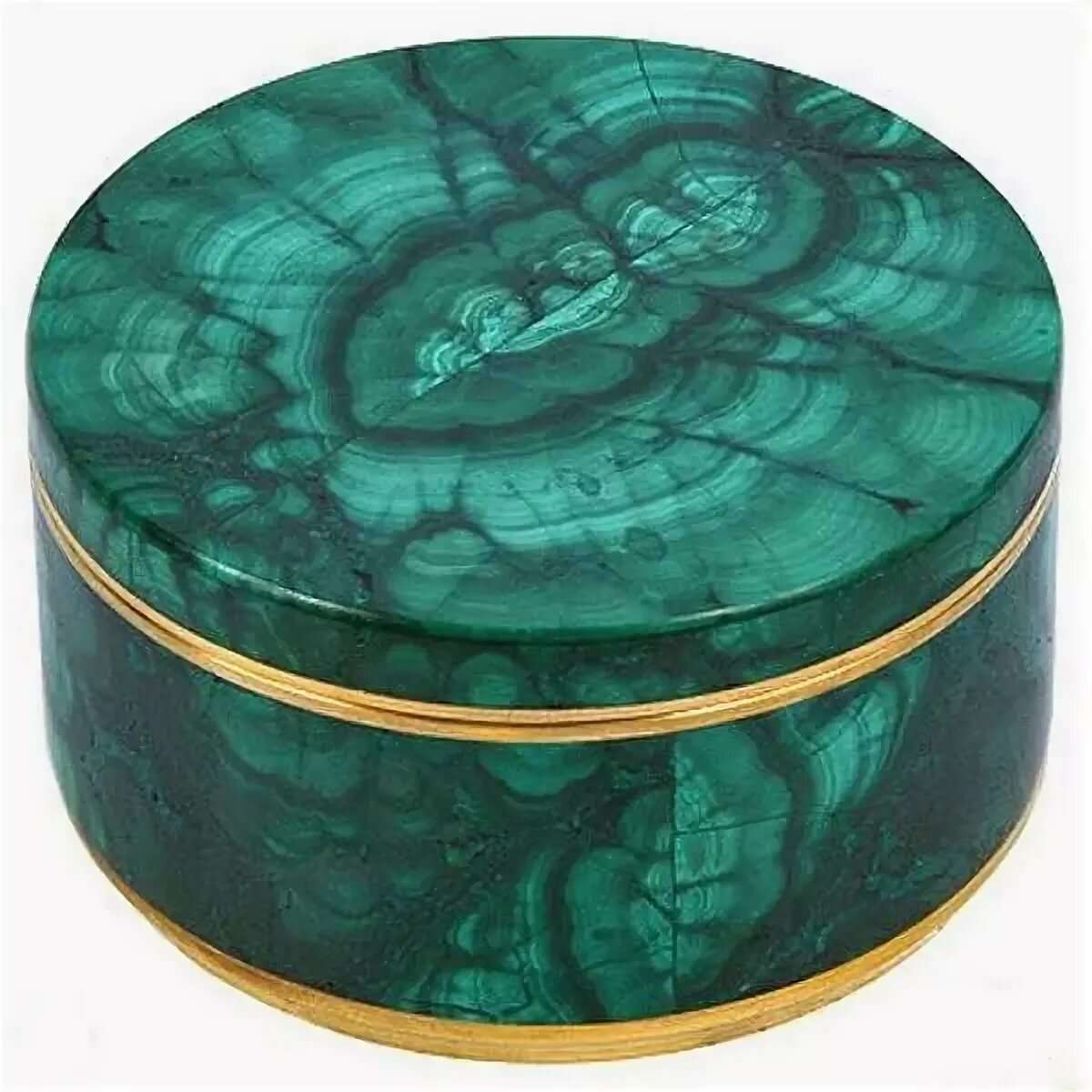
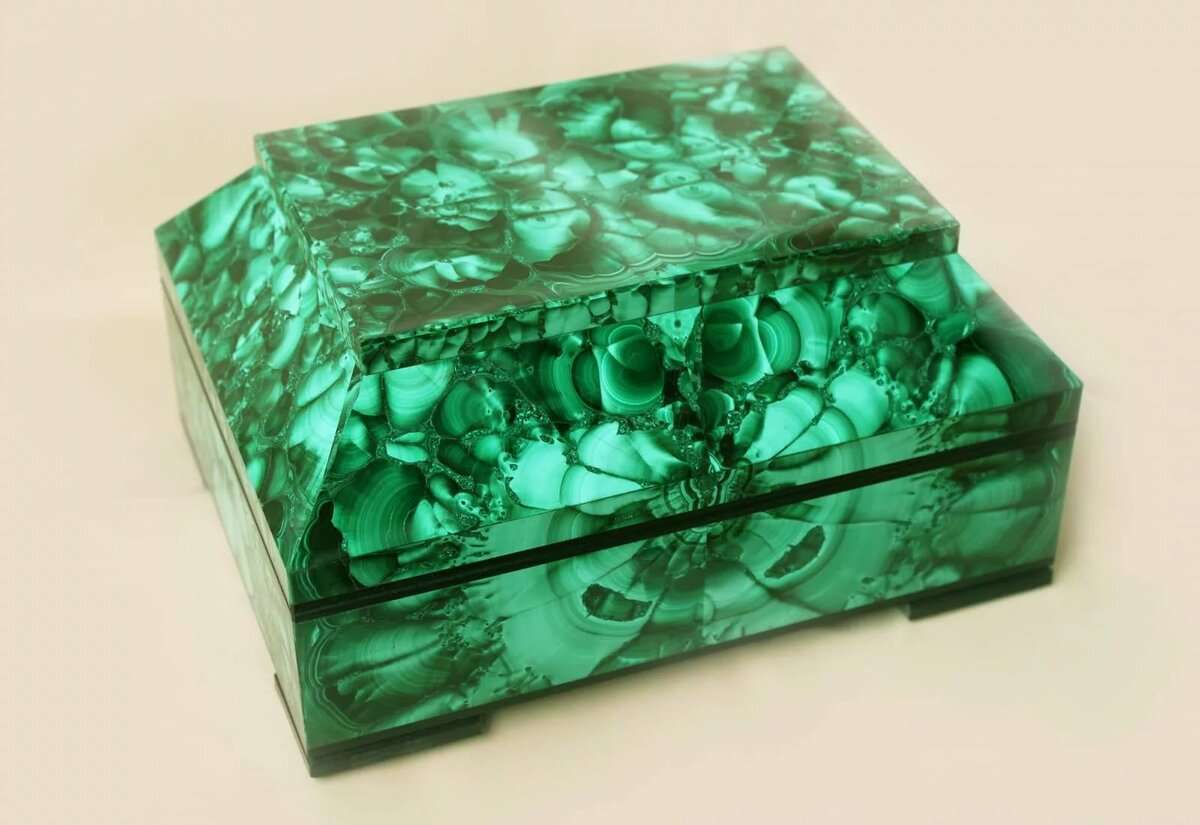
Malachite should be protected from bumps and drops because of its fragility, and its low hardness makes it unstable to scratches. Therefore, it should be stored wrapped in a soft cloth or in a box lined with velvet on the inside.
Malachite is sensitive to sudden changes in temperature. Boxes are best stored in a cabinet behind glass, away from batteries and other heat sources.
You can wash it with water or a mild soapy solution, and then immediately dry it with a dry cloth.
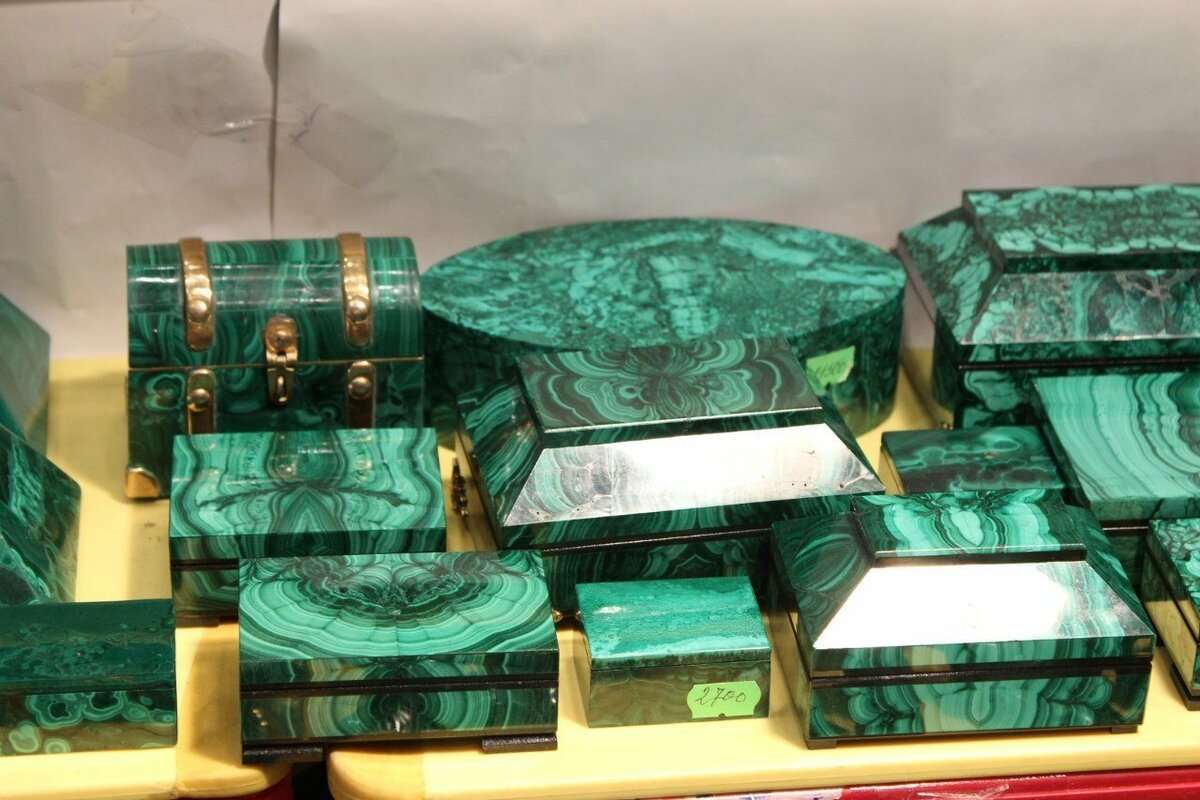
Malachite is a very inexpensive stone that has so many wonderful properties that it is worth having at home in the form of beautiful crafts, and it is better to purchase jewelry with it.
Photo of the mineral Malachite