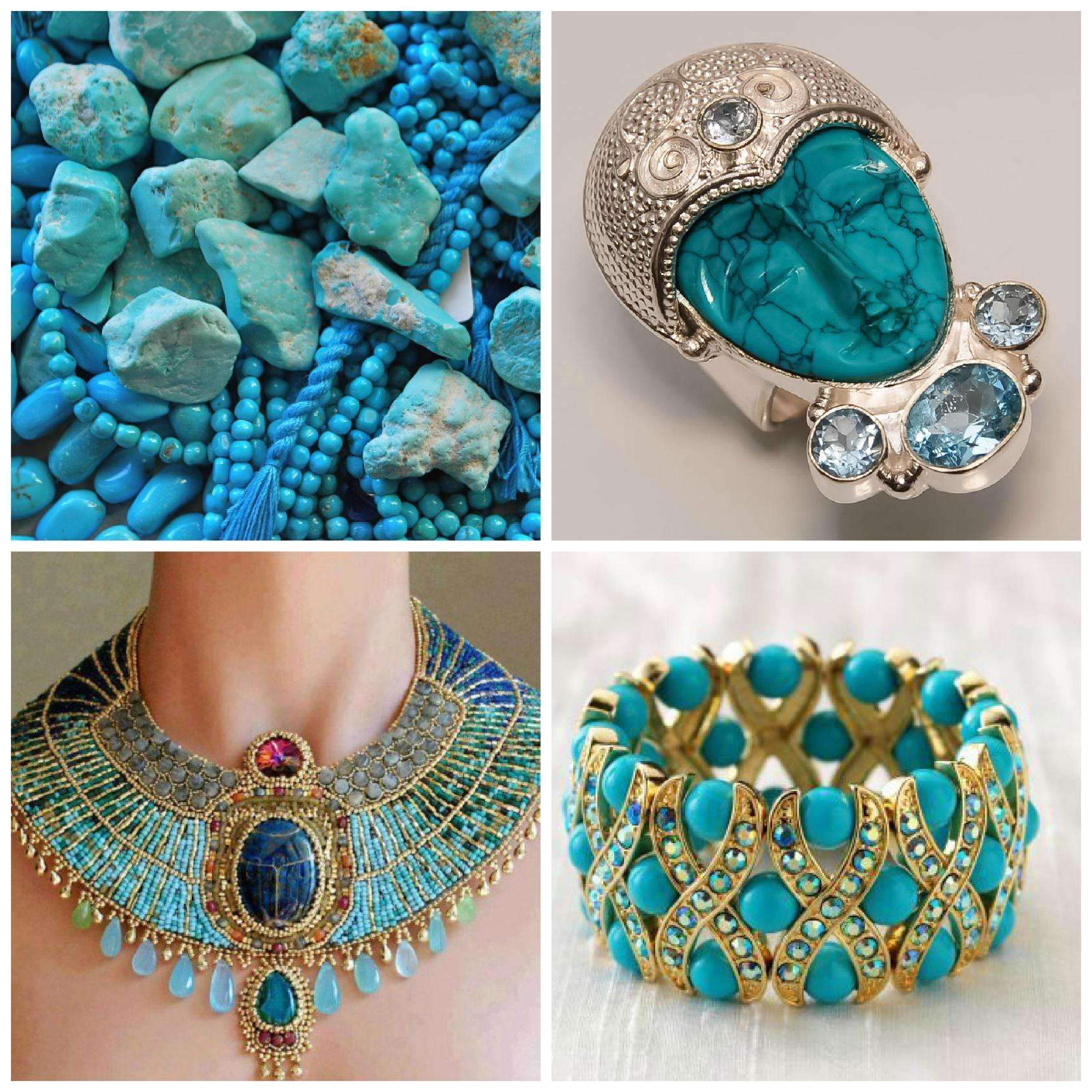
Sky blue Turquoise stone - where did it come from and what is its history, rules for choosing and caring for a stone, beautiful photos
Turquoise is one of the rare gems, jewelry from it pleases any owner, especially received as a gift. Traditionally, it is considered a feminine stone. Inserts look great in silver, gold and cupronickel. However, a magical mineral requires a competent choice according to the sign of the zodiac, in shape and shade. It is important to know the storage and care conditions so as not to spoil the elegant decoration.

Historical information about turquoise and the translation of the name
There are many references to this gem in legends and tales, but there is no single version of the origin and decoding of the name. Most often it was called "firuza" (translated as "happiness"), and today it is a female name for many peoples of the Middle East. Another version is from the word “piruz”, translated from Persian as “victorious”.
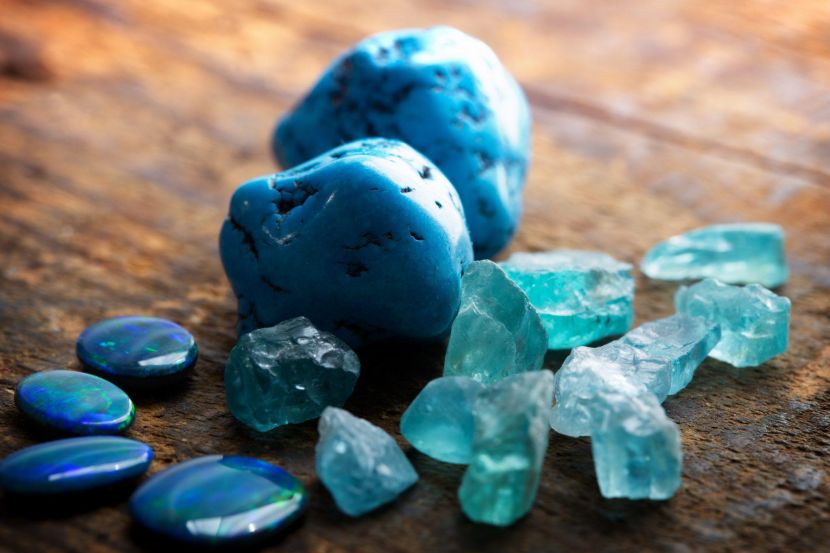
Sky-blue and greenish stones in Asia were called the "eye of the Buddha." It was used as inserts in statues of deities, in places of worship and monumental statues. In Europe, it was called "Turkish stone", from where it was brought by merchants, although there are no deposits of it there.They tried to guess with him, wanting to get answers to their questions and find out the future, which is repeatedly mentioned in the manuscripts.

The ancient Egyptians believed in the ability of turquoise to attract good luck. The scarab was the most popular talisman, which was made from gems, inserts from this mineral of different shades prevailed. The tribesmen of Tutankhamen knew about the properties of the stone - turquoise in the form of amulets and jewelry filled his sarcophagus.
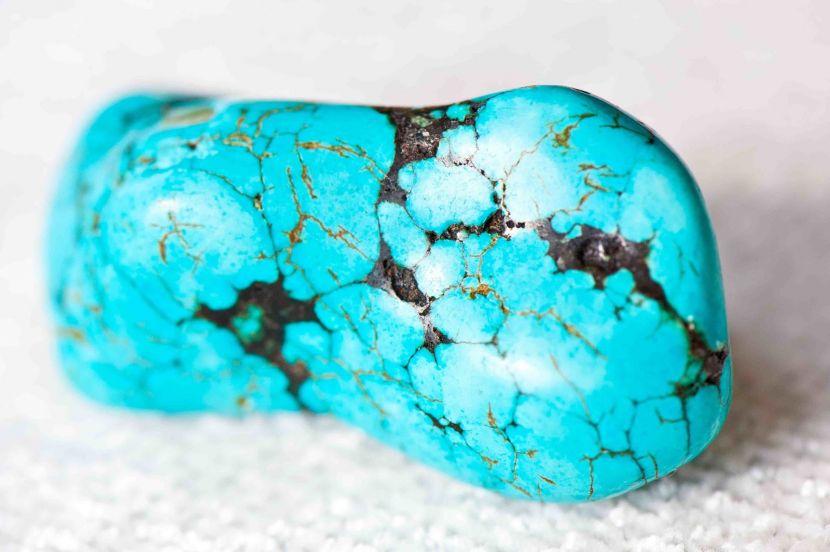
In the ancient world, it was believed that this mineral originated in the soil from the bones of young maidens suffering from unrequited love. Perhaps for this reason, so far it is not recommended to give turquoise products to young girls who do not have a couple. This right was reserved only for grooms who brought jewelry to their chosen one on the eve of the wedding.

Important! Women from different historical eras were sure that turquoise amulets enhance their sexual energy and make them more attractive to men.
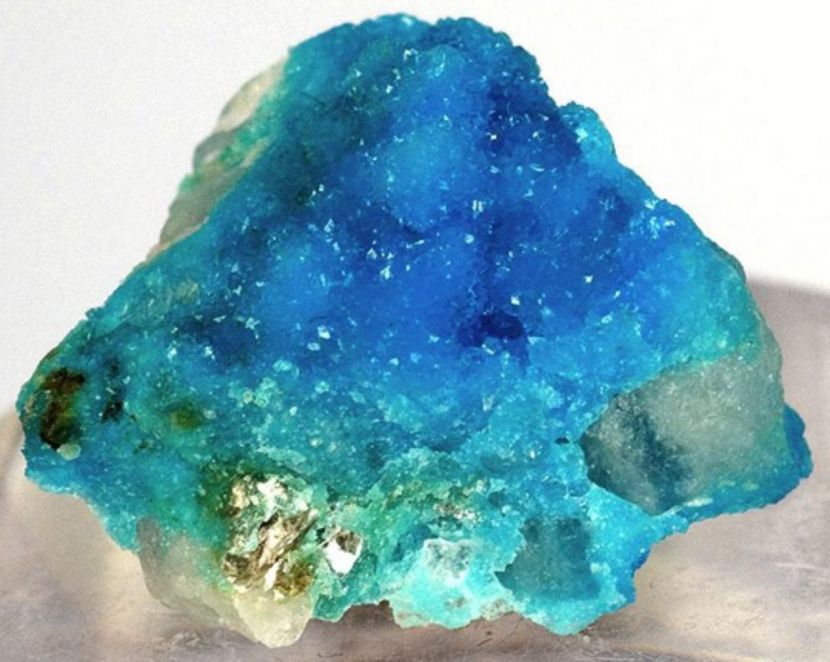
The rulers of the powers at different times gave a lot of money for sky-blue and green inserts with dark stains for their throne. Ivan the Terrible was superstitious, when he saw that the turquoise in his throne had darkened, he almost lost his mind and began to talk about his impending death.
Physical and chemical properties of the mineral
Turquoise, from the point of view of chemists, is a hydrated phosphate of aluminum and copper. In fact, this is copper sulfate with an admixture of aluminum and minor inclusions, on which the shades and density of the mineral depend.

The chemical formula is CuAl6[PO4]4(OH)8•5H2O, an opaque blue mineral with a matte or waxy sheen.
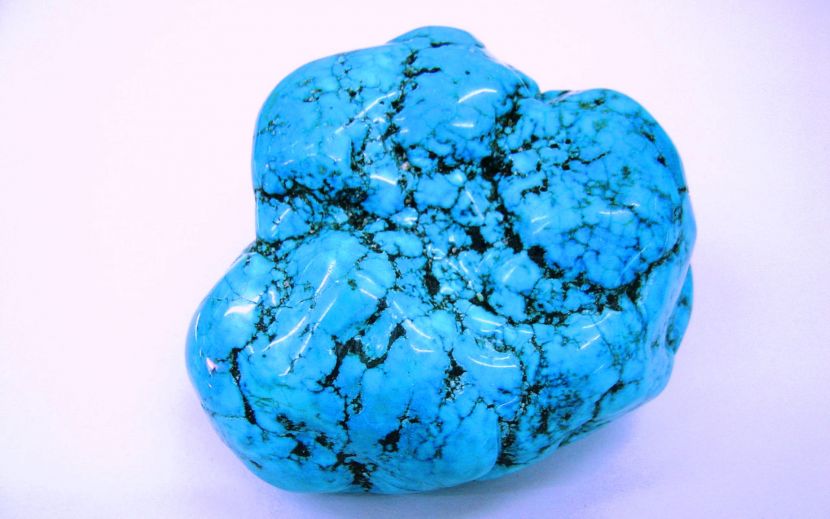
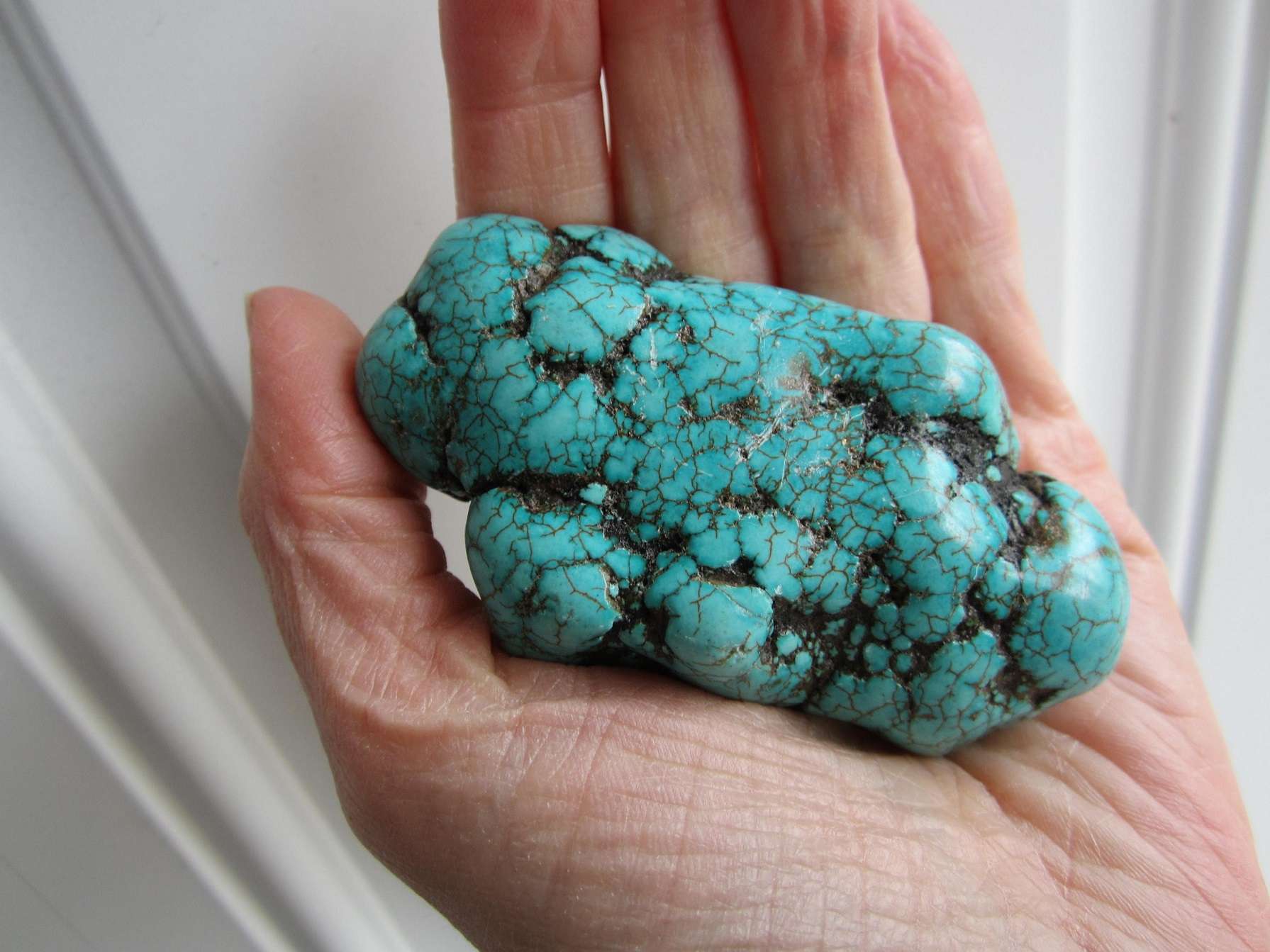
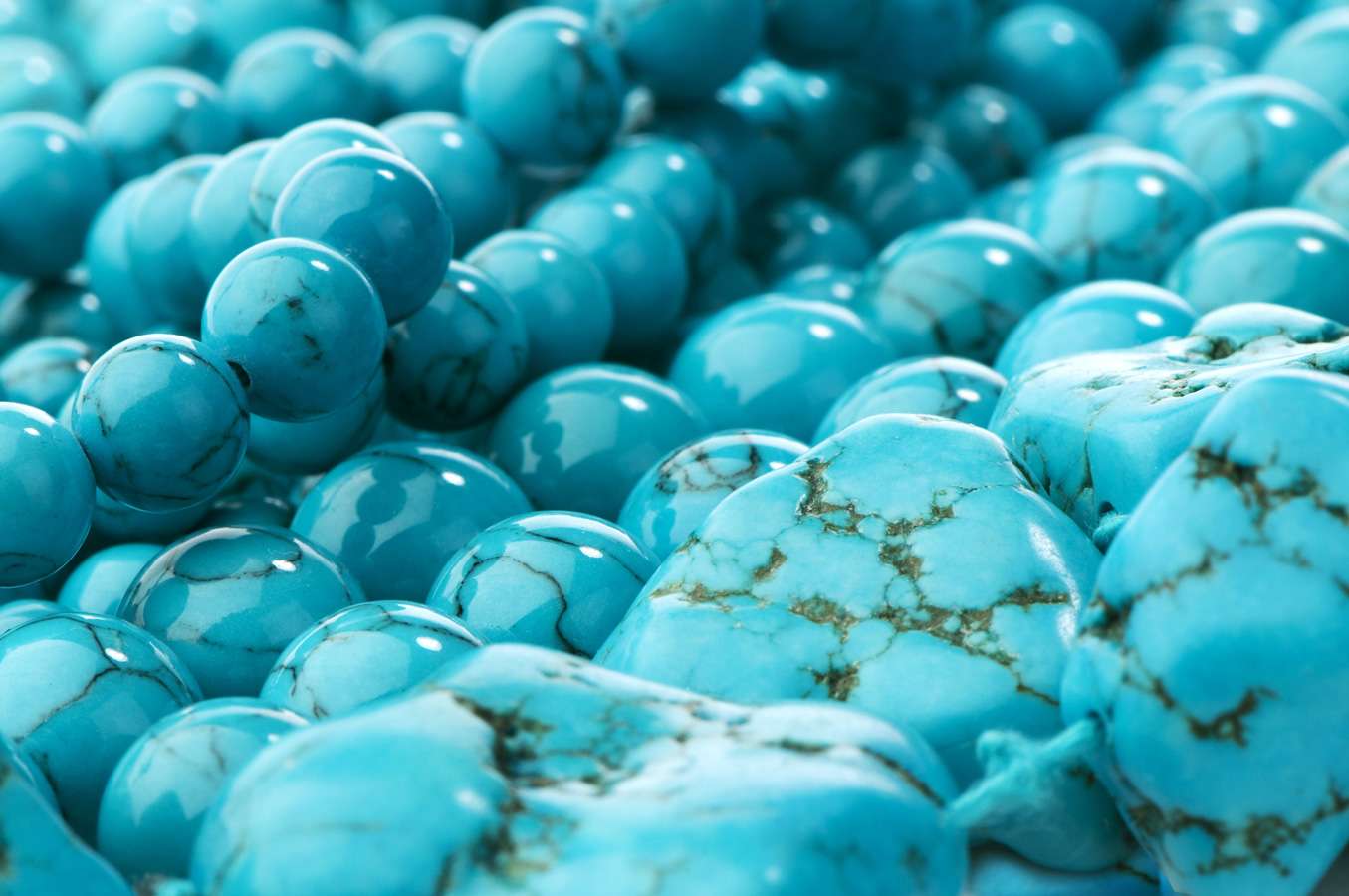
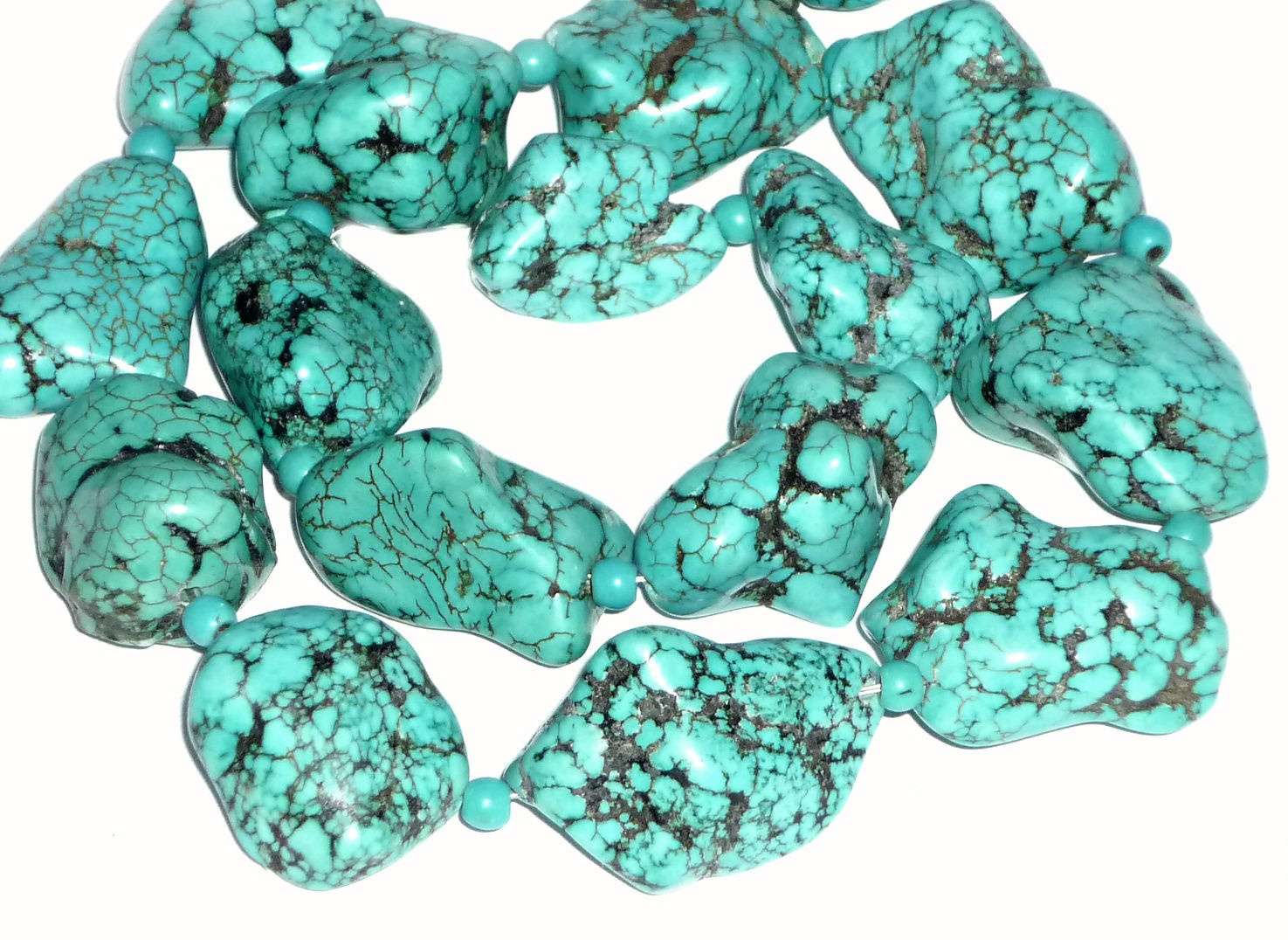
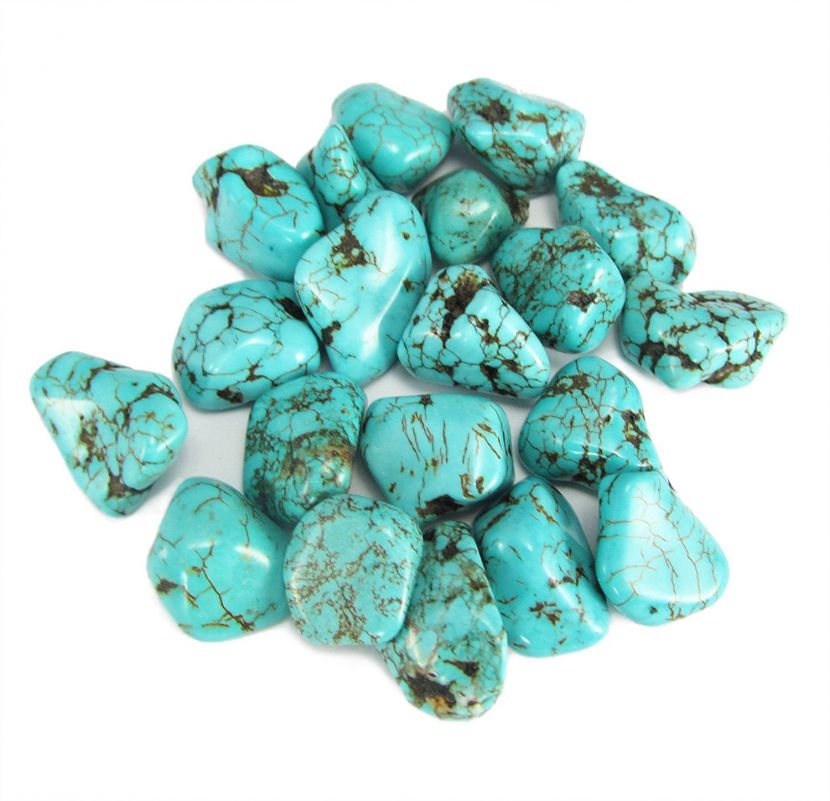
It has green varieties, but any variation shows the dark blistering streaks that are characteristic of these stones.
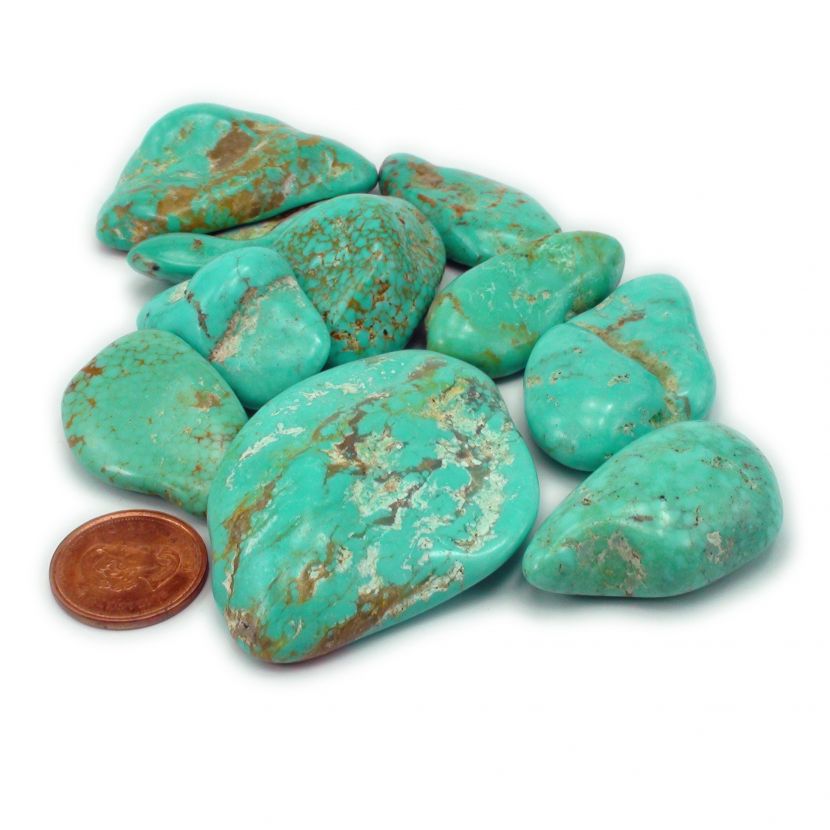
Hardness on the Mohs scale is relatively small - 5-6 units.It can be broken with a hammer blow.
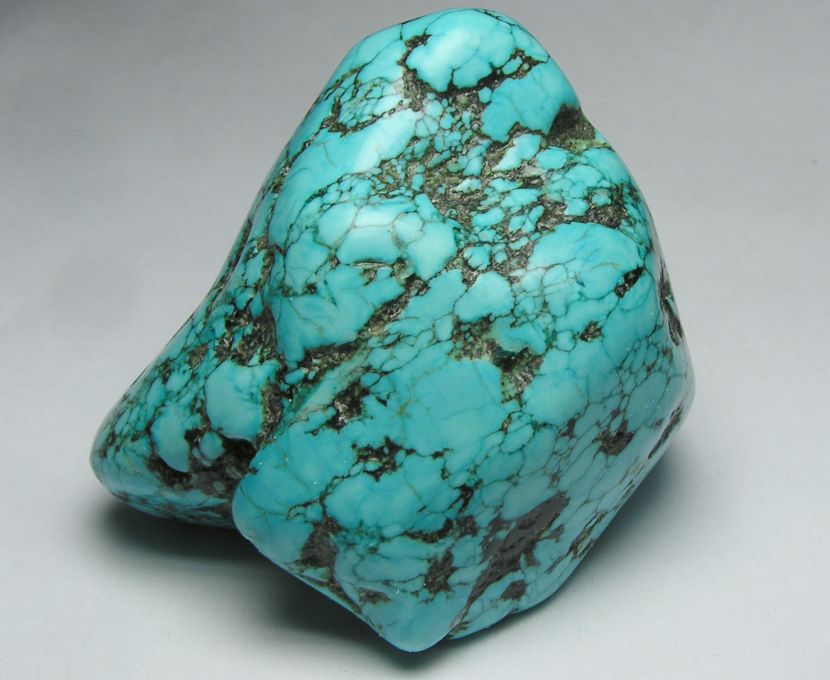
Turquoise deposits
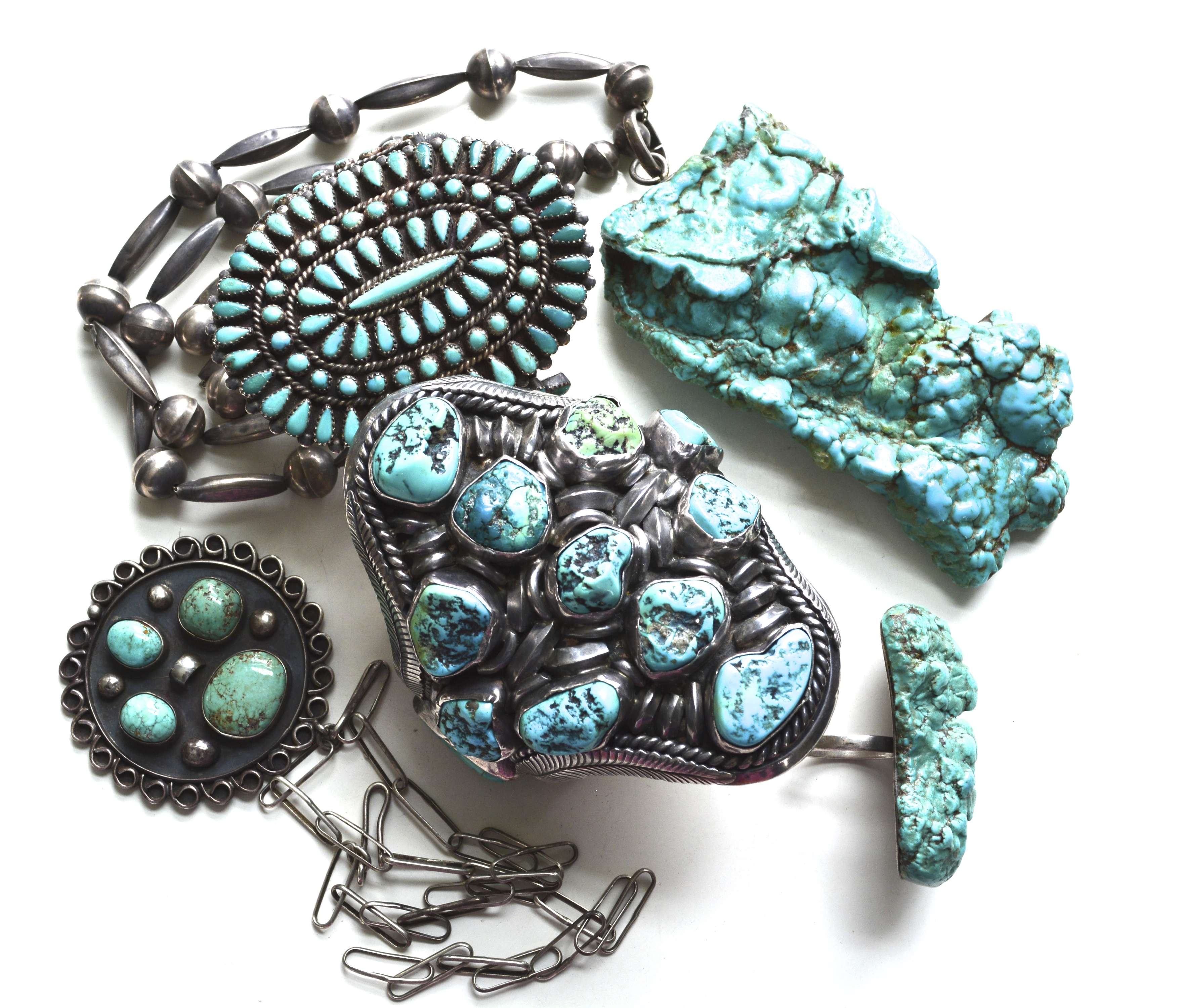
India, Iran and Tibet are the main suppliers of sky blue with dark veins of the mineral. Turquoise has been in demand since ancient times, and many deposits have already been fully developed. The greenish mineral is especially revered in Tibet, where it is mainly mined for the manufacture of talismans and amulets.

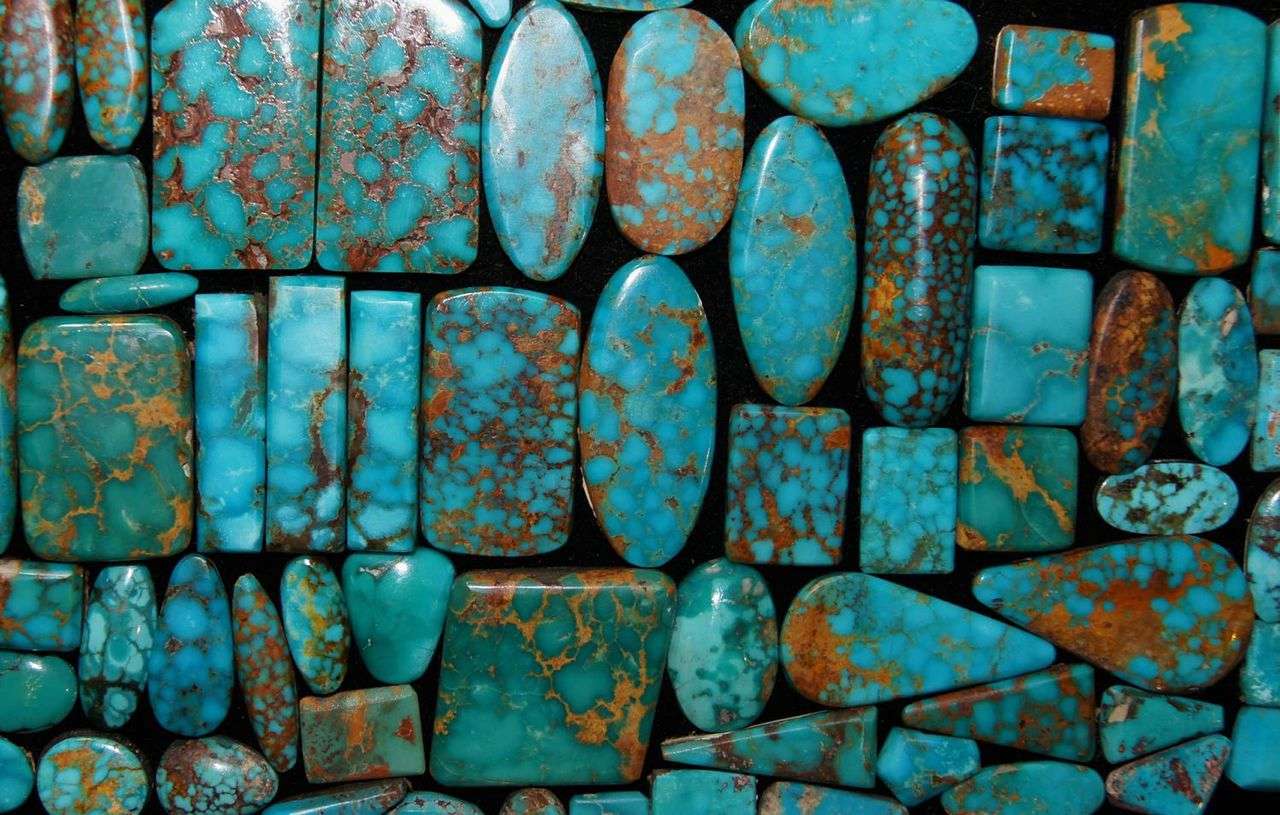
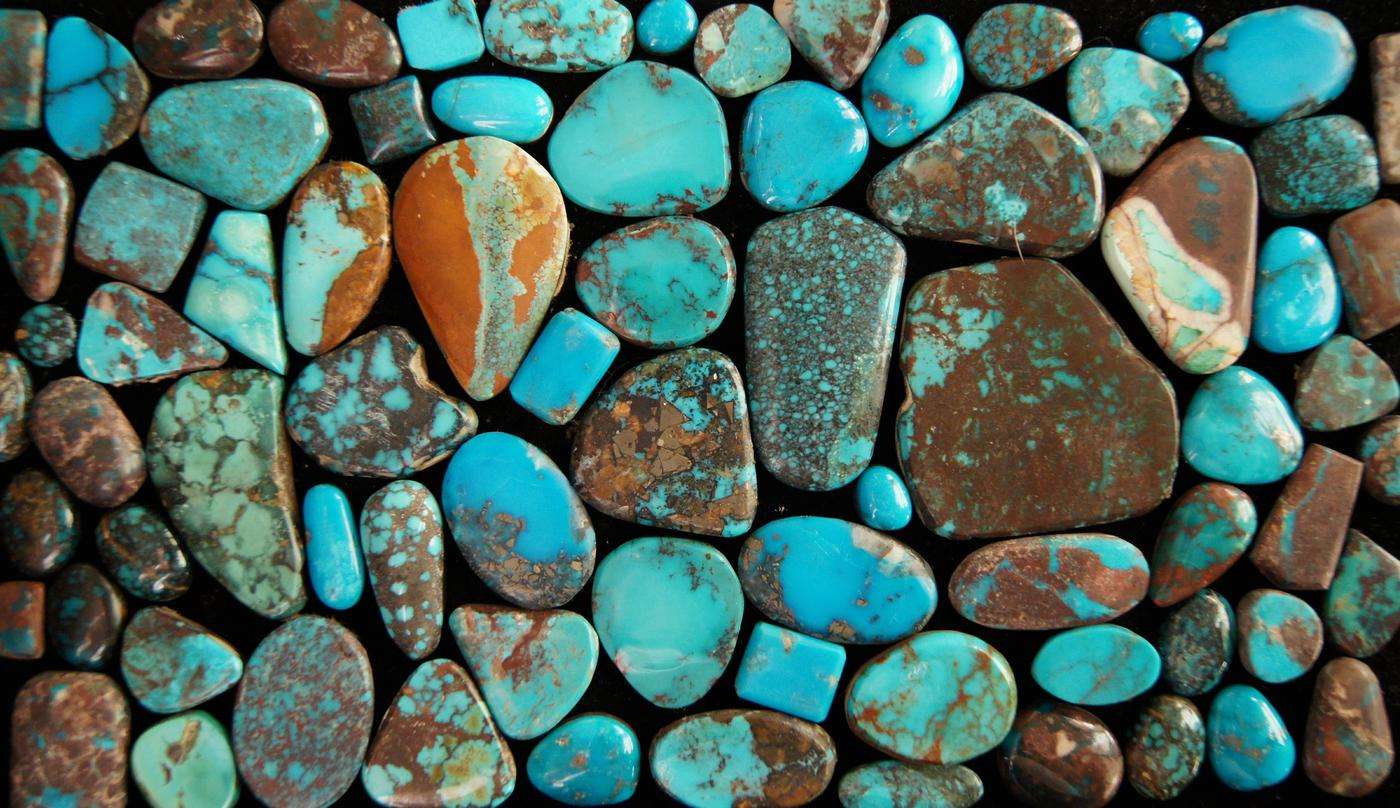
Minerals from different deposits differ in different parameters:
- shade;
- the size of the nuggets;
- the color of the veins (from light brown to chocolate and black tones);
- density (different weight of stones of the same volume).
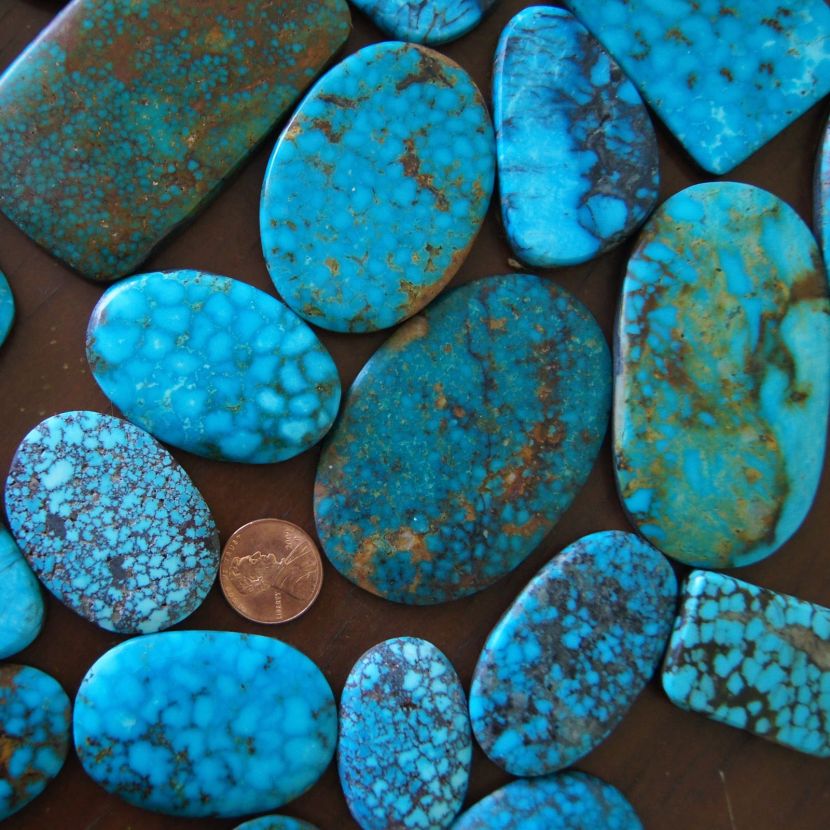
In ancient Egypt, blue turquoise was mined, it was “lightened” for a long time in the sun to a whitish hue. Today, turquoise is mined in Peru and Brazil, the USA and Mexico, Tanzania and Australia.
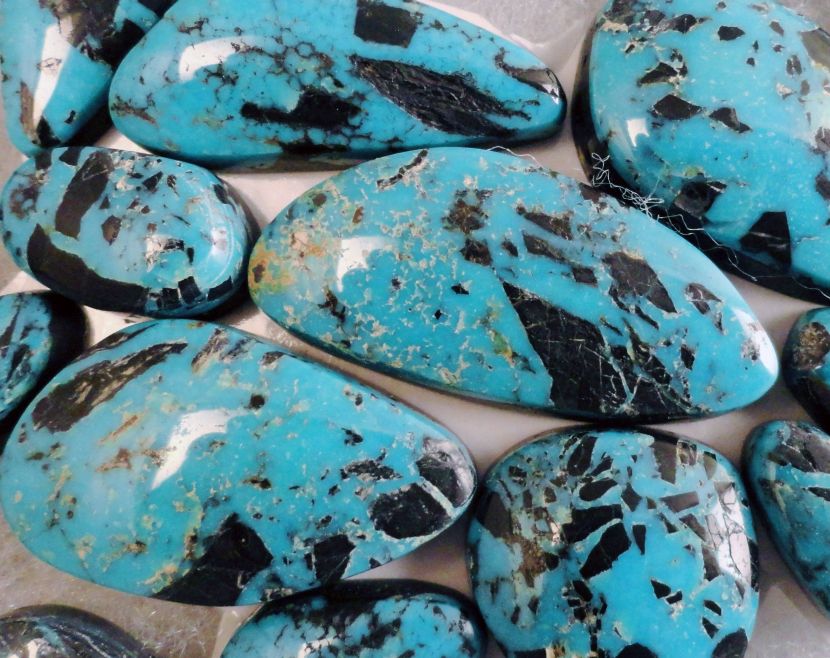
The most common shades
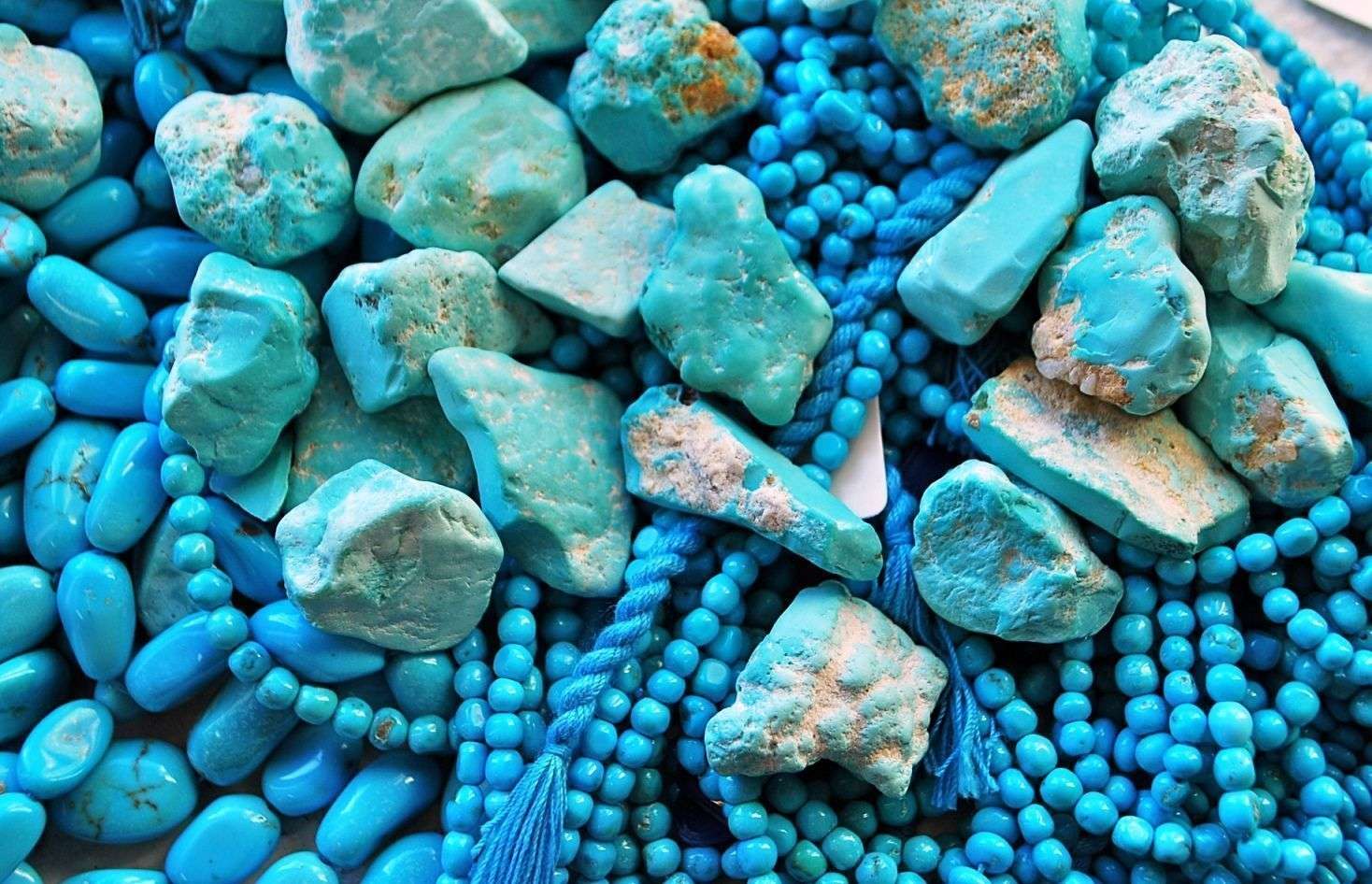
The characteristic structural pattern and the typical greenish-blue tint, which gave the common name "turquoise", makes all varieties of the gem recognizable:
- green or "old" turquoise;
- sky blue or "young";
- blue-green;
- greenish-blue turquoise (classic, often used for fakes as a reference).
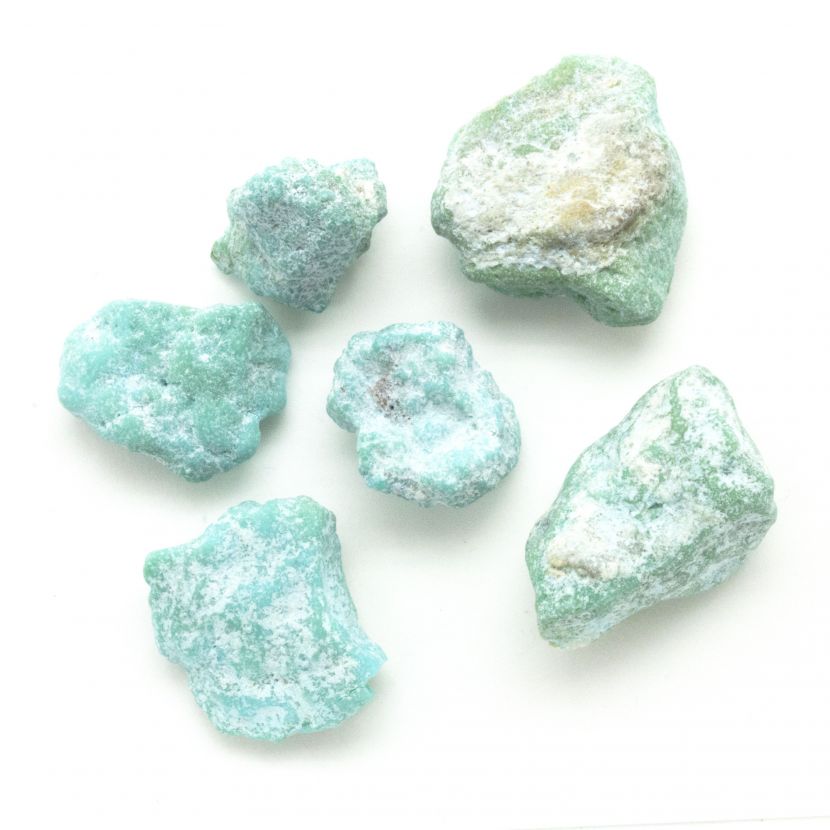
Copper almost without impurities gives turquoise a bright blue color. The green variety was formed under the influence of a large percentage of iron dioxide impurities.
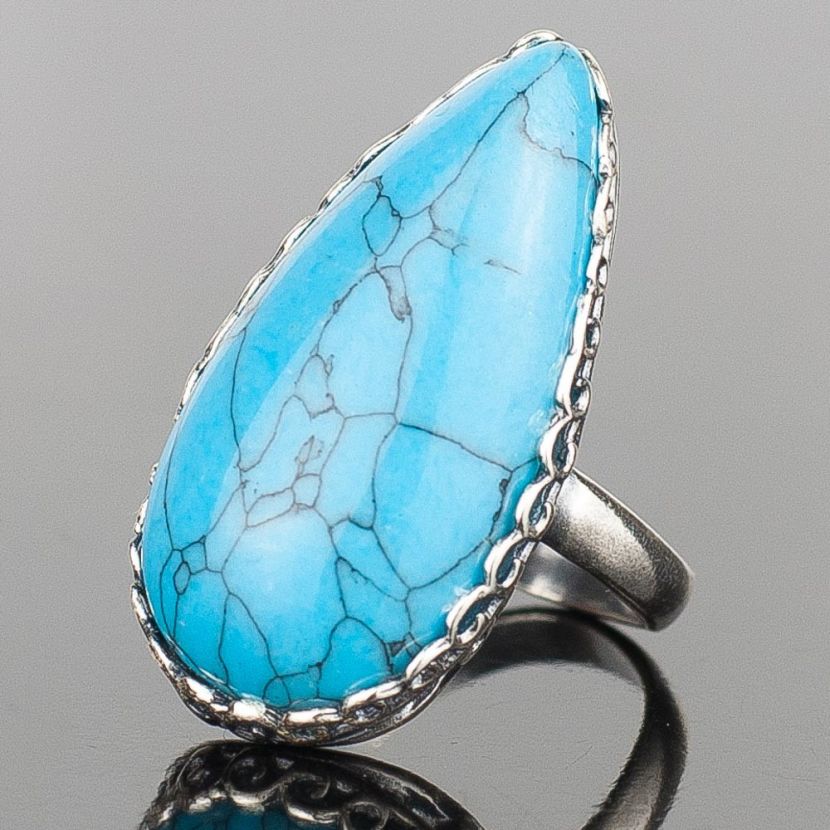
Important! Natural samples can change color over time under the influence of temperature and sunlight, the acid-base reaction of the environment and the fatty base with which jewelry made from this stone comes into contact.

How to distinguish a fake
Today, they have learned to produce imitations of almost all varieties of precious stones. False turquoise is not uncommon and can be found even in silver jewelry.A characteristic feature of true blue turquoise is brownish bubbly stains of a brown hue. Black veins are typical of the green variety of stone.

Important! The Chinese are the main suppliers of whitish and greenish turquoise to the world market. Periodically, large batches are rejected with suspicion of forgery.

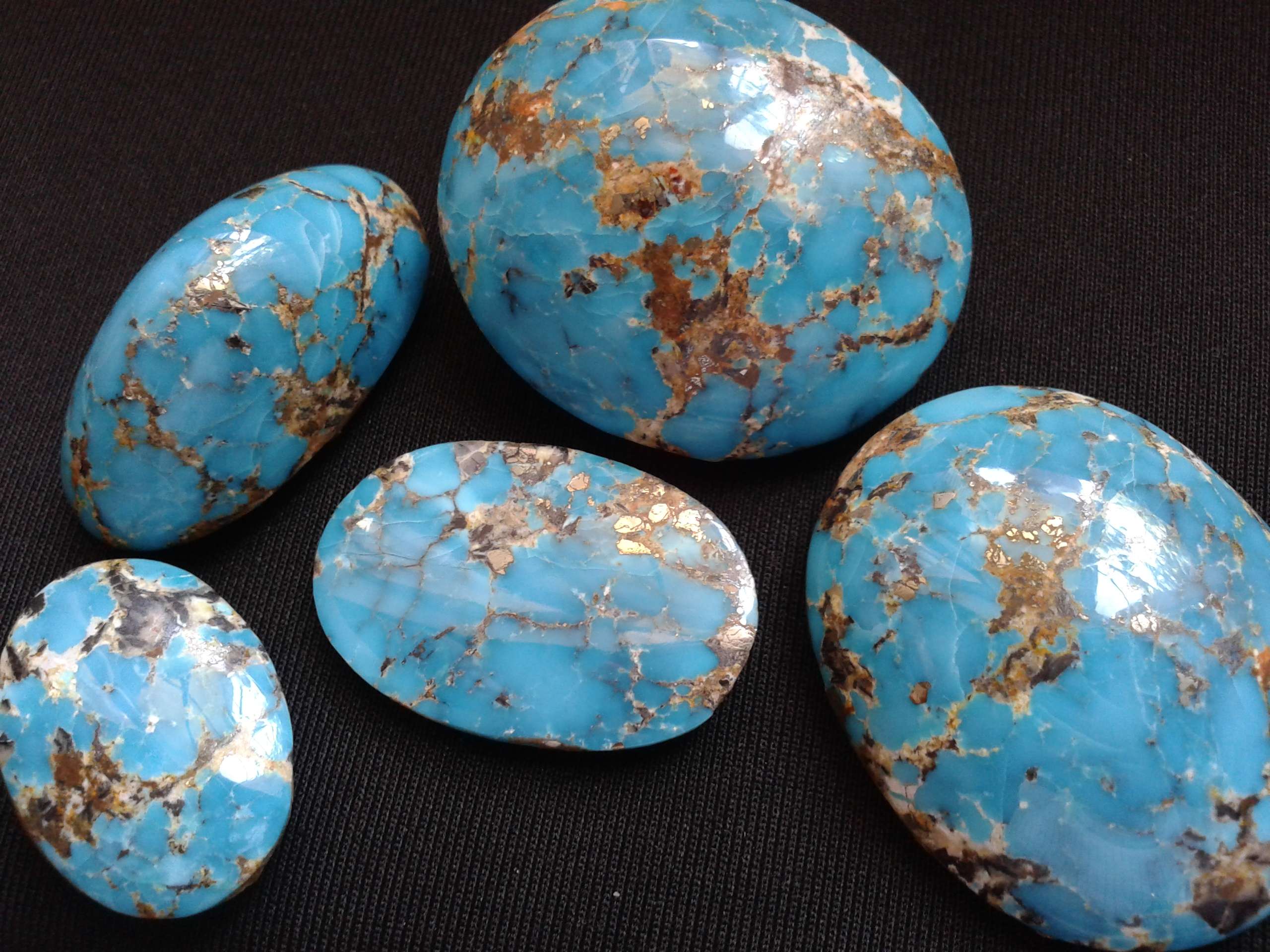
A very rare find - a completely blue gem without a characteristic mesh pattern. But sometimes there are small pores (voids) in them. These stones are easiest to fake using hard acrylic or polymer with the right shade of dye. In addition, fakes are often at least partially translucent when viewed through an artificial light source. Natural stone has a dense opaque structure.

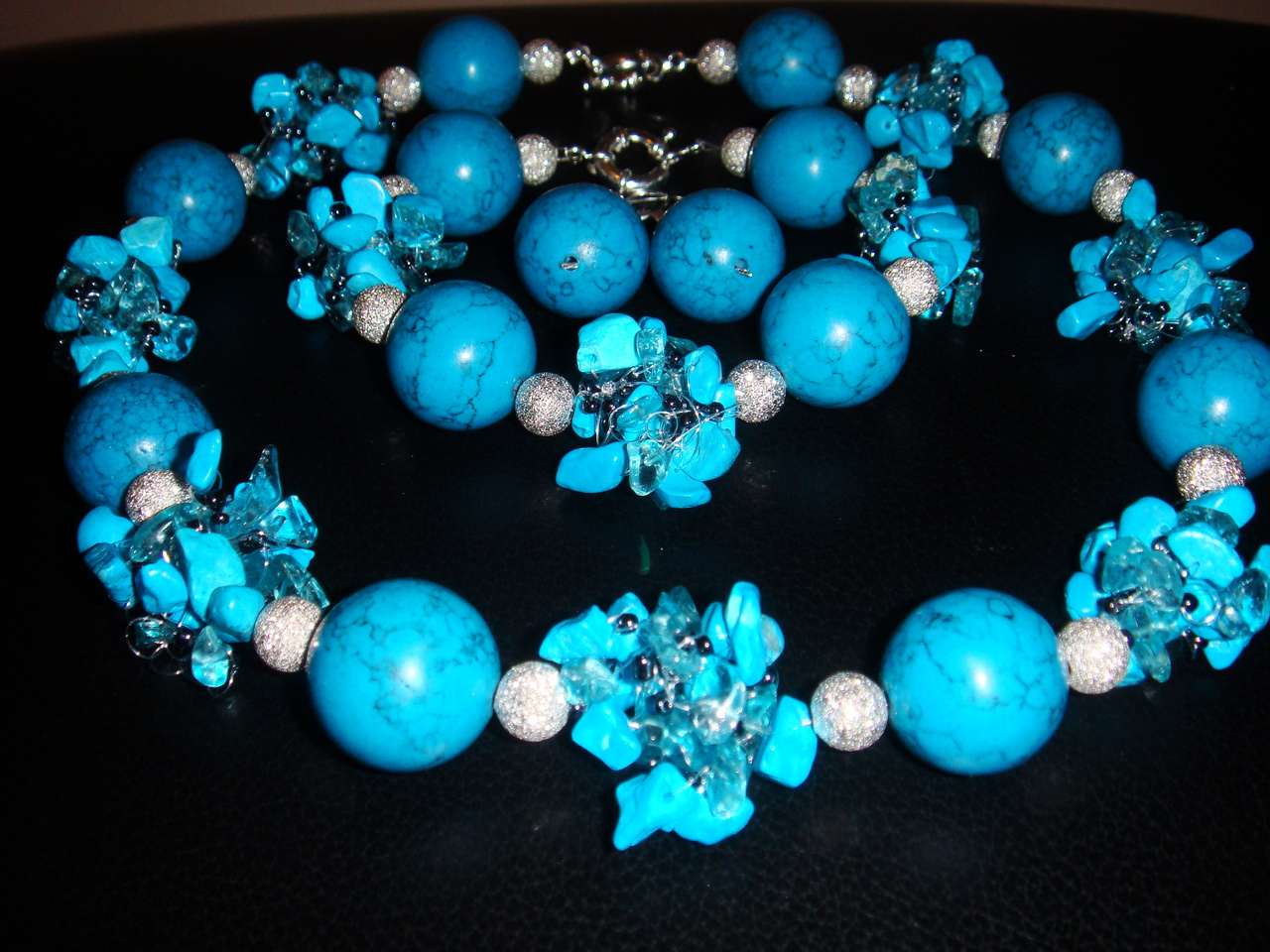
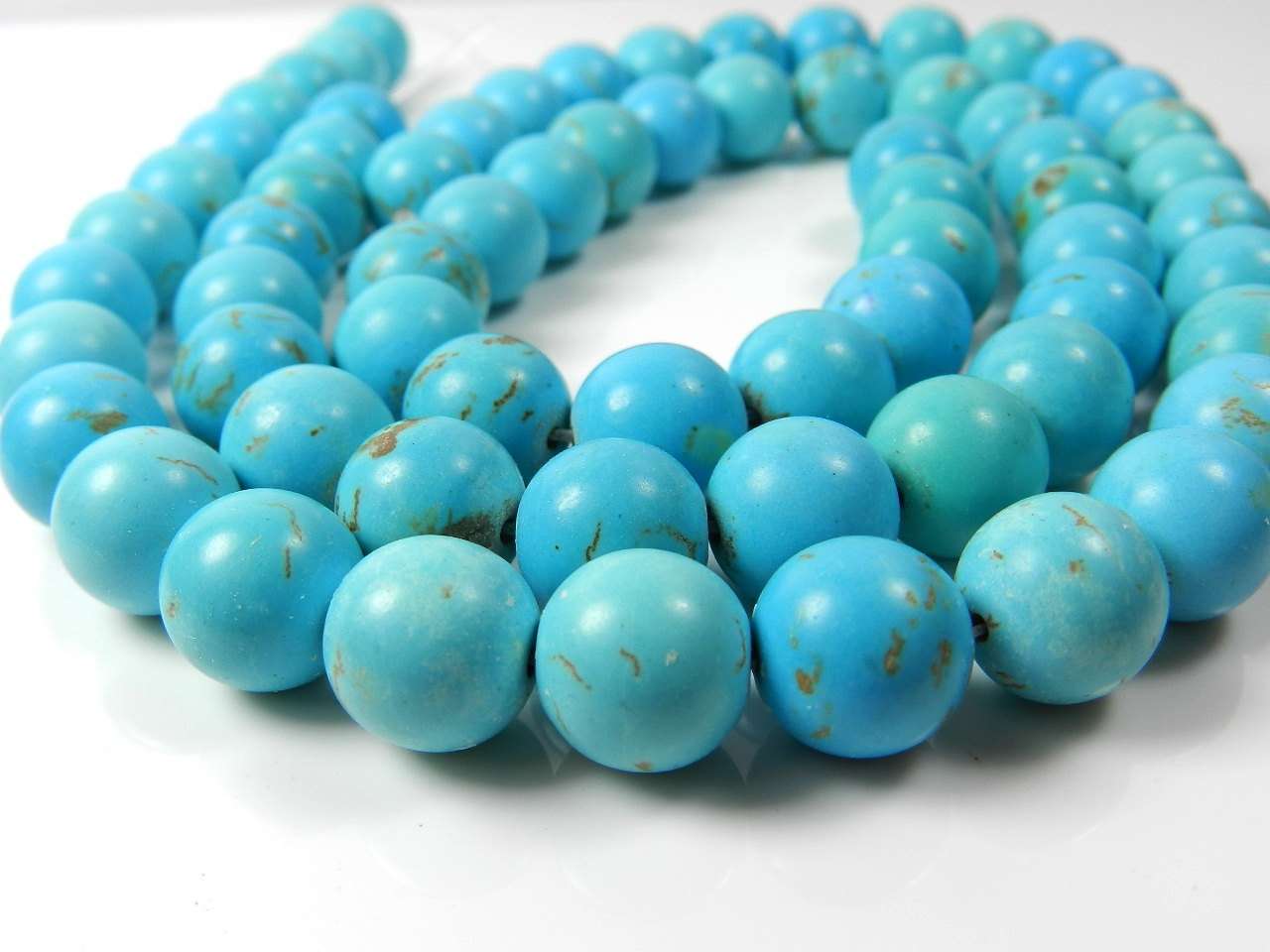
It is more difficult to fake a thick matte background, so natural stones are not made with a cut. Faceted inserts and "turquoise" beads are most likely fake, especially with glitter. This is beautiful, but you cannot count on the special characteristics of the mineral.

The magical properties of turquoise
A sky-blue mineral with a dark mesh pattern is able to give luck and good luck to people with pure thoughts. With a large pendant or amulet, it is easier for them to break into the lead or beat the competition. This is a stone of strong and strong-willed personalities, regardless of whether it is a man or a woman.
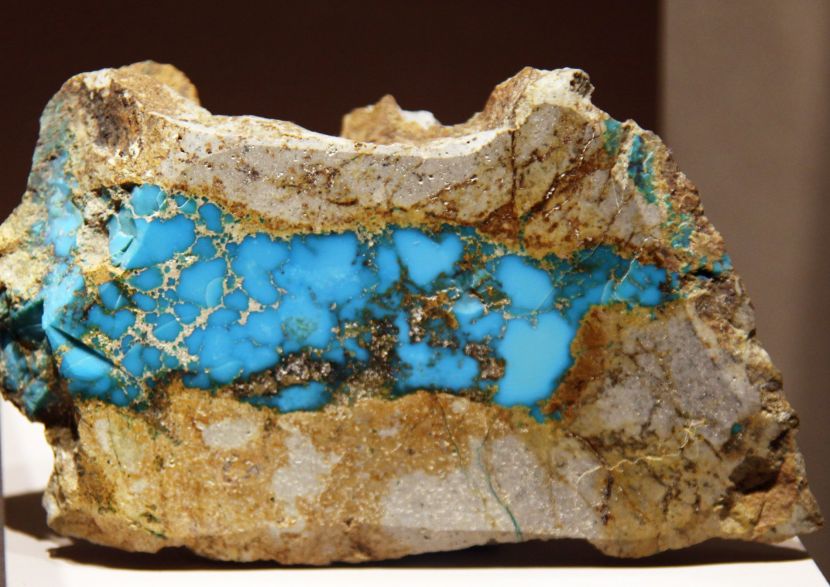
It is interesting! Due to the property to give a preemptive right, this stone was preferred by priestesses and queens, concubines of sultans and favorites of kings.

In the tombs and tombs of the elites of ancient civilizations, large turquoise inserts are invariably found in gold and silver jewelry (mainly chest pieces).

Mediums and astrologers claim that this is one of the minerals that do not enter into an energy conflict with its owner.The best qualities that he endows men are sanity and pragmatism, which should be inherent in leaders and responsible individuals. When you get a job, it will help you quickly strengthen your authority and climb the career ladder.
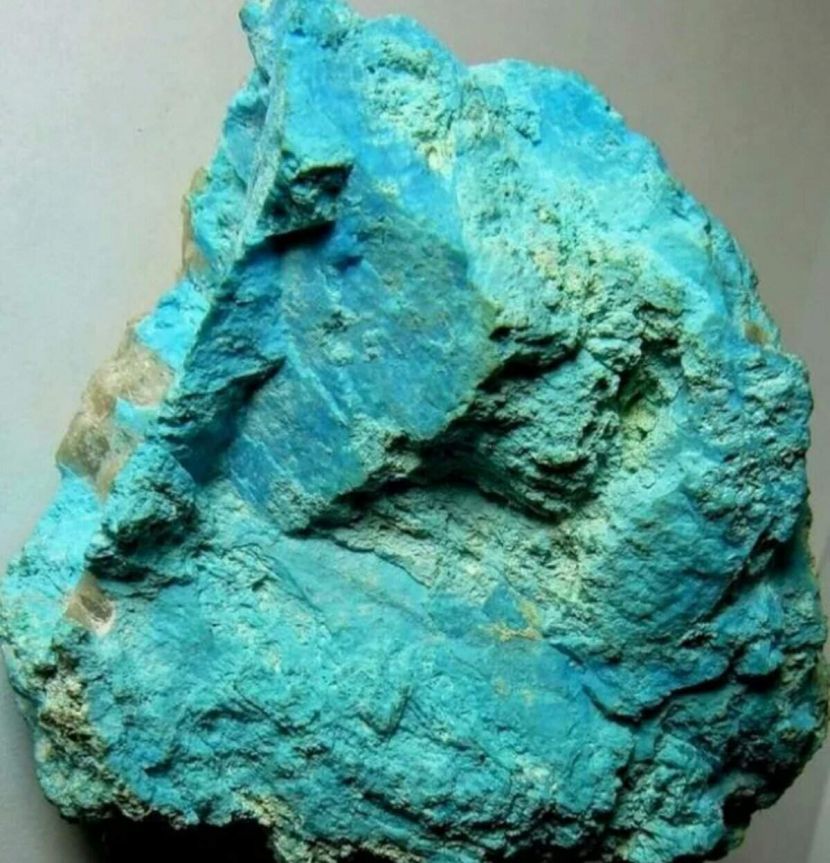
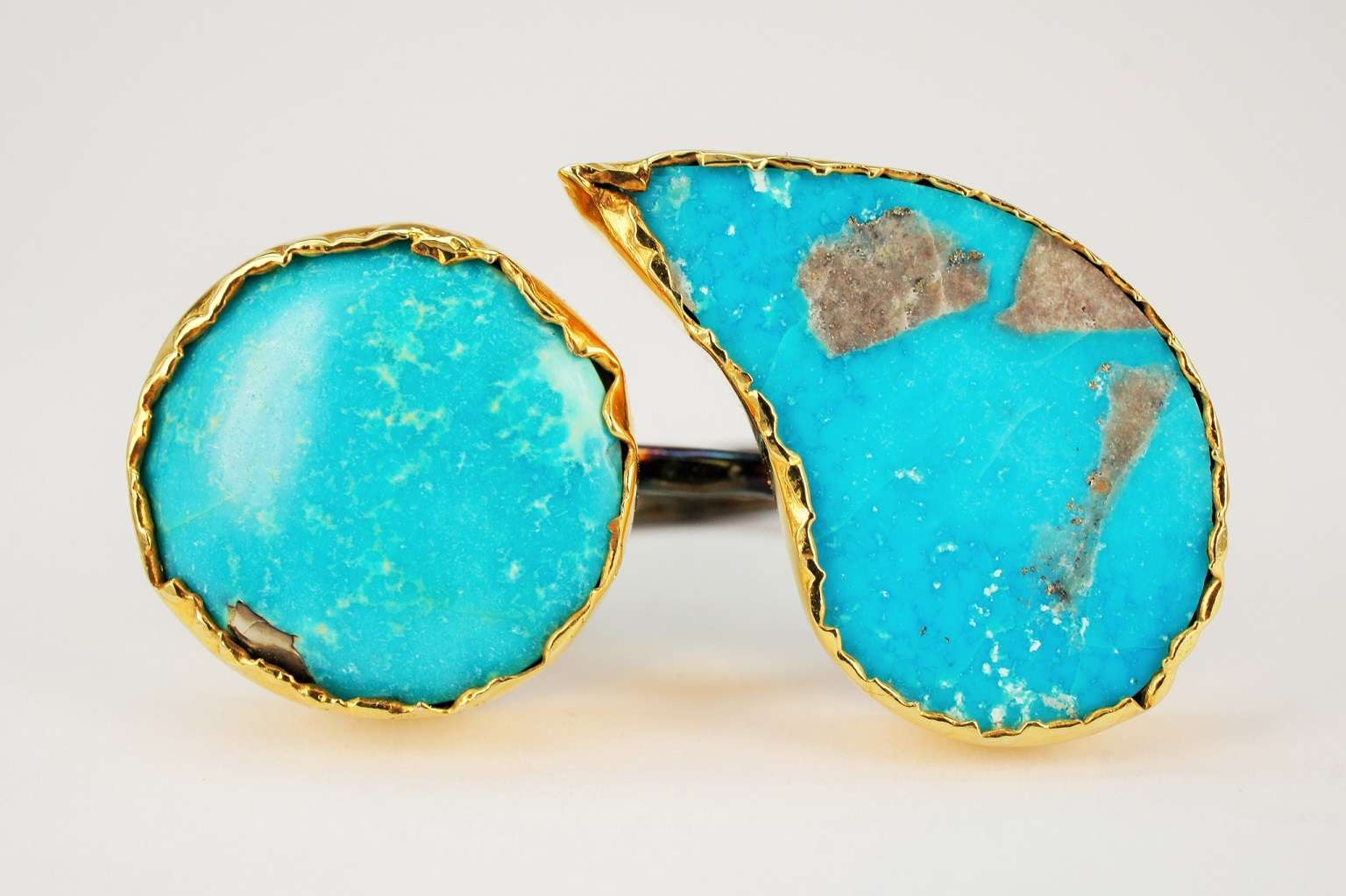
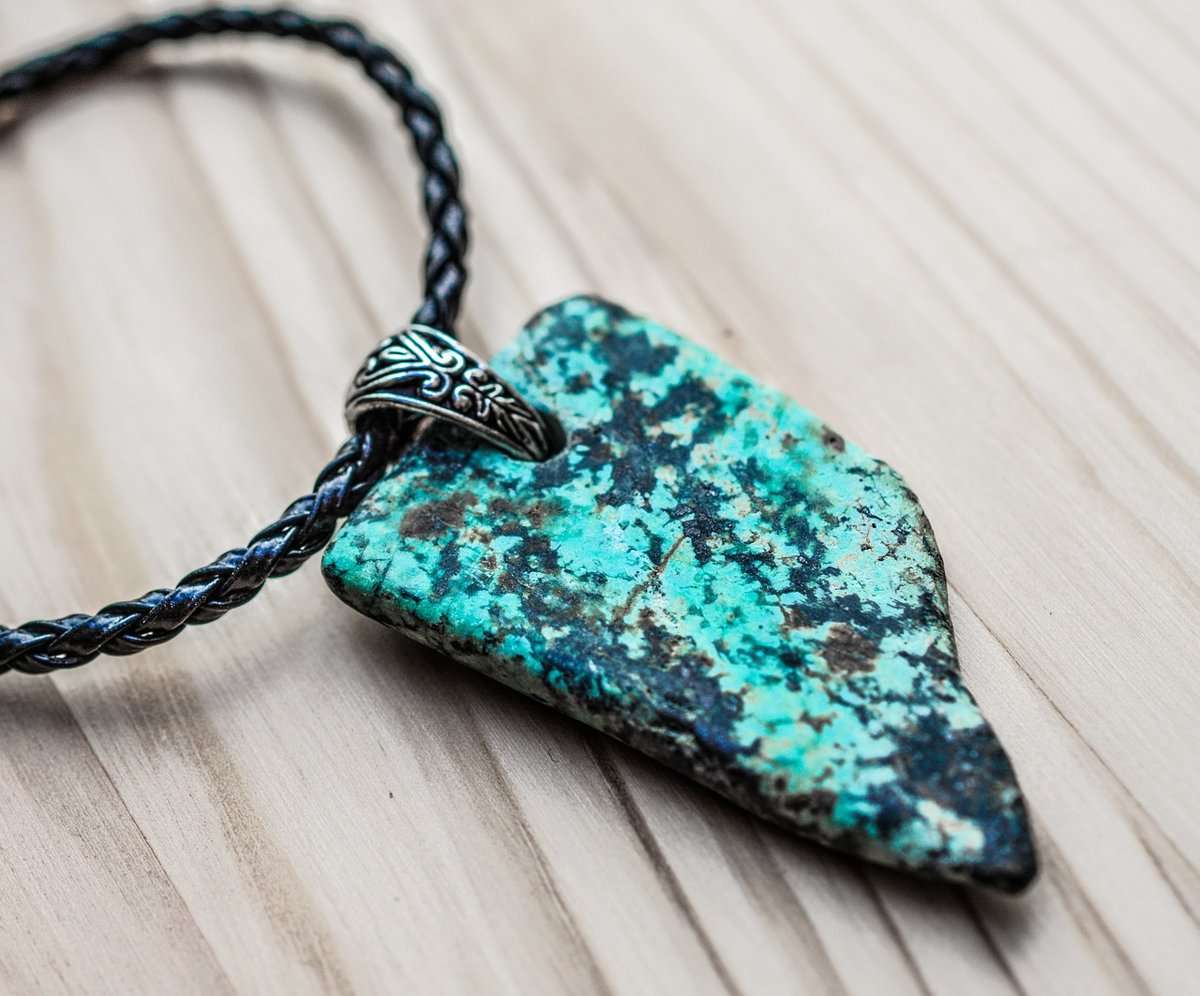
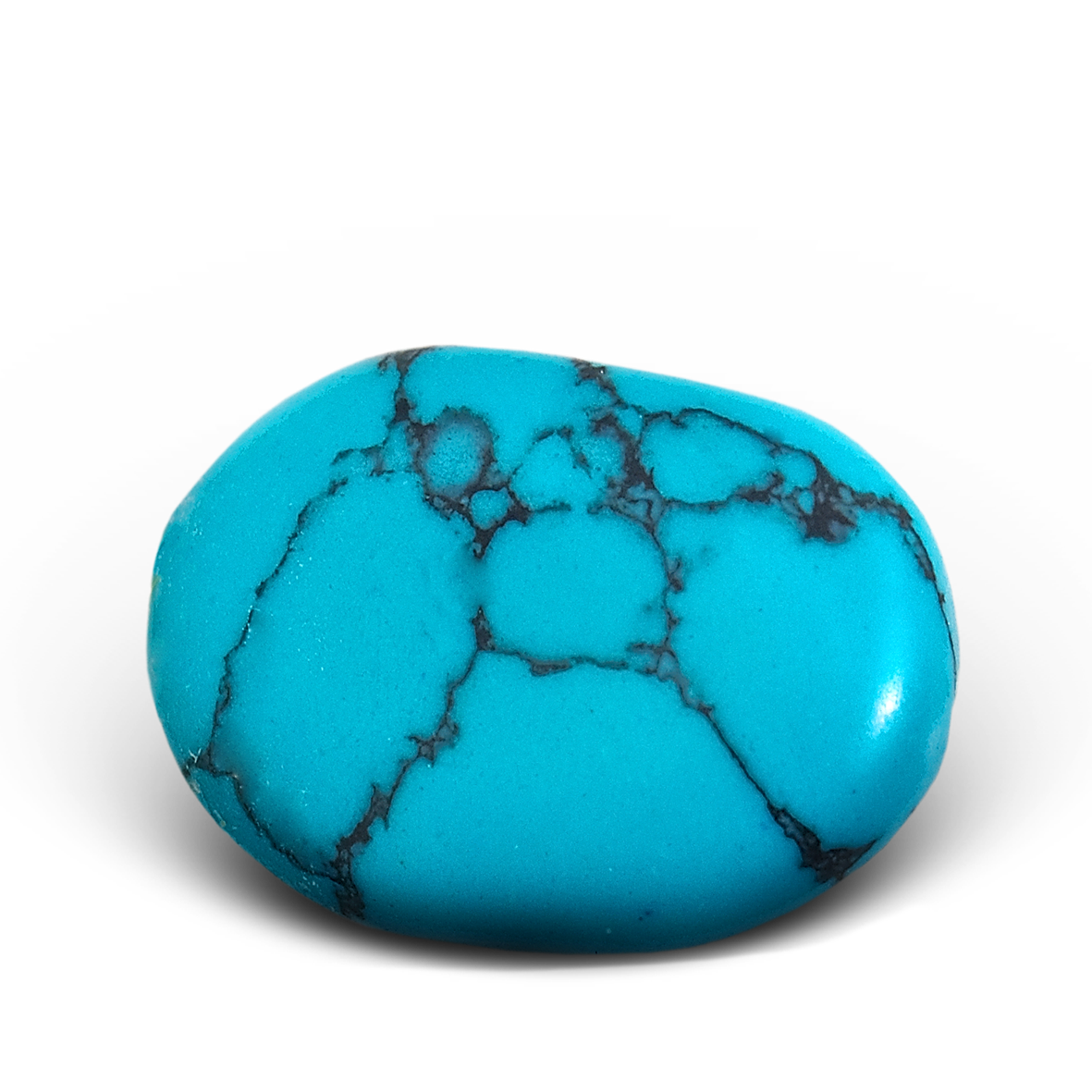
The most powerful amulets are obtained from light, almost whitish turquoise. And for occult rituals, only a solid blue-green stone with multiple divorces is used, like turquoise in the photo.
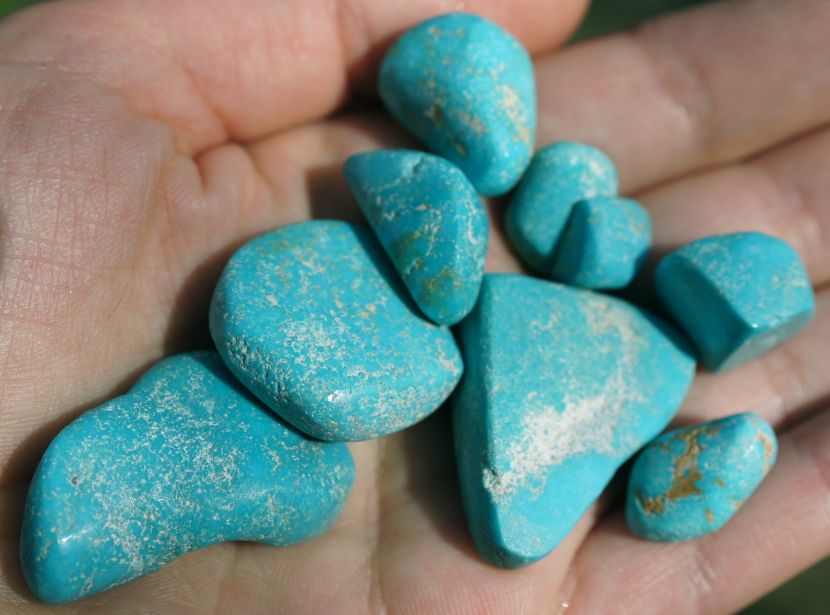
Turquoise makes senior leaders or "powers that be" loyal. Therefore, it is recommended to wear it as an amulet for those who are forced to work often enter the manager's office. It helps to collect thoughts, overcome shyness and correctly express thoughts. Perhaps that is why it was often worn by orators of ancient Rome.
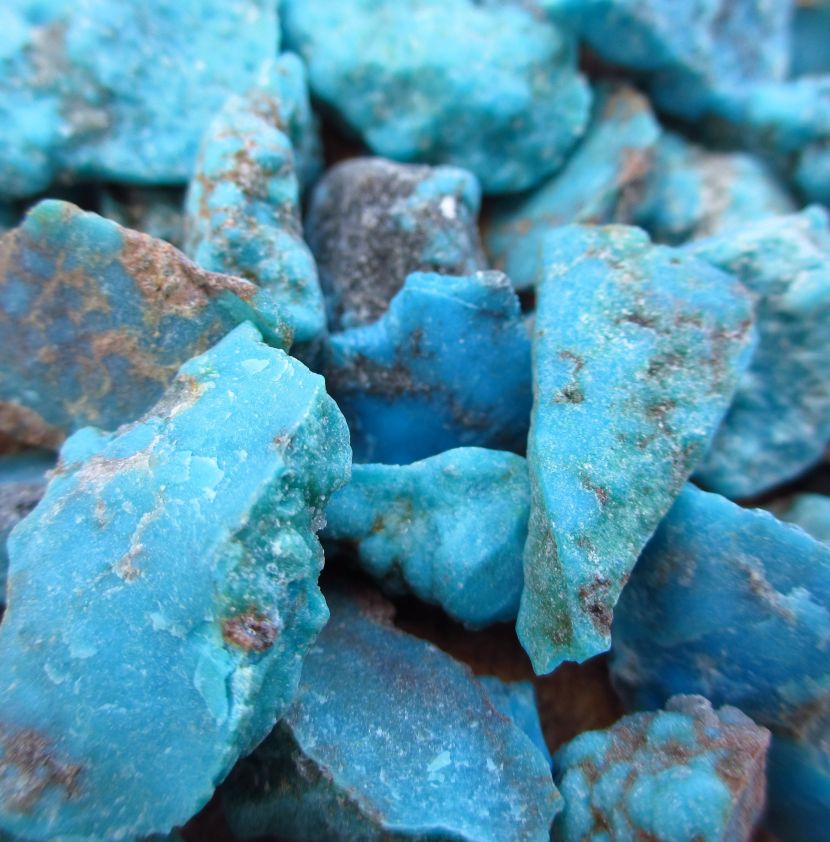
Healing properties of stone
Lithotherapists are unanimous on the issue of turquoise - who is suitable for a stone for general healing. It helps to cope with depression and enhances the positive dynamics in the treatment of respiratory organs. Experts recommend actively using the healing properties of the stone.

Turquoise has been proven to have a positive effect on the wearer:
- harmonizes the hormonal background;
- activates regeneration processes;
- stimulates the rejuvenation of the body;
- improves metabolism.

Superstitious owners of turquoise amulets, jewelry and souvenirs can observe their "aging" or discoloration. Doctors are sure that the problem is not in bioenergy, but in chemistry. This gem was saturated with fat, exposed to an aggressive acid-base environment, or had prolonged contact with iron.

Rules for choosing products from turquoise according to the horoscope
"Firuza" - A very neutral mineral. Turquoise suits many zodiac signs, the stone can be worn by almost everyone.A bright gem is preferred by blue-eyed ladies, but she is most supportive of Sagittarius and Taurus.

Cancers, Lions and Virgos are not entitled to count on her help, although elegant jewelry can sometimes be worn under matching clothes.
For Aries, light shades of stone are suitable, almost white, with red streaks. Scorpio is favored in all endeavors by juicy turquoise greenery.
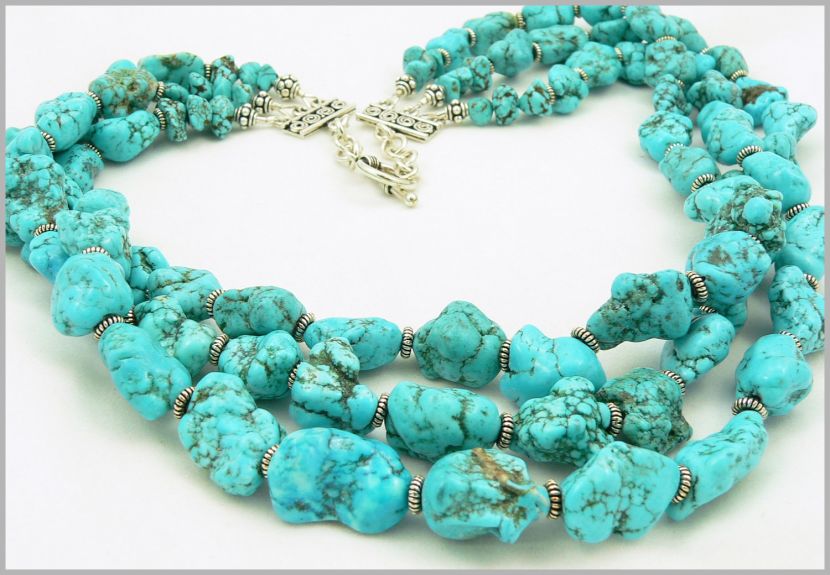
Capricorns with turquoise jewelry and talismans will become more relaxed and communicative, which will help strengthen their family relationships.
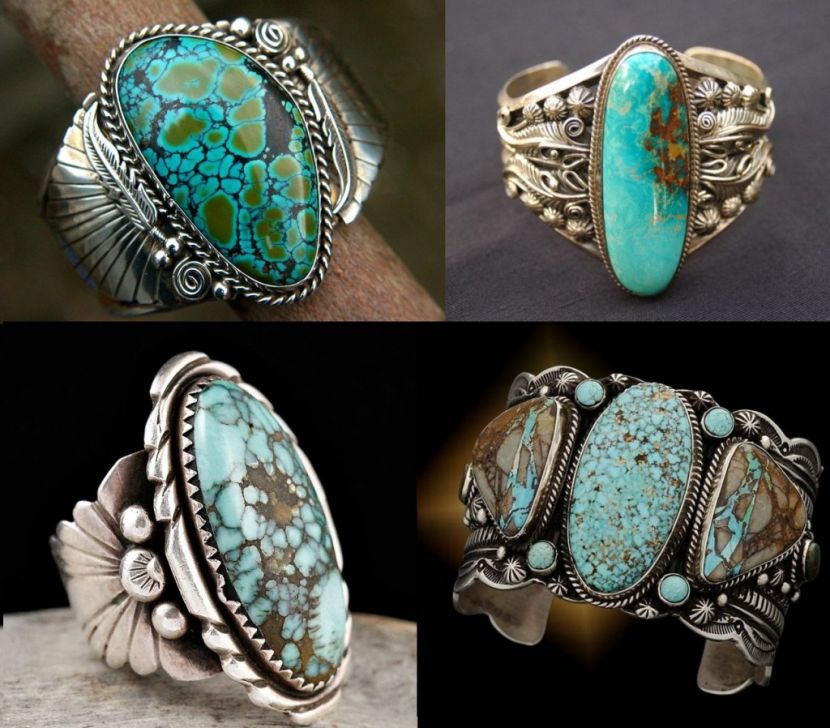
Rules for the purchase and care of products
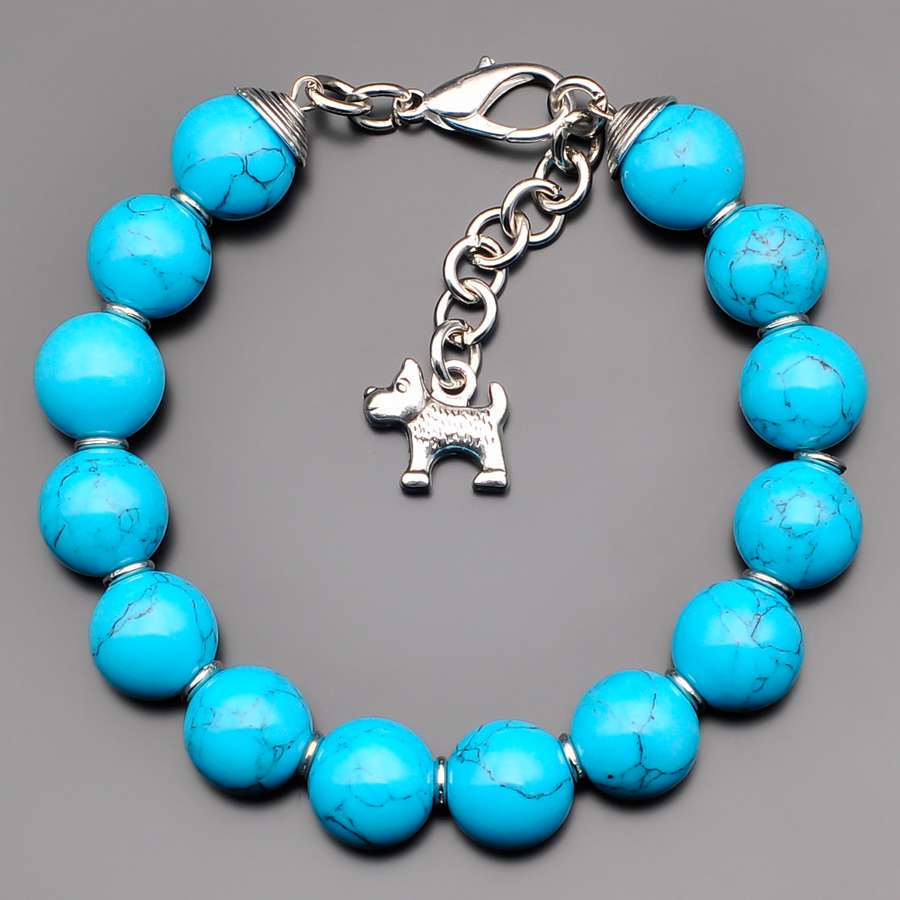
Turquoise bracelets and rings carved from a single gem are not so often found on sale. They are not recommended to be worn on the naked body - exposure to sebum, cream or oils can adversely affect the purity of the color over time.
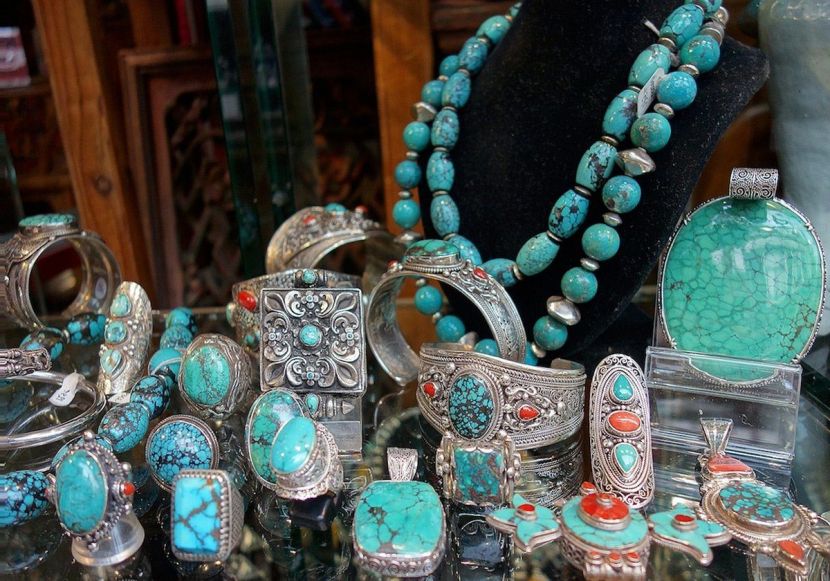
It is better to remove rings with turquoise inserts before cooking, it is also undesirable to swim with amulets from this gem. Turquoise cannot be cleaned with aggressive media - soda, acids, chemicals. Special jewelry care products are not contraindicated.
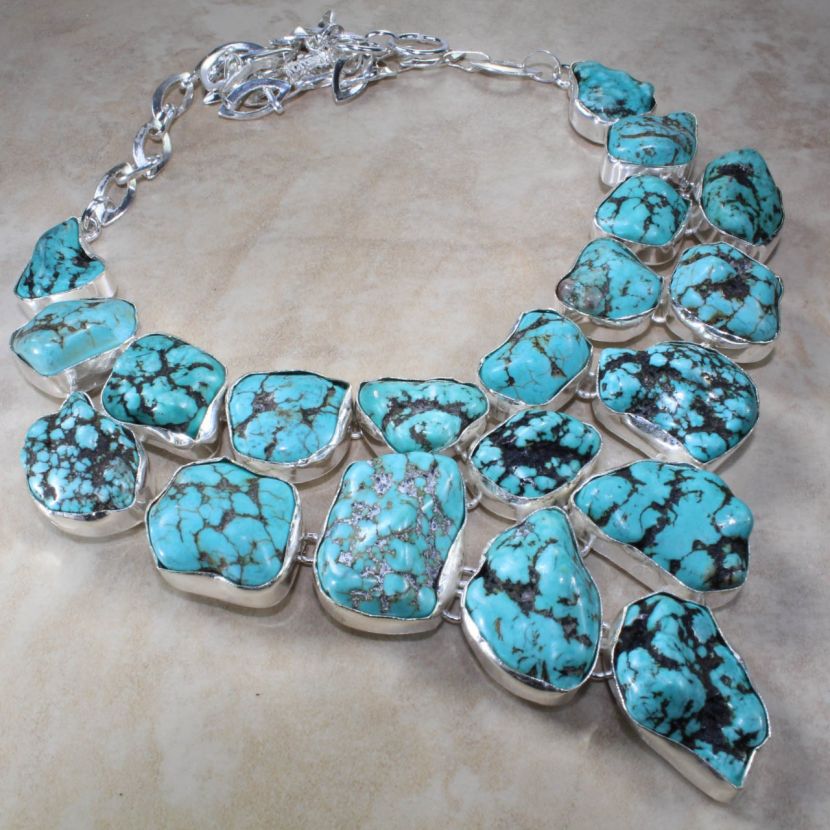
It should be a good habit to clean your jewelry with a dry flannel or napkin after wearing it, after which it is better to put them in a separate box.
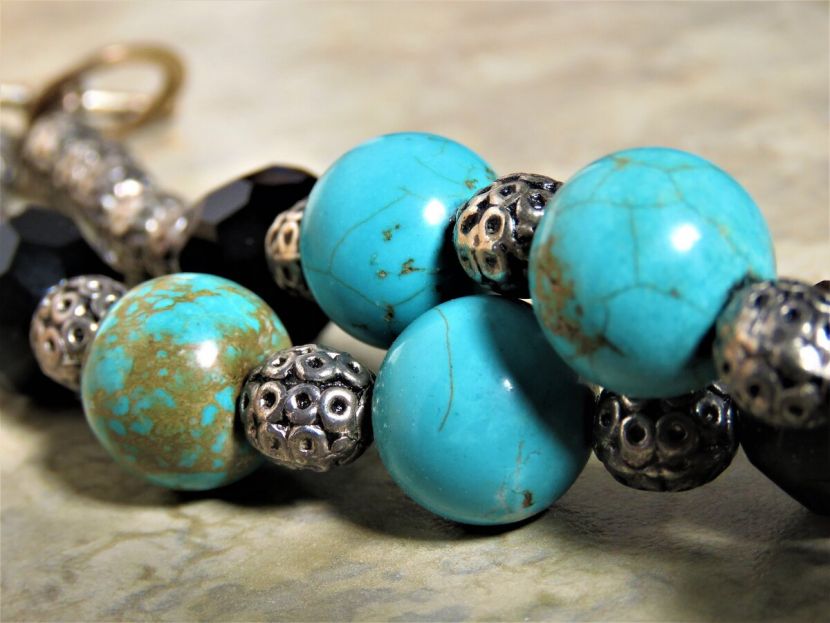
It is better to choose jewelry made of turquoise intuitively, even if there are several identical offers in front of the buyer. It is undesirable to store turquoise beads, earrings and pendants behind glass, as well as in a showcase where direct sunlight falls - the bright color of the inserts and beads will gradually fade.
Photo stone Turquoise